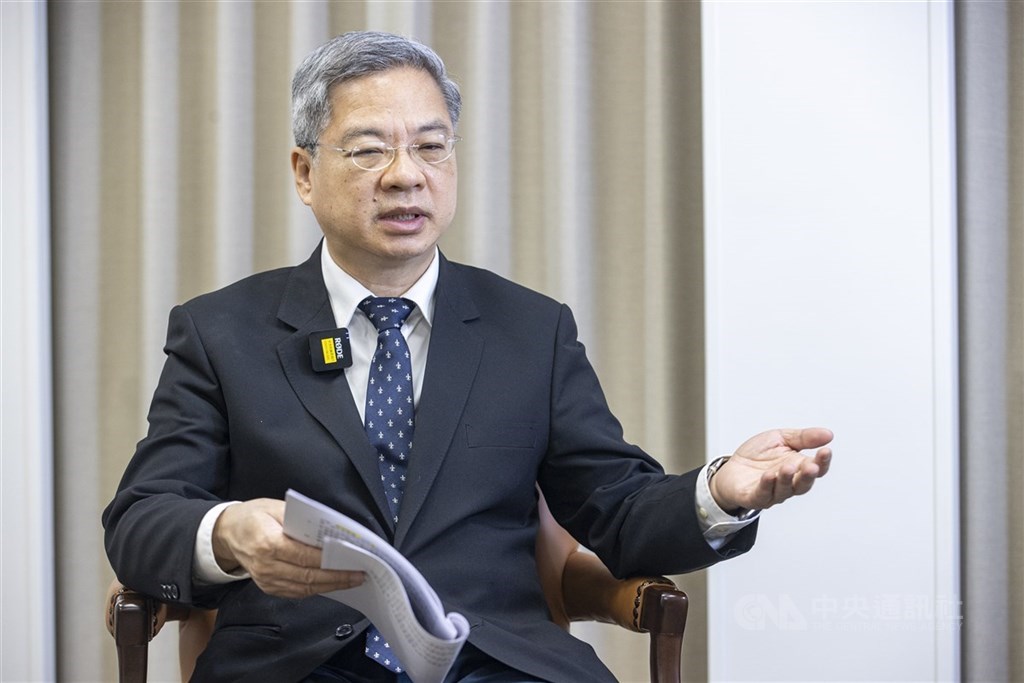
(CNA, Taipei, May 21, by reporter Tseng Yun-ting) Following President Lai Ching-te's recent proposal of a hundred-billion-dollar plan to accelerate the upgrading and transformation of small, medium, micro-enterprises and traditional industries, the Ministry of Economic Affairs (MOEA) has begun work on legalizing the transformation and upgrade program for these enterprises. Minister of Economic Affairs Kuo Ming-hsin stated today that the hundred-billion plan is primarily aimed at reinforcing and strengthening the export and order-taking capabilities of small and medium enterprises (SMEs) with long-term support. The plan is expected to be integrated with the existing "Small and Medium Enterprise Development Act," with the goal of submitting a draft amendment for review in the next legislative session. In his second-anniversary-of-governance speech at the Presidential Office yesterday, President Lai pointed out that the government will propose an 8-year plan with a scale of NT$100 billion to accelerate the upgrading and transformation of SMEs, micro-enterprises, and traditional industries, and to have the tech industry drive traditional industries, so that the fruits of economic growth can be shared across all sectors. Speaking to the media before a business meeting today, Kuo Ming-hsin noted that the government has already invested budgets in the tens of billions for two consecutive years to support SMEs and has been continuously promoting diverse stimulus programs for them. However, with about 1.7 million SMEs in Taiwan, there may still be gaps in coverage. Therefore, following President Lai's proposal for additional funding, the ministry will review whether aspects like export orders and overseas market expansion need further strengthening. Kuo pointed out that although special budgets have helped industries face challenges in recent years, they were mostly short-term measures. A long-term financial support framework would help enhance policy stability and continuity. In terms of institutional design, Kuo said the planning will move towards legislation and be integrated with the "Small and Medium Enterprise Development Act" to institutionalize policy tools such as upgrades, transformation, and tax support, but this still requires further discussion with the Executive Yuan. The hope is to draft the bill quickly for Executive Yuan review, with the goal to "send it to the Legislative Yuan as soon as possible in the next session." Kuo mentioned that future policy design will not be limited to SMEs themselves but will also strengthen supply chain links with high-tech and electronics industries. Through upstream and downstream integration of materials and equipment, this will drive the development of the overall industrial ecosystem, allowing growth momentum to spill over to traditional and related peripheral industries. Currently, the Small and Medium Enterprise Development Act mainly covers aspects such as financing, R&D, tax incentives, startup counseling, transformation and upgrading, and market expansion. In terms of financing support, it helps enterprises obtain bank loans through the SME credit guarantee mechanism and provides startup loans and policy-based project financing. For tax incentives, measures include R&D expenditure deductions from corporate income tax and investment tax credits for equipment, coupled with tax incentives for hiring more employees (youth, elderly) and raising wages.
FACT BOX
- Source: CNA (Central News Agency)
- Category: 政策