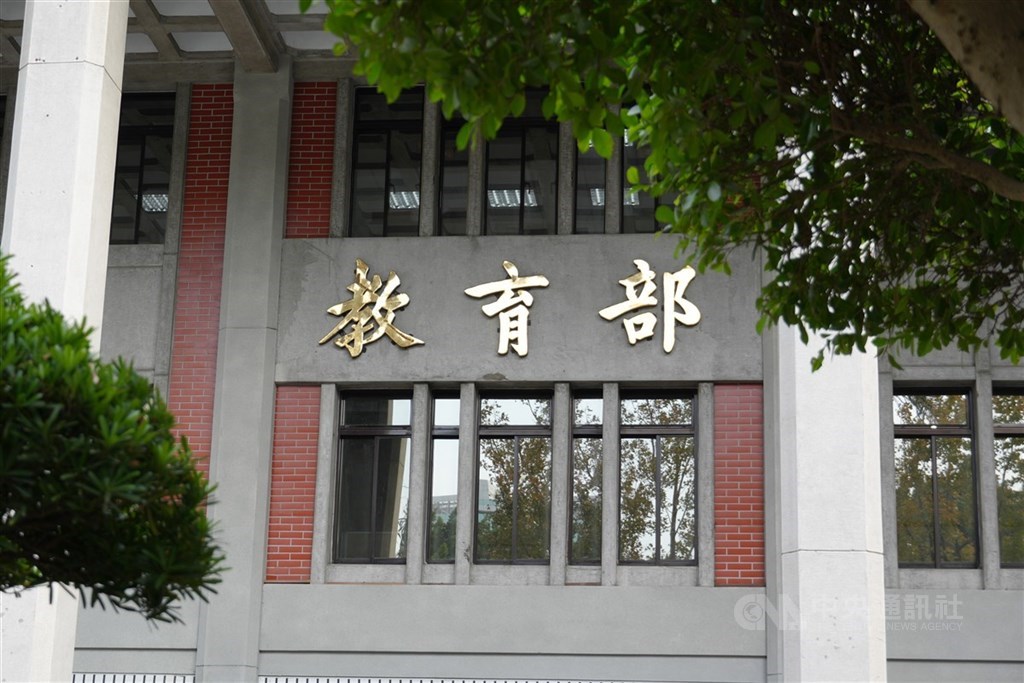
Ministry of Education Plans 'Taiwan Advanced Academy of Science' with Joint Admissions by Top Universities
In line with President Lai Ching-te's goal of producing three Nobel Prize winners in 30 years, the Ministry of Education is planning to establish a new 'Taiwan Advanced Academy of Science' (TAAS). The academy will feature joint admissions by four top universities—NTU, NTHU, NYCU, and NCKU—targeting students with a clear aptitude for academia. A new science experimental high school is also being planned to cultivate talent from an earlier age.
📋 Article Processing Timeline
- 📰 Published: May 21, 2026 at 10:15
- 🔍 Collected: May 21, 2026 at 10:31 (16 min after Published)
- 🤖 AI Analyzed: May 21, 2026 at 10:46 (14 min after Collected)
Following President Lai Ching-te's declaration of aiming for at least three Nobel Prize laureates within 30 years, the Ministry of Education is drafting plans for a new "Taiwan Advanced Academy of Science." This initiative will involve joint admissions by National Taiwan University, National Tsing Hua University, National Yang Ming Chiao Tung University, and National Cheng Kung University, and also proposes establishing a science experimental high school to target students with a clear academic orientation.
In March of this year, at the 29th National Chair Professorship Award Ceremony, President Lai stated that in the face of global competition for top talent, the government must "not only build bridges for talent but also pave the way for academia." He expressed hope that by providing various opportunities and resources, the government could create a better research environment, aiming for Taiwan to produce at least three Nobel Prize winners in the fields of physics, chemistry, and medicine within the next 30 years.
In recent years, due to a declining birthrate and the industrial structure, a large number of outstanding students have concentrated in high-tech industries or medicine rather than basic research. In response, the Ministry of Education has recently begun preparations for the "Taiwan Advanced Academy of Science" (TAAS) to create a model for cultivating international scientific research talent that is distinct from the current system and admission pathways.
According to the preliminary proposal, TAAS will not be a physical school but rather a consortium formed by four universities—National Taiwan University, National Tsing Hua University, National Yang Ming Chiao Tung University, and National Cheng Kung University—along with Academia Sinica. It will transform scattered resources into a collaboratively operated platform.
Under the current plan, TAAS will conduct joint admissions, with groups based on "specialized fields" (such as mathematics, physics, chemistry, biology, earth sciences, etc.). A two-stage selection process will be adopted, with the first stage being a written science proficiency test, and the second stage involving a portfolio review, practical assessment, and interview.
The second-stage interview will be conducted by a joint inter-university interview committee and will use a pass/fail evaluation. Candidates who are 'passed' in their respective fields will then fill out their preferences for distribution, with no quota limits for each field or university.
Additionally, the Ministry of Education also plans to establish the National Taiwan Science and Experimental High School (NTSEHS) to begin cultivating academic research talent at an earlier educational stage.
Currently, the plan is that if NTSEHS students pass a qualification examination upon graduation, they can bypass the written test for TAAS admission and proceed directly to the second stage. Students from regular high schools who have qualified for the International Olympiads or international science fairs can also be exempted from the first-stage written test.
Lin Po-chiao, Chief Secretary of the Ministry of Education, stressed in a telephone interview with CNA that the plans for TAAS are not yet finalized. Details such as admission methods and timelines are still undetermined and are in the data collection and organization phase.
Lin stated that TAAS is different from the "College-based Bachelor's Programs" that many universities are already promoting. While those programs encourage interdisciplinary exploration, TAAS is designed to assist students whose aptitudes and interests are already very clear. Through new learning pathways and flexibility, it will provide these students with special academic talents more space for independent research, allowing them to "move a bit faster in specific fields."
Lin emphasized that TAAS will not be a means of mass talent recruitment; the number of spots will certainly not be large, and it will not affect existing high school and university admission pathways. He said that it doesn't matter if TAAS students do not pursue academia in the future; at the very least, during the prime learning phase of their lives, they will have been exposed to scientific research, which will surely be useful even if they enter the general workforce.
In March of this year, at the 29th National Chair Professorship Award Ceremony, President Lai stated that in the face of global competition for top talent, the government must "not only build bridges for talent but also pave the way for academia." He expressed hope that by providing various opportunities and resources, the government could create a better research environment, aiming for Taiwan to produce at least three Nobel Prize winners in the fields of physics, chemistry, and medicine within the next 30 years.
In recent years, due to a declining birthrate and the industrial structure, a large number of outstanding students have concentrated in high-tech industries or medicine rather than basic research. In response, the Ministry of Education has recently begun preparations for the "Taiwan Advanced Academy of Science" (TAAS) to create a model for cultivating international scientific research talent that is distinct from the current system and admission pathways.
According to the preliminary proposal, TAAS will not be a physical school but rather a consortium formed by four universities—National Taiwan University, National Tsing Hua University, National Yang Ming Chiao Tung University, and National Cheng Kung University—along with Academia Sinica. It will transform scattered resources into a collaboratively operated platform.
Under the current plan, TAAS will conduct joint admissions, with groups based on "specialized fields" (such as mathematics, physics, chemistry, biology, earth sciences, etc.). A two-stage selection process will be adopted, with the first stage being a written science proficiency test, and the second stage involving a portfolio review, practical assessment, and interview.
The second-stage interview will be conducted by a joint inter-university interview committee and will use a pass/fail evaluation. Candidates who are 'passed' in their respective fields will then fill out their preferences for distribution, with no quota limits for each field or university.
Additionally, the Ministry of Education also plans to establish the National Taiwan Science and Experimental High School (NTSEHS) to begin cultivating academic research talent at an earlier educational stage.
Currently, the plan is that if NTSEHS students pass a qualification examination upon graduation, they can bypass the written test for TAAS admission and proceed directly to the second stage. Students from regular high schools who have qualified for the International Olympiads or international science fairs can also be exempted from the first-stage written test.
Lin Po-chiao, Chief Secretary of the Ministry of Education, stressed in a telephone interview with CNA that the plans for TAAS are not yet finalized. Details such as admission methods and timelines are still undetermined and are in the data collection and organization phase.
Lin stated that TAAS is different from the "College-based Bachelor's Programs" that many universities are already promoting. While those programs encourage interdisciplinary exploration, TAAS is designed to assist students whose aptitudes and interests are already very clear. Through new learning pathways and flexibility, it will provide these students with special academic talents more space for independent research, allowing them to "move a bit faster in specific fields."
Lin emphasized that TAAS will not be a means of mass talent recruitment; the number of spots will certainly not be large, and it will not affect existing high school and university admission pathways. He said that it doesn't matter if TAAS students do not pursue academia in the future; at the very least, during the prime learning phase of their lives, they will have been exposed to scientific research, which will surely be useful even if they enter the general workforce.