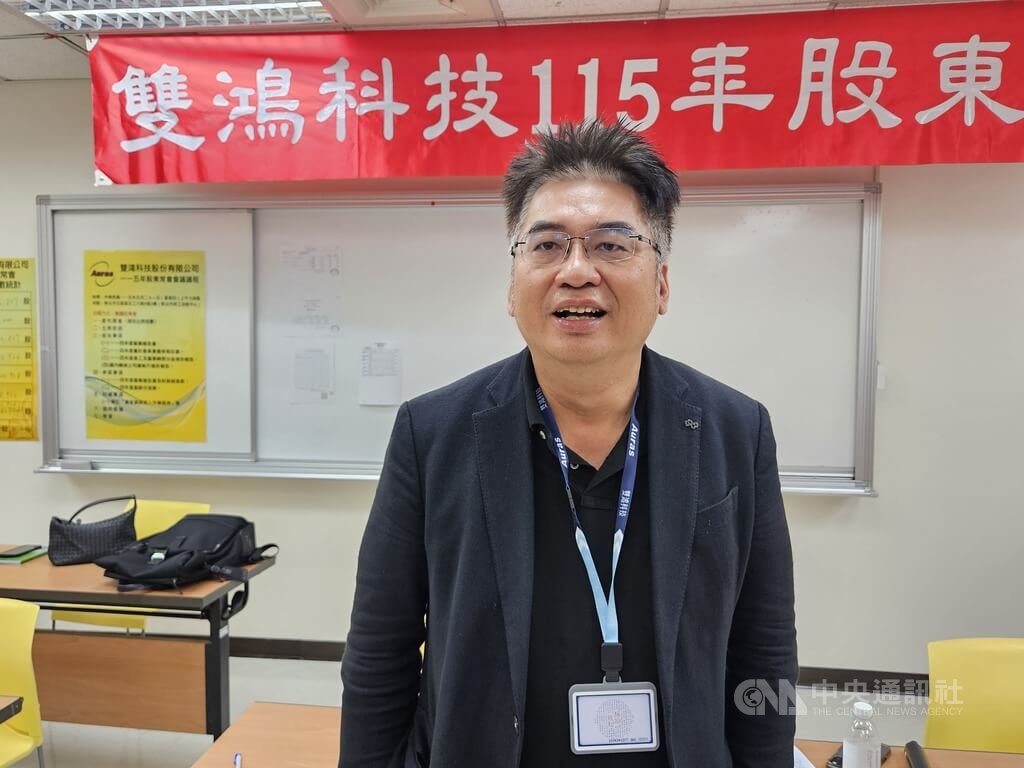
Auras Raises Revenue Growth Target to up to 70%, Sees AI Boom Lasting Until 2028
T.Y. Lin, chairman of thermal solutions giant Auras Technology, announced at a shareholders' meeting on the 21st that due to strong demand from the AI and ASIC markets, the company is raising its 2026 revenue growth target from 50% to 60-70% year-on-year. He expects the AI boom to continue until 2028. Lin explained that while Auras will not be supplying NVIDIA's Vera Rubin platform, it is providing cooling for other projects like NVLink 8. He anticipates ASIC-related revenue will account for 40% of the total in the second half of the year. To meet this demand from clients like Google, AWS, Meta, and AMD, Auras is actively expanding production capacity for water cooling plates and CPU vapor chambers at its plants in Thailand and Guangzhou.
📋 Article Processing Timeline
- 📰 Published: May 21, 2026 at 13:13
- 🔍 Collected: May 21, 2026 at 13:31 (18 min after Published)
- 🤖 AI Analyzed: May 21, 2026 at 13:51 (19 min after Collected)
(CNA, Taipei, June 21, by reporter Tseng Jen-kai) T.Y. Lin, chairman of thermal solutions major Auras Technology, said today that the AI market remains strong and should pose no problems until 2028. Benefiting from the takeoff of the ASIC (Application-Specific Integrated Circuit) market, Auras is upgrading its 2026 revenue growth target from the original 50% year-on-year to 60% to 70%, with profits expected to be even better.
Auras held its annual shareholders' meeting today. Lin admitted that Auras's cold plates are not on the supplier list for NVIDIA's upcoming Vera Rubin platform, set to launch in the second half of the year. He described this as a trade-off, a result of considering the company's overall capacity allocation for the most efficient application.
Lin analyzed that cooling is now needed in many areas beyond GPUs, including DIMMs (dual in-line memory modules). NVIDIA has initiated many projects, such as the NVLink 8 high-speed interconnect technology, for which Auras is providing the cooling solution.
Meanwhile, the ASIC market is just taking off, with companies like Google, Amazon AWS, and Meta developing their own chips and progressively adopting liquid cooling technology. It is estimated that in the second half of this year, ASICs will account for a significant 40% of Auras's revenue, serving as a key growth driver.
In response to customer demand, Auras is actively expanding its production capacity. It is increasing cold plate capacity at its Thailand and Guangzhou plants from the current 300,000 units per month to 400,000 units by June or July. The capacity for manifolds has also just been expanded, from the original 2,000-3,000 pairs per month to 4,000 pairs.
Additionally, Auras had previously entered AMD's supply chain for CPU vapor chambers. Lin stated that the CPU market has suddenly become very strong, and Auras plans to expand its vapor chamber production from the current 100,000-plus units per month to 1 million units per month by the end of this year or early next year.
Lin observed that based on current information, the AI industry boom should continue for several more years, with no issues foreseen until 2028.
Auras's 2025 revenue is NT$23.276 billion, a 47.5% annual increase; net profit attributable to the parent company is NT$2.572 billion, up 35.9%. Both revenue and profit set historical highs, with an after-tax earnings per share of NT$28.26. At today's meeting, shareholders approved a cash dividend of NT$12 per share.
At an investor conference late last year, Auras had proposed a 2026 revenue growth target of over 50%. Today, Lin revised this upward to 60% to 70%.
Auras held its annual shareholders' meeting today. Lin admitted that Auras's cold plates are not on the supplier list for NVIDIA's upcoming Vera Rubin platform, set to launch in the second half of the year. He described this as a trade-off, a result of considering the company's overall capacity allocation for the most efficient application.
Lin analyzed that cooling is now needed in many areas beyond GPUs, including DIMMs (dual in-line memory modules). NVIDIA has initiated many projects, such as the NVLink 8 high-speed interconnect technology, for which Auras is providing the cooling solution.
Meanwhile, the ASIC market is just taking off, with companies like Google, Amazon AWS, and Meta developing their own chips and progressively adopting liquid cooling technology. It is estimated that in the second half of this year, ASICs will account for a significant 40% of Auras's revenue, serving as a key growth driver.
In response to customer demand, Auras is actively expanding its production capacity. It is increasing cold plate capacity at its Thailand and Guangzhou plants from the current 300,000 units per month to 400,000 units by June or July. The capacity for manifolds has also just been expanded, from the original 2,000-3,000 pairs per month to 4,000 pairs.
Additionally, Auras had previously entered AMD's supply chain for CPU vapor chambers. Lin stated that the CPU market has suddenly become very strong, and Auras plans to expand its vapor chamber production from the current 100,000-plus units per month to 1 million units per month by the end of this year or early next year.
Lin observed that based on current information, the AI industry boom should continue for several more years, with no issues foreseen until 2028.
Auras's 2025 revenue is NT$23.276 billion, a 47.5% annual increase; net profit attributable to the parent company is NT$2.572 billion, up 35.9%. Both revenue and profit set historical highs, with an after-tax earnings per share of NT$28.26. At today's meeting, shareholders approved a cash dividend of NT$12 per share.
At an investor conference late last year, Auras had proposed a 2026 revenue growth target of over 50%. Today, Lin revised this upward to 60% to 70%.
FAQ
雙鴻為何上修2026年營收目標?
因為AI市場持續強勁,特別是ASIC(特殊應用積體電路)市場起飛,Google、亞馬遜AWS、Meta等大廠紛紛開發自有晶片並導入液冷散熱技術,帶動強勁需求。
雙鴻與輝達(NVIDIA)的合作關係有何變化?
根據報導,雙鴻的水冷板將不會供應輝達下半年推出的Vera Rubin平台,董事長林育申稱這是考量公司整體產能配置的策略性取捨。但雙鴻仍為輝達的其他案子(如NVLink 8高速互連技術)提供散熱方案。
雙鴻的擴產計畫為何?
為因應客戶需求,雙鴻正在泰國廠和廣州廠擴充水冷板產能(從每月30萬片增至40萬片)、分歧管產能(擴充至每月4000對),並計畫將CPU均熱片產能從每月10萬多顆大幅擴充至100萬顆。
ASIC相關業務對雙鴻有多重要?
ASIC業務是雙鴻重要的成長動能。報導指出,預計今年下半年,ASIC相關營收將佔雙鴻總營收的40%。
雙鴻對AI市場的長期展望如何?
董事長林育申觀察,從目前掌握情況來看,這波AI產業熱潮應該還有幾年的好光景,預計到2028年都沒有問題。