The Bashi Channel, located between the northern tip of the Philippines and the southern end of Taiwan, is a crucial passageway for Chinese warships to break through the First Island Chain and sail toward Taiwan's east coast or the Pacific Ocean. Due to its relatively weak defense capabilities, the Philippines has long been considered a breach in the First Island Chain.
In recent years, the U.S. military has been actively strengthening its military deployments in the northern Philippines, with a core objective of establishing monitoring and denial capabilities over the Bashi Channel. If shore-based anti-ship missiles and long-range radar were deployed in Northern Luzon, they could form a cross-strait fire network with Japan's Southwest Islands, enhancing the First Island Chain's blockade capabilities.
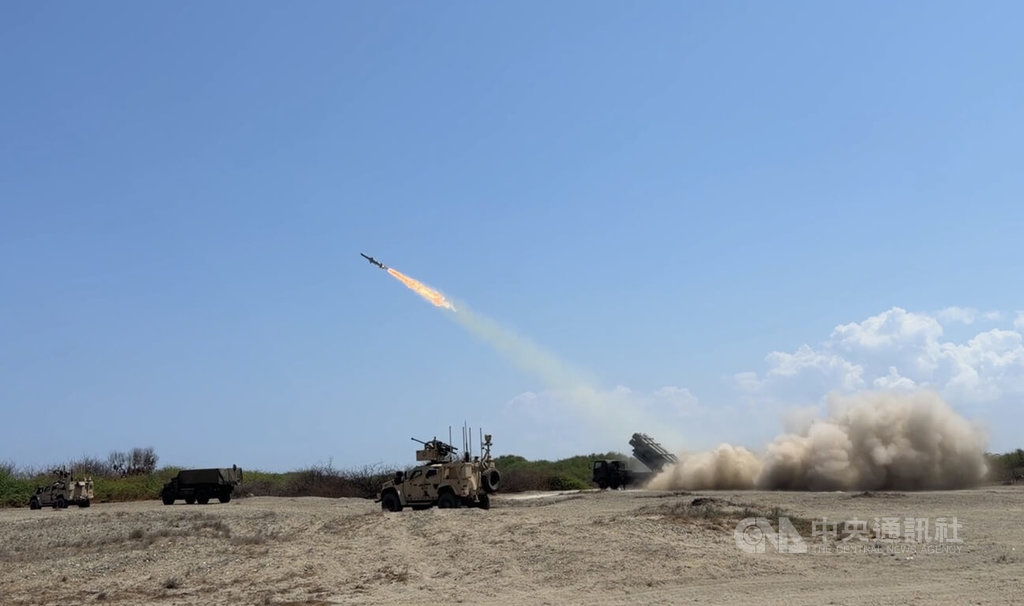
This year's Balikatan (Shoulder-to-Shoulder) exercise saw troops from seven countries participate, with Japan deploying combat personnel for the first time. During the exercise, the U.S., Japan, and the Philippines utilized at least five types of land-based maritime denial systems. These included the U.S. military's High Mobility Artillery Rocket System (HIMARS), the Typhon Missile System, the Navy/Marine Corps Expeditionary Ship Interdiction System (NMESIS); the Philippines' Indian-procured BrahMos supersonic anti-ship cruise missile; and the Japan Ground Self-Defense Force's Type 88 coastal anti-ship missile.
Among these, HIMARS, Typhon, and the Type 88 missile all conducted live-fire shootings. NMESIS and BrahMos conducted simulated firings with their sensors and fire-control radars activated. The Philippine military noted that even simulated firings can validate joint operational effectiveness without expending costly missiles.
In the early hours of May 5, the U.S. military launched a Tomahawk cruise missile from a Typhon system in the central Philippines. The missile flew at low altitude close to the sea for nearly a thousand kilometers before accurately hitting a target area within the Fort Magsaysay military camp in central Luzon.
An unnamed retired Taiwanese general told CNA that this was the U.S. military's first public live-fire test of the Typhon system since its deployment to the Philippines in 2024, validating its ability to use the Philippine archipelago's terrain to execute "cross-island chain deep strike" capabilities.
In other words, even if frontline bases in the Philippines are attacked, islands in the rear can still provide long-range precision fire support, enhancing overall survival and sustained combat capabilities.
Meanwhile, the Japan Self-Defense Forces also conducted a live firing of the Type 88 coastal anti-ship missile in Northern Luzon, successfully hitting a maritime target ship over 70 kilometers away. Japanese Defense Minister Koizumi Shinjiro and Philippine Secretary of National Defense Gilberto Teodoro were present to witness the event.
Although the Type 88 missile is a Cold War-era weapon with a range of about 100 to 200 kilometers, if deployed at the northernmost tip of the Philippines, it would still be sufficient to cover the Bashi Channel. According to Japanese media reports, Japan may transfer this type of missile to the Philippines. If this materializes, it would symbolize a shift in Japan-Philippines defense cooperation from defensive to deterrent.
Philippine and U.S. military officials stated that a key breakthrough in this year's exercise was the integration of key firepower from different countries into a unified Integrated Air and Missile Defense (IAMD) system, forming a single operational framework and constructing a multi-layered, three-dimensional strike network covering near, medium, and long ranges.
HIMARS can execute "shoot-and-scoot" tactics using the terrain; NMESIS can be concealed among islands to conduct mobile maritime denial against enemy ships; BrahMos strikes enemy ships with supersonic speed; Typhon provides long-range strike capability exceeding 1600 kilometers; and the Type 88 missile is responsible for blockading key straits.
PMTEC NEWS, a media platform under the U.S. Indo-Pacific Command (INDOPACOM), quoted David Sheridan, the U.S. lead planner for the IAMD exercise, as saying that the U.S., Japan, and the Philippines can now share target information in real-time and complete target allocation and engagement.
The aforementioned retired Taiwanese general pointed out that for the Taiwan Strait, the greatest significance of this year's Balikatan exercise is the rapid strengthening of the defensive line at the southern end of the First Island Chain. The U.S., Japan, and the Philippines are progressively building a joint denial capability for the Bashi Channel. If a crisis occurs in the Taiwan Strait, it will increase the difficulty and cost for the Chinese navy to break through the First Island Chain.
For the Philippines, its role is also undergoing a major transformation. Amid rising tensions in the South China Sea in recent years, the Philippines' security strategy has clearly leaned towards the U.S. and Japan. From increasing bases under the Enhanced Defense Cooperation Agreement (EDCA) for U.S. forces to agreeing to missile deployments, the Philippines is gradually becoming a crucial pivot in the Indo-Pacific strategic framework.
FACT BOX
- Source: CNA (Central News Agency)
- Category: 國際
- Organizations: PMTEC NEWS