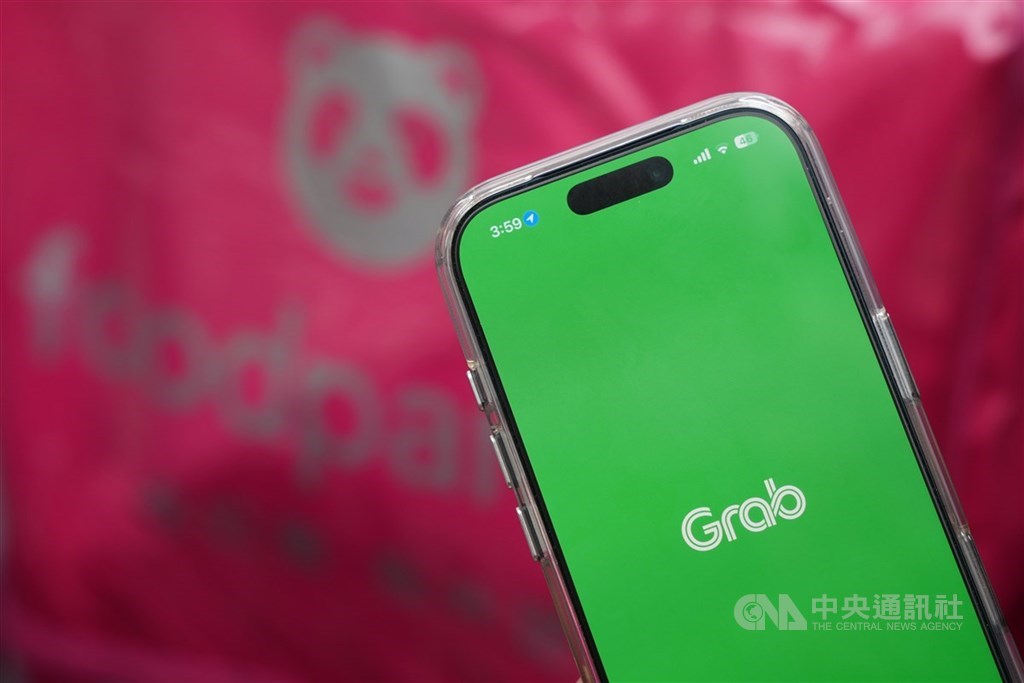
Grab: Huawei Map Partnership Excludes Taiwan, Alibaba Cloud Not Used
In response to data security concerns over its acquisition of foodpanda's Taiwan operations, Southeast Asian ride-hailing and delivery giant Grab clarified on May 20th that its map service, GrabMaps, partnership with Huawei does not include Taiwan, a policy it pledges to maintain permanently. Grab also emphasized that it does not use Alibaba Cloud for app data storage, with Amazon Web Services (AWS) as its primary provider and data mainly stored in Singapore. This move aims to assure Taiwan's Fair Trade Commission and the public of its compliance with data security and privacy laws.
📋 Article Processing Timeline
- 📰 Published: May 20, 2026 at 20:16
- 🔍 Collected: May 20, 2026 at 20:32 (15 min after Published)
- 🤖 AI Analyzed: May 20, 2026 at 20:57 (25 min after Collected)
Taipei, May 20 (CNA) - Amid data security concerns over its collaboration with Huawei on mapping data, Grab clarified today that its partnership between GrabMaps and Huawei does not cover the Taiwan market and promised to permanently maintain this practice. This means Huawei cannot access any Taiwanese mapping data through its relationship with Grab. Additionally, Grab stated it does not use Alibaba Cloud to store Grab App-related data, with AWS being its primary cloud service provider.
Grab, the Southeast Asian ride-hailing and food delivery leader, submitted an application to the Fair Trade Commission on March 27 to acquire foodpanda's Taiwan business. However, concerns have been raised about potential data security vulnerabilities in the merger, including a close technical licensing partnership between Grab's mapping brand, GrabMaps, and Huawei's Petal Maps, and the fact that one of Grab's cloud service providers is China-based Alibaba Cloud (part of Alibaba).
In a press release today, Grab addressed these data-related concerns by committing to comply with Taiwanese regulations and all applicable legal requirements. Any future operations in Taiwan will also adhere to relevant data governance and cybersecurity standards, as well as Taiwan's "Personal Data Protection Act." The company is actively engaging with local professional consultants to review its operational processes to ensure that, if its Taiwan business is approved, Grab's operations in Taiwan will fully comply with all relevant legal and regulatory requirements.
Grab further explained that its partnership with Huawei does not cover the Taiwan market and pledged to maintain this permanently. The collaboration between Grab and Huawei's Petal Maps is limited to eight Southeast Asian markets: Singapore, Malaysia, Indonesia, Thailand, Vietnam, the Philippines, Myanmar, and Cambodia, and does not involve any user data. Taiwan is not included in the cooperation agreement. Therefore, from both a contractual and technical standpoint, Huawei cannot access any Taiwan map data through its partnership with Grab.
Grab emphasized that it does not use Alibaba Cloud to store Grab App-related data. Its primary cloud service provider is Amazon Web Services (AWS). All data within the Grab App is stored in secure data centers outside of mainland China, with the main storage location being Singapore. Grab has a comprehensive data protection framework, including strict access control and audit monitoring measures, to ensure that only authorized personnel can access relevant data.
Regarding its shareholding structure, Grab reiterated that its institutional investor base is global, with over half from the United States, followed by Japan, the United Kingdom, and Singapore. Under Grab's dual-class share structure, Group CEO and Co-founder Anthony Tan holds majority voting rights. Consequently, all strategic decisions for the company are made independently by the Singapore-based management team.
According to filings and public information, as of January 31, 2026, Uber holds approximately 13% of Grab's common shares, but its voting rights are less than 4%. Uber's stake was acquired in 2018 when it sold its Southeast Asian business to Grab, a transaction that did not include any non-compete clauses applicable to Taiwan. Uber is not involved in Grab's daily operational management, and the director from Uber has recused themselves from all board decisions related to Taiwan.
Furthermore, Grab's other major shareholders include SoftBank (Japan/UK), with a 9.8% stake and 2.6% of voting rights, and Toyota Motor Corp (Japan), with a 5.4% stake and 1.4% of voting rights. Grab has no known Chinese institutional investors with a stake exceeding 5%.
Grab previously announced its acquisition of foodpanda's Taiwan business for about US$600 million (approximately NT$19.3 billion). If approved by the Fair Trade Commission, Grab expects to complete the transaction in the second half of 2026 and plans to complete platform integration in the first half of 2027, fully migrating former foodpanda users to the Grab application. The Fair Trade Commission's acting chairman, Chen Chih-min, stated in April that the case is still in the phase of supplementary document submission and will undergo formal review once the documents are complete.
Grab, the Southeast Asian ride-hailing and food delivery leader, submitted an application to the Fair Trade Commission on March 27 to acquire foodpanda's Taiwan business. However, concerns have been raised about potential data security vulnerabilities in the merger, including a close technical licensing partnership between Grab's mapping brand, GrabMaps, and Huawei's Petal Maps, and the fact that one of Grab's cloud service providers is China-based Alibaba Cloud (part of Alibaba).
In a press release today, Grab addressed these data-related concerns by committing to comply with Taiwanese regulations and all applicable legal requirements. Any future operations in Taiwan will also adhere to relevant data governance and cybersecurity standards, as well as Taiwan's "Personal Data Protection Act." The company is actively engaging with local professional consultants to review its operational processes to ensure that, if its Taiwan business is approved, Grab's operations in Taiwan will fully comply with all relevant legal and regulatory requirements.
Grab further explained that its partnership with Huawei does not cover the Taiwan market and pledged to maintain this permanently. The collaboration between Grab and Huawei's Petal Maps is limited to eight Southeast Asian markets: Singapore, Malaysia, Indonesia, Thailand, Vietnam, the Philippines, Myanmar, and Cambodia, and does not involve any user data. Taiwan is not included in the cooperation agreement. Therefore, from both a contractual and technical standpoint, Huawei cannot access any Taiwan map data through its partnership with Grab.
Grab emphasized that it does not use Alibaba Cloud to store Grab App-related data. Its primary cloud service provider is Amazon Web Services (AWS). All data within the Grab App is stored in secure data centers outside of mainland China, with the main storage location being Singapore. Grab has a comprehensive data protection framework, including strict access control and audit monitoring measures, to ensure that only authorized personnel can access relevant data.
Regarding its shareholding structure, Grab reiterated that its institutional investor base is global, with over half from the United States, followed by Japan, the United Kingdom, and Singapore. Under Grab's dual-class share structure, Group CEO and Co-founder Anthony Tan holds majority voting rights. Consequently, all strategic decisions for the company are made independently by the Singapore-based management team.
According to filings and public information, as of January 31, 2026, Uber holds approximately 13% of Grab's common shares, but its voting rights are less than 4%. Uber's stake was acquired in 2018 when it sold its Southeast Asian business to Grab, a transaction that did not include any non-compete clauses applicable to Taiwan. Uber is not involved in Grab's daily operational management, and the director from Uber has recused themselves from all board decisions related to Taiwan.
Furthermore, Grab's other major shareholders include SoftBank (Japan/UK), with a 9.8% stake and 2.6% of voting rights, and Toyota Motor Corp (Japan), with a 5.4% stake and 1.4% of voting rights. Grab has no known Chinese institutional investors with a stake exceeding 5%.
Grab previously announced its acquisition of foodpanda's Taiwan business for about US$600 million (approximately NT$19.3 billion). If approved by the Fair Trade Commission, Grab expects to complete the transaction in the second half of 2026 and plans to complete platform integration in the first half of 2027, fully migrating former foodpanda users to the Grab application. The Fair Trade Commission's acting chairman, Chen Chih-min, stated in April that the case is still in the phase of supplementary document submission and will undergo formal review once the documents are complete.