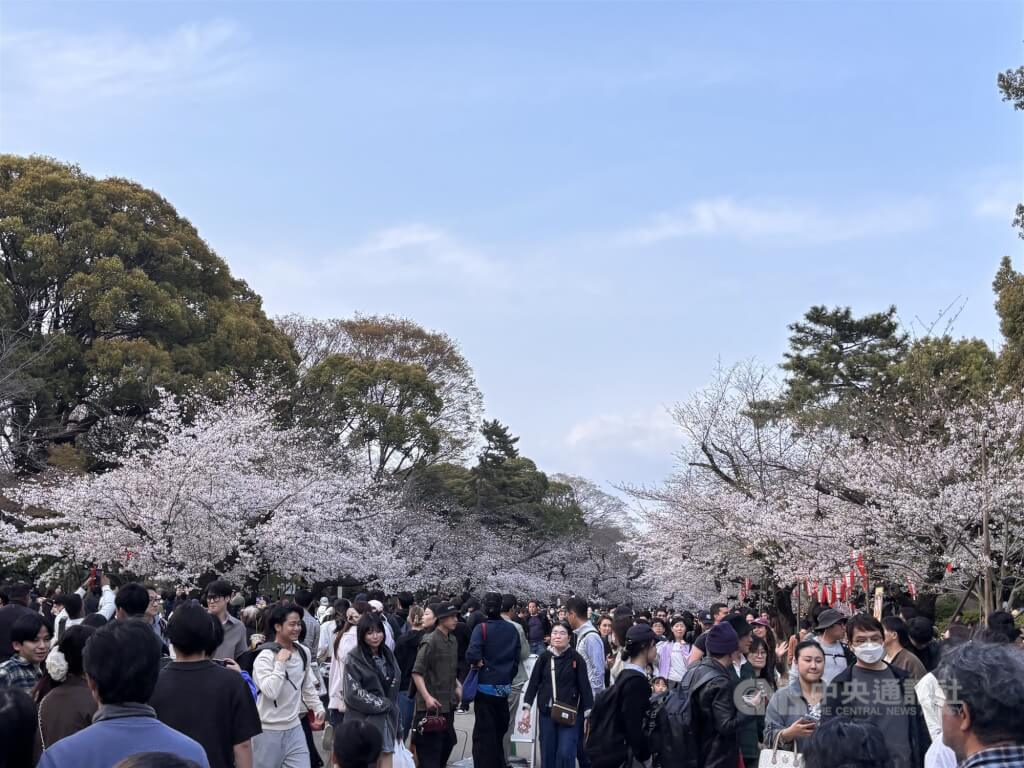
(CNA, Taipei, May 20) Data released today by the Japan National Tourism Organization (JNTO) shows that the number of Chinese visitors to Japan in April continued to fall to 331,000, a sharp decrease of 56.8% from 765,000 in the same period last year, and the fifth consecutive month of decline. Despite this, Japan received 3.6922 million foreign tourists in April, a new high for the year. According to comprehensive reports from Japanese media and Xinhua News Agency, the total number of Chinese visitors to Japan from January to April also dropped to 1.404 million, a 55.1% decrease from 3.13 million in the same period last year. In contrast, the cumulative total of foreign tourists Japan received from January to April exceeded 14 million, surpassing 14 million for the same period for the second consecutive year. According to JNTO, the number of tourists from nine countries, including South Korea, Taiwan, Vietnam, and France, set record highs for the same period in April. Notably, the number of French tourists set an all-time single-month record. JNTO stated that due to the Easter holiday, demand for travel to Japan was somewhat dispersed from late March to early April. However, with the arrival of Japan's cherry blossom season, the number of foreign tourists from East and Southeast Asian countries like South Korea and Vietnam, as well as from Europe, the Americas, and Australia, increased significantly. In November 2025, after Japanese Prime Minister Sanae Takaichi made a "Taiwan contingency" statement during a parliamentary inquiry, it triggered strong dissatisfaction from the Chinese side, which used various methods to boycott travel to Japan. These included major reductions in flights to Japan by Chinese airlines and travel agencies halting group tours to Japan, leading to a significant decrease in Chinese tourists to Japan since last November. (Editors: Chiu Kuo-chiang / Yang Sheng-ju) 1150520
FACT BOX
- Source: CNA (Central News Agency)
- Category: 國際