AI Agent Craze: Research Firm Estimates 19% and 68% YoY Growth for AI and General-Purpose Servers, Respectively
Research firm DIGITIMES predicts that a surge in enterprise demand for AI Agents will drive the global hardware market. This year, shipments of AI servers and general-purpose servers are expected to grow by 19% and 68% year-over-year, respectively. The report also forecasts that by 2026, terminal devices like AI glasses, AI laptops, and humanoid robots will experience rapid growth, while the soaring power demand from AI data centers will create opportunities for on-site power generation solutions like Solid Oxide Fuel Cells (SOFCs).
📋 Article Processing Timeline
- 📰 Published: May 20, 2026 at 22:48
- 🔍 Collected: May 20, 2026 at 23:02 (13 min after Published)
- 🤖 AI Analyzed: May 20, 2026 at 23:10 (8 min after Collected)
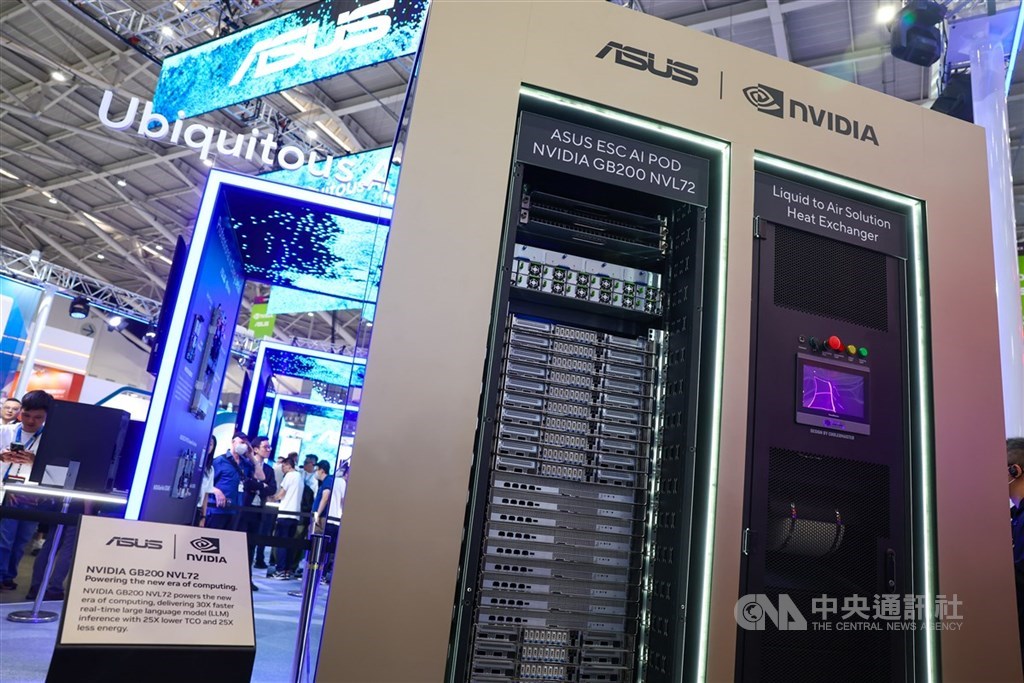
A surge in enterprise-level demand for AI Agents is set to boost the momentum of global server shipments through 2026. Research firm DIGITIMES estimates that this year, shipments of AI servers and general-purpose servers will see year-over-year growth of 19% and 68%, respectively. The competition between NVIDIA and Google in computing power supply will be a key focus of the market.
DIGITIMES points out that the soaring demand for large language models like Gemini and Claude has significantly benefited Tensor Processing Unit (TPU) servers. However, the server market will also face more severe supply chain bottlenecks.
On the other hand, the expanding demand for AI data centers is driving a rapid increase in electricity consumption, making Behind-The-Meter (BTM) power solutions, which enable on-site power generation and reduce reliance on external grids, a focal point. Among these, Solid Oxide Fuel Cells (SOFCs), with their advantage of rapid deployment, will be key to alleviating short-term energy problems.
DIGITIMES expects that by 2030, the deployment of SOFCs will leap from the megawatt (MW) level to the gigawatt (GW) level, with the global market size exceeding ten billion US dollars, attracting major players like Bloom Energy, Doosan Fuel Cell, and Delta Electronics to actively invest and position themselves.
DIGITIMES explains that the accelerated launch of AI products is creating opportunities for a variety of terminal devices. The rise of AI Agents, in particular, is comprehensively driving global demand for AI devices, including cars, robots, laptops, and AI glasses, which will face technological transformations and challenges.
DIGITIMES predicts that in 2026, the AI glasses market, benefiting from Meta and Chinese brands actively expanding into overseas markets, will achieve a growth rate of up to 105%, with a compound annual growth rate (CAGR) of 58% between 2025 and 2030. As for laptops, although the overall market may face a downward trend in 2026, the penetration rate of AI laptops is expected to exceed expectations, reaching over 60%.
With the enhanced collaborative computing capabilities of Central Processing Units (CPUs), Graphics Processing Units (GPUs), and Neural Processing Units (NPUs), coupled with the development of open-source models, more AI functions will shift from the cloud to terminal devices, further boosting future shipment momentum.
Regarding the robotics industry, catalyzed by Physical AI, humanoid robots have become a major market trend. DIGITIMES indicates that in 2026, the global mass production of humanoid robots will reach 38,000 units, with Chinese brands accounting for as high as 93% due to companies like Unitree and UBTECH being the first to enter mass production at the ten-thousand-unit level. As players like Tesla and Boston Dynamics gradually follow suit to reach this scale, global production is estimated to reach 183,000 units by 2030.
Autonomous driving technology is also benefiting from Physical AI, evolving from traditional driver assistance to intelligent development with the ability to understand and make decisions in the physical world. The maturation of end-to-end models, world models, and high-compute autonomous driving chips will accelerate the commercialization process of autonomous applications like the Tesla, Waymo Robotaxi, and Aurora Robotruck, moving towards large-scale deployment.
DIGITIMES points out that the soaring demand for large language models like Gemini and Claude has significantly benefited Tensor Processing Unit (TPU) servers. However, the server market will also face more severe supply chain bottlenecks.
On the other hand, the expanding demand for AI data centers is driving a rapid increase in electricity consumption, making Behind-The-Meter (BTM) power solutions, which enable on-site power generation and reduce reliance on external grids, a focal point. Among these, Solid Oxide Fuel Cells (SOFCs), with their advantage of rapid deployment, will be key to alleviating short-term energy problems.
DIGITIMES expects that by 2030, the deployment of SOFCs will leap from the megawatt (MW) level to the gigawatt (GW) level, with the global market size exceeding ten billion US dollars, attracting major players like Bloom Energy, Doosan Fuel Cell, and Delta Electronics to actively invest and position themselves.
DIGITIMES explains that the accelerated launch of AI products is creating opportunities for a variety of terminal devices. The rise of AI Agents, in particular, is comprehensively driving global demand for AI devices, including cars, robots, laptops, and AI glasses, which will face technological transformations and challenges.
DIGITIMES predicts that in 2026, the AI glasses market, benefiting from Meta and Chinese brands actively expanding into overseas markets, will achieve a growth rate of up to 105%, with a compound annual growth rate (CAGR) of 58% between 2025 and 2030. As for laptops, although the overall market may face a downward trend in 2026, the penetration rate of AI laptops is expected to exceed expectations, reaching over 60%.
With the enhanced collaborative computing capabilities of Central Processing Units (CPUs), Graphics Processing Units (GPUs), and Neural Processing Units (NPUs), coupled with the development of open-source models, more AI functions will shift from the cloud to terminal devices, further boosting future shipment momentum.
Regarding the robotics industry, catalyzed by Physical AI, humanoid robots have become a major market trend. DIGITIMES indicates that in 2026, the global mass production of humanoid robots will reach 38,000 units, with Chinese brands accounting for as high as 93% due to companies like Unitree and UBTECH being the first to enter mass production at the ten-thousand-unit level. As players like Tesla and Boston Dynamics gradually follow suit to reach this scale, global production is estimated to reach 183,000 units by 2030.
Autonomous driving technology is also benefiting from Physical AI, evolving from traditional driver assistance to intelligent development with the ability to understand and make decisions in the physical world. The maturation of end-to-end models, world models, and high-compute autonomous driving chips will accelerate the commercialization process of autonomous applications like the Tesla, Waymo Robotaxi, and Aurora Robotruck, moving towards large-scale deployment.