South Korean, Japanese Leaders Meet for 4th Time in 7 Months; Experts Say Positive Ties to Continue for Now
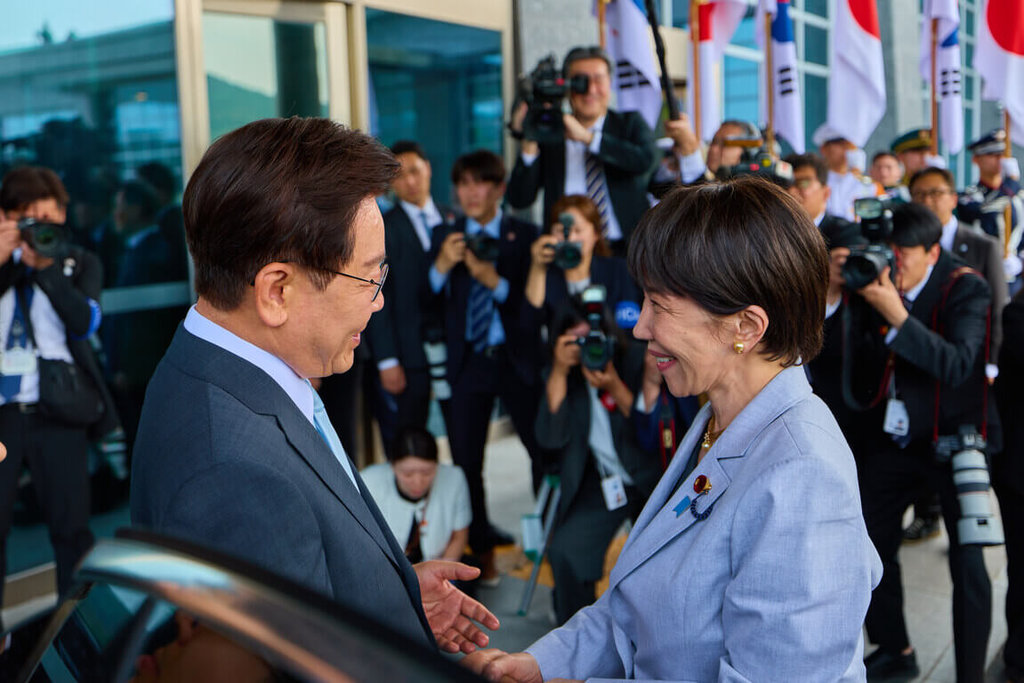
South Korean President Lee Jae-myung and Japanese Prime Minister Takaichi Sanae held their fourth meeting in under seven months on the 19th, emphasizing the need for enhanced cooperation amidst challenges like supply chain and energy market instability due to the war in the Middle East. Experts believe the bilateral relationship will maintain its positive trend for the time being. The leaders discussed stabilizing energy and critical mineral supplies, as well as the importance of trilateral cooperation with the United States. Despite unprecedented exchanges, such as visiting each other's hometowns, experts warn that the relationship remains fragile due to unresolved historical issues like 'conscripted labor' and 'comfort women'.
📋 Article Processing Timeline
- 📰 Published: May 19, 2026 at 22:56
- 🔍 Collected: May 19, 2026 at 23:01 (5 min after Published)
- 🤖 AI Analyzed: May 19, 2026 at 23:23 (21 min after Collected)
South Korean President Lee Jae-myung and Japanese Prime Minister Takaichi Sanae held their fourth talks in less than seven months today, highlighting the need for the Asian archrivals to strengthen cooperation as they face challenges such as the war in Iran. Experts believe the relationship between the two countries will temporarily maintain its positive development trend.
Associated Press reports that Lee, at a joint post-meeting press conference with Takaichi Sanae, stated that due to the war in the Middle East, supply chains and energy markets are unstable, thus requiring more bilateral cooperation than ever before.
Takaichi made similar remarks, stating that the issues they discussed included stabilizing energy and critical mineral supplies, and promoting exchange arrangements for crude oil, petroleum products, and natural gas.
The two leaders said they also discussed the importance of trilateral cooperation between South Korea, Japan, and the United States.
Experts point out that there are currently no major sticking points in Korea-Japan relations, and they will temporarily maintain a positive development trajectory.
Choi Eunmi, a Japan expert at the Asan Institute for Policy Studies in South Korea, said, "The two countries are now focusing more on cooperation rather than controversial issues. They will now think that a negative bilateral relationship is not good for anyone."
Both South Korea and Japan are key U.S. allies and democracies, but their bilateral relations have long experienced severe fluctuations due to Japan's 35-year colonial rule of the Korean Peninsula before the end of World War II.
Before Lee and Takaichi came to power, leaders of South Korea and Japan had begun to improve relations in 2023, attempting to move past historical disputes and strengthen bilateral cooperation, citing common challenges such as the U.S.-China strategic competition, vulnerable supply chains, and North Korea's nuclear development.
When Lee and Takaichi each took office last year, observers were concerned about Takaichi's reputation as a right-wing hawk on security issues, and also worried that the politically liberal Lee would be more inclined towards North Korea and China and distance himself from the U.S. and Japan.
However, both South Korea and Japan have maintained cooperation, and some unprecedented forms of exchange have even emerged.
In August last year (two months before Takaichi became Prime Minister), Lee chose Japan as the location for his first bilateral summit, becoming the first South Korean leader to do so.
In January this year, Lee met with Takaichi Sanae in the ancient Japanese capital of Nara, which is Takaichi's hometown. After the talks, at Takaichi's arrangement, they played drums together to K-pop hits like "Dynamite" by the Korean supergroup BTS.
Today, Lee hosted Takaichi in his own hometown—Andong in southeastern South Korea, a city famous for its centuries-old folk village, a UNESCO World Heritage site. This also marks the first time that incumbent leaders of the two countries have visited each other's hometowns.
Lee once said that he and Takaichi both believe that the actions of national leaders must be different from those of ordinary politicians. But many observers say the two may feel the need to strengthen cooperation because they face more severe geopolitical challenges than their predecessors, including U.S. President Donald Trump's 'America First' policy and the global economic losses caused by the war in Iran.
Both South Korea and Japan have pledged hundreds of billions of dollars in business investments in the United States, and Trump's tariff wars and transaction-oriented security policies have also threatened the trust many South Koreans and Japanese have in the U.S.
Experts point out that Korea-Japan relations need to be handled with care. If explosive issues such as 'conscripted laborers' (Koreans forced to work for Japanese companies) and 'comfort women' from the World War II era are not properly addressed, their relationship could suffer an unexpected setback. The debate has subsided as both governments try to avoid public discussion of these issues.
But Choi Eunmi said, "Currently, neither side is talking about how to resolve these disputes, or how to prevent them from recurring. We don't know when such conflicts might emerge."
Associated Press reports that Lee, at a joint post-meeting press conference with Takaichi Sanae, stated that due to the war in the Middle East, supply chains and energy markets are unstable, thus requiring more bilateral cooperation than ever before.
Takaichi made similar remarks, stating that the issues they discussed included stabilizing energy and critical mineral supplies, and promoting exchange arrangements for crude oil, petroleum products, and natural gas.
The two leaders said they also discussed the importance of trilateral cooperation between South Korea, Japan, and the United States.
Experts point out that there are currently no major sticking points in Korea-Japan relations, and they will temporarily maintain a positive development trajectory.
Choi Eunmi, a Japan expert at the Asan Institute for Policy Studies in South Korea, said, "The two countries are now focusing more on cooperation rather than controversial issues. They will now think that a negative bilateral relationship is not good for anyone."
Both South Korea and Japan are key U.S. allies and democracies, but their bilateral relations have long experienced severe fluctuations due to Japan's 35-year colonial rule of the Korean Peninsula before the end of World War II.
Before Lee and Takaichi came to power, leaders of South Korea and Japan had begun to improve relations in 2023, attempting to move past historical disputes and strengthen bilateral cooperation, citing common challenges such as the U.S.-China strategic competition, vulnerable supply chains, and North Korea's nuclear development.
When Lee and Takaichi each took office last year, observers were concerned about Takaichi's reputation as a right-wing hawk on security issues, and also worried that the politically liberal Lee would be more inclined towards North Korea and China and distance himself from the U.S. and Japan.
However, both South Korea and Japan have maintained cooperation, and some unprecedented forms of exchange have even emerged.
In August last year (two months before Takaichi became Prime Minister), Lee chose Japan as the location for his first bilateral summit, becoming the first South Korean leader to do so.
In January this year, Lee met with Takaichi Sanae in the ancient Japanese capital of Nara, which is Takaichi's hometown. After the talks, at Takaichi's arrangement, they played drums together to K-pop hits like "Dynamite" by the Korean supergroup BTS.
Today, Lee hosted Takaichi in his own hometown—Andong in southeastern South Korea, a city famous for its centuries-old folk village, a UNESCO World Heritage site. This also marks the first time that incumbent leaders of the two countries have visited each other's hometowns.
Lee once said that he and Takaichi both believe that the actions of national leaders must be different from those of ordinary politicians. But many observers say the two may feel the need to strengthen cooperation because they face more severe geopolitical challenges than their predecessors, including U.S. President Donald Trump's 'America First' policy and the global economic losses caused by the war in Iran.
Both South Korea and Japan have pledged hundreds of billions of dollars in business investments in the United States, and Trump's tariff wars and transaction-oriented security policies have also threatened the trust many South Koreans and Japanese have in the U.S.
Experts point out that Korea-Japan relations need to be handled with care. If explosive issues such as 'conscripted laborers' (Koreans forced to work for Japanese companies) and 'comfort women' from the World War II era are not properly addressed, their relationship could suffer an unexpected setback. The debate has subsided as both governments try to avoid public discussion of these issues.
But Choi Eunmi said, "Currently, neither side is talking about how to resolve these disputes, or how to prevent them from recurring. We don't know when such conflicts might emerge."