Green: Taiwan Strait Instability Originates from China; Hopes All Parties Will Strengthen Defense Capabilities
Responding to the Ministry of National Defense's release of photos showing China's Liaoning carrier passing through the Taiwan Strait, the DPP legislative caucus stated today that the Taiwan Strait's instability comes from China and urged all parties to work together to guard national security and strengthen defense capabilities.
📋 Article Processing Timeline
- 📰 Published: April 21, 2026 at 12:40
- 🔍 Collected: April 21, 2026 at 13:01 (21 min after Published)
- 🤖 AI Analyzed: April 21, 2026 at 13:43 (41 min after Collected)
Taipei, Taiwan – April 21, 2026 – Following the Ministry of National Defense's release of photos yesterday showing the Chinese aircraft carrier Liaoning passing through the Taiwan Strait, sparking discussion, the Democratic Progressive Party (DPP) legislative caucus stated today that the reason for the Taiwan Strait's instability is China, and expressed hope that all parties, regardless of political affiliation, will unite to protect national security and strengthen defense capabilities.
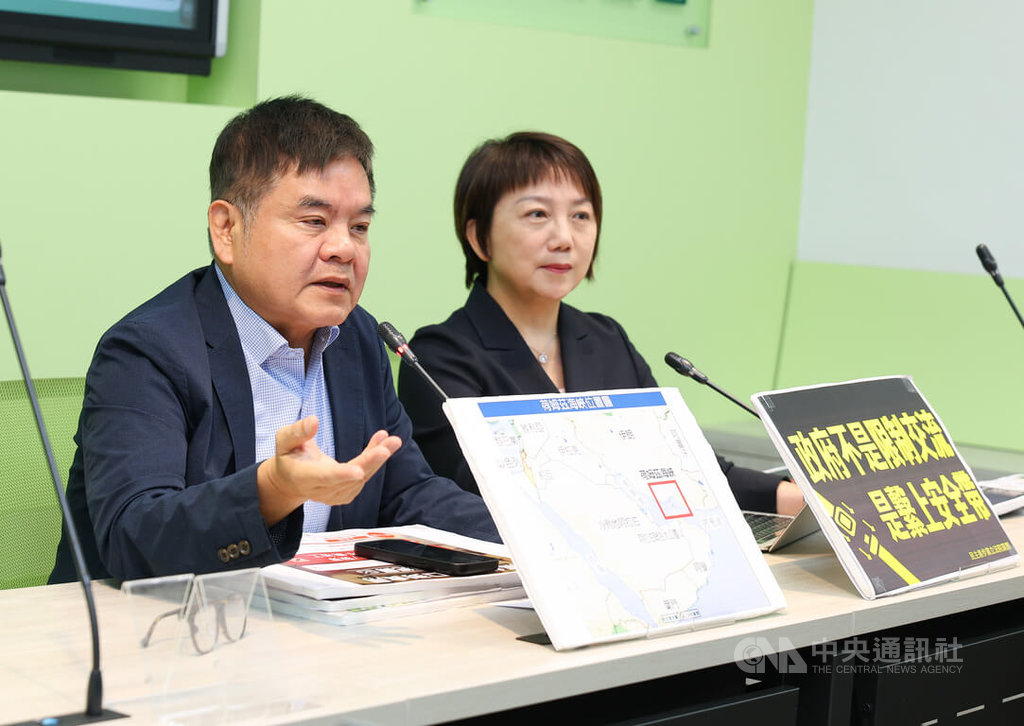
DPP Legislative Caucus Convener Chuang Jui-hsiung and Secretary-General Fan Yun held a press conference at the Legislative Yuan today.
Regarding the Chinese aircraft carrier Liaoning's passage through the Taiwan Strait yesterday, Chuang Jui-hsiung explained that China's intentions toward Taiwan are not limited to the Liaoning incident alone; China frequently engages in military intimidation. He stated that the tension between the two sides is perceived by the public and the international community as originating from China. Chuang emphasized that in the face of issues concerning national survival and the well-being of 23 million people in Taiwan, he hopes all political parties will avoid excessive competition and instead jointly strengthen defense capabilities and enhance asymmetric defense power. This, he asserted, is not only Taiwan's path to survival but also the direction the government is striving towards.
When asked by the media about a conscript undergoing military training at the Jinhou Military Training Center in Yilan, who is a dual national of Taiwan and Japan and was allegedly frequently insulted by his company commander in public, Fan Yun explained that in the past, instances of bullying or unreasonable treatment have occurred in the military. However, she noted that during the process of nationalization and reform of the military system, mechanisms for appeals and handling bullying have become increasingly sound. She expressed confidence that the Ministry of National Defense has handled the matter properly. If there are still unresolved issues, she added, there are channels for appeals and petitions, and she hopes such incidents will not occur in the future.
When media pressed on the issue of the Chinese State Council Taiwan Affairs Office releasing 10 Taiwan-related measures, to which the Mainland Affairs Council responded by calling it united front tactics, Chuang Jui-hsiung opined that it's not just the Mainland Affairs Council that sees it as a united front tactic; the vast majority of Taiwanese people will also believe that these measures carry a very deep political purpose, especially since they have set significant preconditions. Chuang stressed that for the DPP and the Taiwanese people, what they anticipate is healthy, normal, and orderly economic and trade exchanges. Furthermore, he pointed out that both Taiwan and China are members of the World Trade Organization. As long as international or cross-strait economic and trade interactions proceed according to international norms, no one will object. In contrast, he argued, such preferential measures from the CCP set too many political preconditions, making them unhealthy, and excessive political conditions will also interfere with cross-strait economic and trade exchanges. (Edited by Chang Jo-yao) 1150421
DPP Legislative Caucus Convener Chuang Jui-hsiung and Secretary-General Fan Yun held a press conference at the Legislative Yuan today.
Regarding the Chinese aircraft carrier Liaoning's passage through the Taiwan Strait yesterday, Chuang Jui-hsiung explained that China's intentions toward Taiwan are not limited to the Liaoning incident alone; China frequently engages in military intimidation. He stated that the tension between the two sides is perceived by the public and the international community as originating from China. Chuang emphasized that in the face of issues concerning national survival and the well-being of 23 million people in Taiwan, he hopes all political parties will avoid excessive competition and instead jointly strengthen defense capabilities and enhance asymmetric defense power. This, he asserted, is not only Taiwan's path to survival but also the direction the government is striving towards.
When asked by the media about a conscript undergoing military training at the Jinhou Military Training Center in Yilan, who is a dual national of Taiwan and Japan and was allegedly frequently insulted by his company commander in public, Fan Yun explained that in the past, instances of bullying or unreasonable treatment have occurred in the military. However, she noted that during the process of nationalization and reform of the military system, mechanisms for appeals and handling bullying have become increasingly sound. She expressed confidence that the Ministry of National Defense has handled the matter properly. If there are still unresolved issues, she added, there are channels for appeals and petitions, and she hopes such incidents will not occur in the future.
When media pressed on the issue of the Chinese State Council Taiwan Affairs Office releasing 10 Taiwan-related measures, to which the Mainland Affairs Council responded by calling it united front tactics, Chuang Jui-hsiung opined that it's not just the Mainland Affairs Council that sees it as a united front tactic; the vast majority of Taiwanese people will also believe that these measures carry a very deep political purpose, especially since they have set significant preconditions. Chuang stressed that for the DPP and the Taiwanese people, what they anticipate is healthy, normal, and orderly economic and trade exchanges. Furthermore, he pointed out that both Taiwan and China are members of the World Trade Organization. As long as international or cross-strait economic and trade interactions proceed according to international norms, no one will object. In contrast, he argued, such preferential measures from the CCP set too many political preconditions, making them unhealthy, and excessive political conditions will also interfere with cross-strait economic and trade exchanges. (Edited by Chang Jo-yao) 1150421