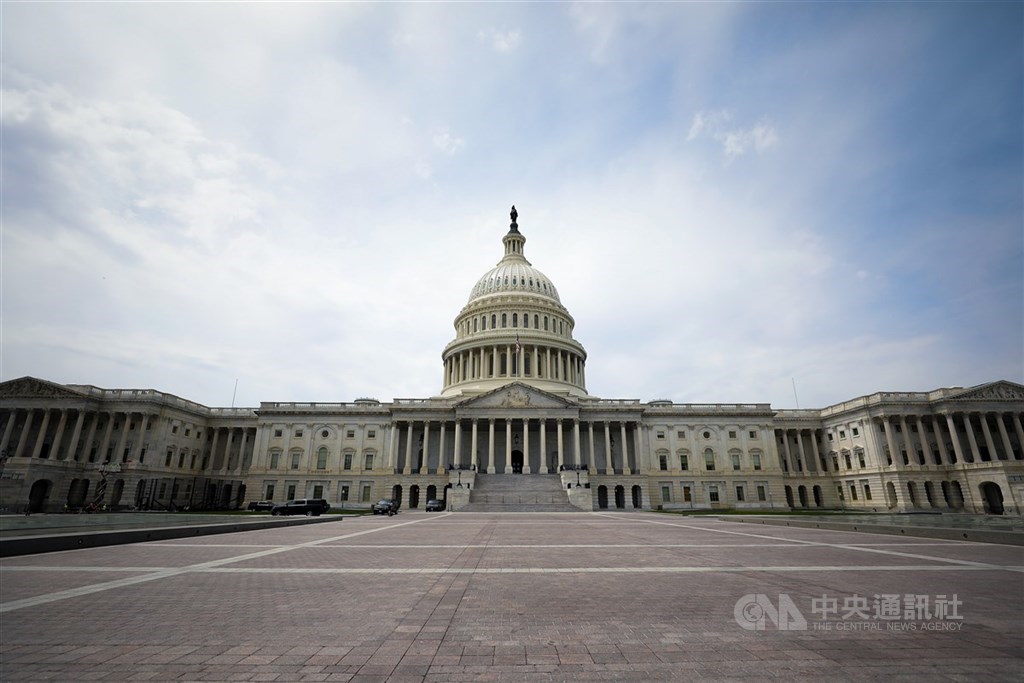
WASHINGTON (AP) — US Senate Republicans on Thursday blocked a Democratic measure that would have required President Donald Trump to seek authorization from Congress for any further military action against Iran, as the war between the US and Iran entered its seventh week.
The Senate voted 52-47 to reject the advancement of the Democratic measure, underscoring Republican support for Trump's war policy even as the conflict has continued for more than six weeks.
In an interview aired Thursday by Fox News, Trump stated that the war was nearing its end.
Mediator General Asim Munir, Chief of Army Staff of Pakistan, arrived in Tehran on Thursday in further efforts to prevent the escalation of hostilities.
This marks the fourth time since the outbreak of the US-Iran war that Democrats have pushed for a vote on war powers legislation in the Senate. With the exception of Senator Rand Paul of Kentucky, Republicans have maintained a unified stance, resulting in the failure of all Democratic proposals.
Senator John Fetterman, a progressive from Pennsylvania, was the sole Republican to vote against his party's proposal.
Senator Jim Risch, the Republican chairman of the Foreign Relations Committee from Idaho, stated before the vote that supporting the Democratic war powers proposal was akin to siding with Iran.
Although the US Constitution vests the power to declare war in Congress, not the president, presidents from both parties have historically argued that this provision does not apply to short-term actions or when the nation faces immediate threats.
White House officials and nearly all Republicans in Congress believe that Trump, as commander-in-chief, has the authority to order limited military action to protect the United States, and that his decisions are legal and within his purview.
Polls indicate that the war is not popular among the general American public, but support is significantly divided along party lines. A Reuters/Ipsos poll released on March 31st showed that 60% of Americans oppose US military action against Iran. However, within the Republican base, 74% expressed support, while only 7% of Democrats approved of the war with Iran. (Compiled by Ji Jinling) 1150416
Choose to stand with the facts. Your every sponsorship is the power to protect the freedom of the press. Download the CNA 'First-Hand News' APP to grasp the latest news in real-time. Text, images, and audio on this website may not be reproduced, publicly broadcast, or publicly transmitted and used without authorization.
FACT BOX
- Source: CNA (Central News Agency)
- Category: regulation