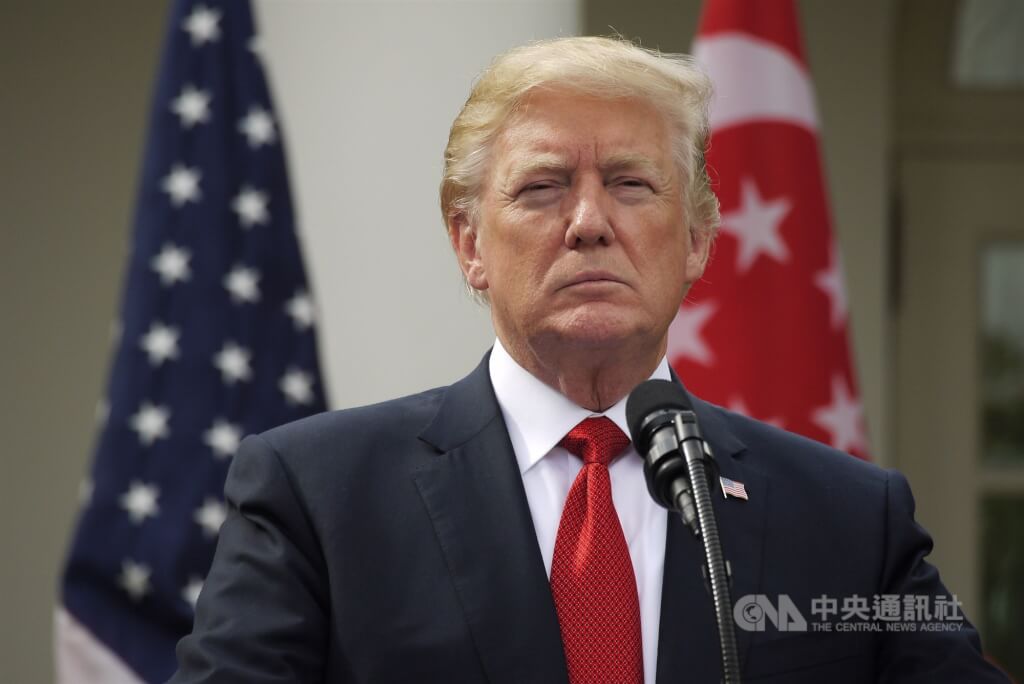
WASHINGTON (CNA) – In response to US President Trump's repeated threats of a potential withdrawal from NATO, Europe is accelerating the formulation of a "European NATO" contingency plan to maintain the operation of its defense system. The formation of this concept is primarily due to Germany's change in attitude.
The Wall Street Journal reported that this plan aims to ensure that even if the United States withdraws, Europe can rely on the existing military system of the North Atlantic Treaty Organization (NATO) for self-defense, and Germany, which has long opposed acting alone, has now expressed its support.
Some officials refer to this plan as "European NATO." Officials promoting the plan stated that the goal is to integrate more Europeans into NATO's command and control levels and to supplement existing US military forces with Europe's own military assets.
Participants emphasized that these plans are not intended to replace the existing NATO system, but rather to maintain deterrence against Russia, operational continuity, and the credibility of nuclear deterrence, even if Washington withdraws troops from Europe or, as President Trump has threatened, refuses to defend Europe.
This plan was first conceived last year, highlighting Europe's high anxiety about the reliability of the United States as an ally. The plan accelerated after Trump threatened to seize Greenland from NATO member Denmark; now, facing a stalemate over Europe's refusal to support US actions against Iran, the issue has become even more urgent.
A crucial factor is that Germany's shift in political stance has boosted this plan. For decades, Germany resisted initiatives led by France to strengthen European defense autonomy, preferring to view the United States as the ultimate guarantor of European security. However, informed sources revealed that after current German Chancellor Friedrich Merz took office, this attitude began to change, primarily due to concerns about the reliability of the United States as an ally during Trump's administration and in the future.
This challenge is extremely difficult. From an overall structural perspective, NATO is led by the United States in almost every aspect, from logistics and intelligence to the highest military command.
Trump has long demanded that Europe bear more responsibility, and now European countries are trying to do so. The report points out that the difference is that European countries are now taking this step proactively due to Trump's increasing hostility, rather than simply at the urging of the United States. Trump recently criticized European allies as "cowards" and called NATO a paper tiger, specifically mentioning that Russian President Vladimir Putin "also knows this very well."
Finnish President Alexander Stubb, one of the few European leaders who maintains close ties with Trump and is involved in planning "European NATO," stated: "The process of the United States transferring burdens to Europe is underway and will continue... This has become part of the US defense and national security strategy."
Earlier this month, Trump threatened to withdraw from NATO because NATO allies were unwilling to support his actions against Iran, stating that the decision "no longer needs to be reconsidered." Any withdrawal from NATO would require US congressional approval, but as commander-in-chief, Trump could still unilaterally withdraw troops or assets stationed in Europe, or suspend support.
For Europe, the decisive political change catalyst is Germany's historic shift. Germany, where US nuclear weapons are deployed, has for years avoided questioning the US role in guaranteeing European security. Germany and other European countries have always worried that promoting European leadership within NATO would give the US an excuse to reduce its own involvement, which worried many Europeans.
However, informed sources said that late last year, Merz began to re-evaluate this long-held view because he believed Trump was prepared to abandon Ukraine. Merz worried that Trump was confusing victims and perpetrators in the war, and that US policy within NATO no longer had clear value guidance.
Nevertheless, sources indicated that Merz was unwilling to publicly question NATO due to the risks; instead, European countries must take on greater responsibility. Sources said that ideally, the US would remain in NATO, but European countries would be responsible for primary defense.
German Defense Minister Boris Pistorius stated that current discussions within NATO have not always been smooth, but if decisions can be reached, it will bring opportunities for Europe. He called NATO "irreplaceable for both Europe and the United States."
He said that Europeans must take on more defense responsibilities, and NATO must become more European to maintain its transatlantic nature.
Related officials revealed that Germany's change in stance has led to broader consensus among countries such as the United Kingdom, France, Poland, Nordic countries, and Canada, which now view this contingency plan as a volunteer alliance within NATO.
Europe's efforts represent a fundamental shift in thinking, but achieving the goal is fraught with difficulties. The Supreme Allied Commander Europe (SACEUR) has always been an American, and US officials have stated no intention of relinquishing this position. Additionally, no European member state has a position within NATO sufficient to replace the United States as a military leader, partly because only the United States can provide a nuclear umbrella for the entire European continent, which is the founding principle of NATO's "mutual deterrence through strength."
Retired US Navy Admiral James Foggo, who held important positions in NATO and related organizations, said that the Europeanization of NATO "should have happened a long time ago." He believes that European member states have many highly professional military officers and leaders. "I think they have the capability, they have some equipment, but they need to accelerate investment and enhance combat power." (Compiled by Hsu Chung-che) 2026-04-15
FACT BOX
- Source: CNA (Central News Agency)
- Category: Taiwan