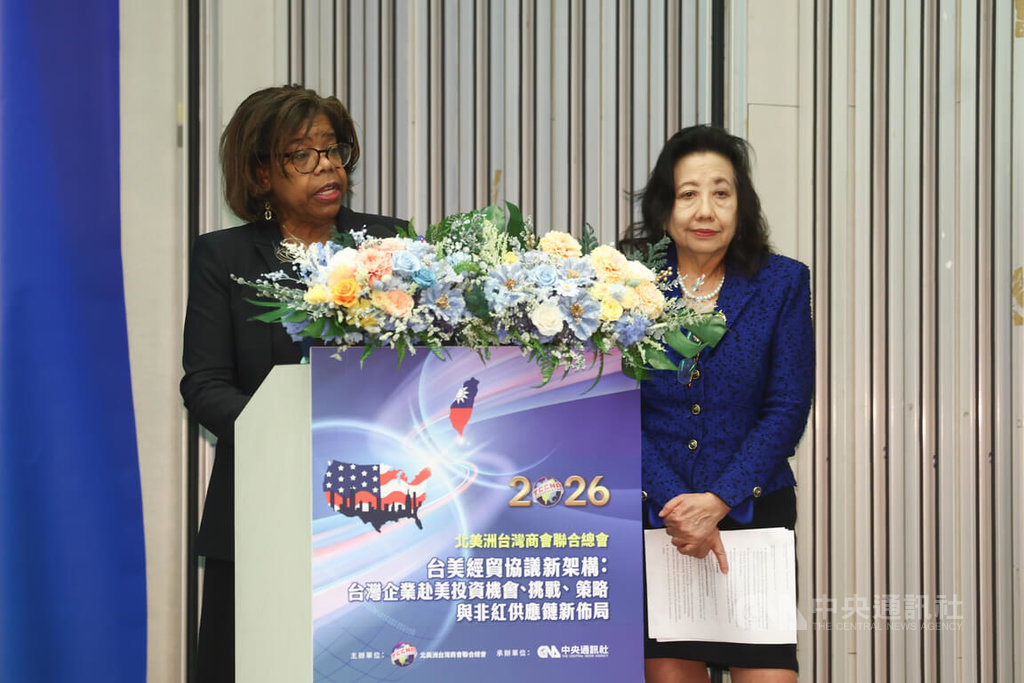
Taiwan-US ART Sparks Investment Wave in the US; North American Taiwanese Chamber of Commerce Establishes Consultation Platform to Aid Landing
The North American Taiwanese Chamber of Commerce hosted a forum on the new framework of the Taiwan-US economic and trade agreement, discussing investment opportunities for Taiwanese enterprises in the US. The ART agreement has led to Taiwan committing US$250 billion in private investment across various sectors. A consultation platform has been launched to assist Taiwanese businesses investing in the US, and Taiwan's Ministry of Economic Affairs has allocated NT$46 billion to support SMEs.
📋 Article Processing Timeline
- 📰 Published: April 7, 2026 at 13:09
- 🔍 Collected: April 7, 2026 at 14:00 (51 min after Published)
- 🤖 AI Analyzed: April 15, 2026 at 12:41 (190h 41m after Collected)
The 2026 'New Framework for Taiwan-US Economic and Trade Agreement: Investment Opportunities, Challenges, Strategies, and New Layout of Non-Red Supply Chain for Taiwanese Enterprises in the US' forum, hosted by the North American Taiwanese Chamber of Commerce, commenced today. Hsu Chia-ching, Minister of the Overseas Community Affairs Council; Susan C. Lee, Maryland Secretary of State; Ko Pao-hsuan, Permanent Vice Minister of Foreign Affairs; Chiang Wen-jo, Political Deputy Minister of Economic Affairs; and Chang Pei-jen, President of ITRI, were invited to attend.
At the same time, representatives from the Maryland state government, Iowa, Wisconsin, North Dakota, and Indiana also participated in the grand event. Li Chun, Senior Deputy Executive Director of the WTO and RTA Center at the Chung-Hua Institution for Economic Research, was invited to deliver a special lecture on Taiwan-US economic and trade relations, drawing a large and distinguished audience.
Hsu Chia-ching stated that Taiwan is the fourth largest trading partner of the US, and the US is Taiwan's largest trading partner, indicating deepening Taiwan-US economic and trade relations. Furthermore, Taiwan is an important defense industry supply chain for the US. The Executive Yuan's recent proposal of a special defense budget of NT$1.25 trillion over eight years is crucial, not only covering procurement from the US but also investing in domestic industries. She urged all sectors to continue expressing support for this budget to Congress.
Hsu Chia-ching also mentioned that direct flights from Taiwan to Washington D.C. will commence on June 26, further narrowing the distance between Taiwan and the US and continuously deepening development. In addition, direct flights to the US have expanded to new locations in recent years, including Dallas and Phoenix, demonstrating the rapid development of Taiwan-US economic and trade relations.
Bai Yue-chu stated in her address that the signing of the ART has brought Taiwan-US relations to a historic high. Taiwan has committed US$250 billion in private investment, covering semiconductors, defense industry, biotechnology, clean energy, electric vehicles, and other fields.
She emphasized that the North American Taiwanese Chamber of Commerce immediately launched a matching platform to provide consultation channels for friends who are about to invest in the US. Today, 35 professionals from various industries working in the US participated in the forum to share their experiences, helping everyone avoid detours and maximize the value of every dollar.
Chiang Wen-jo stated that the signing of the ART has solidified bilateral economic and trade relations. To assist domestic small and medium-sized enterprises in responding to changes in the international economic and trade situation, the Ministry of Economic Affairs has initially allocated NT$46 billion to help businesses mitigate the impact of tariffs through preferential loans, enhanced R&D capabilities, and expanded overseas markets. She also particularly thanked the North American Taiwanese Chamber of Commerce for actively conducting outreach visits, including visiting the US Congress in March this year to urge the US to promptly pass the 'Agreement on the Avoidance of Double Taxation' (ADTA).
Lee Feng-chien stated in her address that Taiwan and Maryland have maintained close exchanges for a long time, and both sides have high complementarity in technology, industry, and talent. She emphasized that Maryland will continue to deepen its partnership with Taiwan in promoting 'subnational diplomacy' and international cooperation.
Ko Pao-hsuan pointed out that in Taiwan-US cooperation, progress is being made towards building industrial clusters in the US. Many excellent Taiwanese manufacturers are currently establishing themselves locally, gradually forming cross-state information and communication and high-tech industrial clusters. Through substantive investment, Taiwan and the US are working together to build a more resilient, secure, and trustworthy non-red supply chain. (Edited by Pan Yi-ching) 1150407
At the same time, representatives from the Maryland state government, Iowa, Wisconsin, North Dakota, and Indiana also participated in the grand event. Li Chun, Senior Deputy Executive Director of the WTO and RTA Center at the Chung-Hua Institution for Economic Research, was invited to deliver a special lecture on Taiwan-US economic and trade relations, drawing a large and distinguished audience.
Hsu Chia-ching stated that Taiwan is the fourth largest trading partner of the US, and the US is Taiwan's largest trading partner, indicating deepening Taiwan-US economic and trade relations. Furthermore, Taiwan is an important defense industry supply chain for the US. The Executive Yuan's recent proposal of a special defense budget of NT$1.25 trillion over eight years is crucial, not only covering procurement from the US but also investing in domestic industries. She urged all sectors to continue expressing support for this budget to Congress.
Hsu Chia-ching also mentioned that direct flights from Taiwan to Washington D.C. will commence on June 26, further narrowing the distance between Taiwan and the US and continuously deepening development. In addition, direct flights to the US have expanded to new locations in recent years, including Dallas and Phoenix, demonstrating the rapid development of Taiwan-US economic and trade relations.
Bai Yue-chu stated in her address that the signing of the ART has brought Taiwan-US relations to a historic high. Taiwan has committed US$250 billion in private investment, covering semiconductors, defense industry, biotechnology, clean energy, electric vehicles, and other fields.
She emphasized that the North American Taiwanese Chamber of Commerce immediately launched a matching platform to provide consultation channels for friends who are about to invest in the US. Today, 35 professionals from various industries working in the US participated in the forum to share their experiences, helping everyone avoid detours and maximize the value of every dollar.
Chiang Wen-jo stated that the signing of the ART has solidified bilateral economic and trade relations. To assist domestic small and medium-sized enterprises in responding to changes in the international economic and trade situation, the Ministry of Economic Affairs has initially allocated NT$46 billion to help businesses mitigate the impact of tariffs through preferential loans, enhanced R&D capabilities, and expanded overseas markets. She also particularly thanked the North American Taiwanese Chamber of Commerce for actively conducting outreach visits, including visiting the US Congress in March this year to urge the US to promptly pass the 'Agreement on the Avoidance of Double Taxation' (ADTA).
Lee Feng-chien stated in her address that Taiwan and Maryland have maintained close exchanges for a long time, and both sides have high complementarity in technology, industry, and talent. She emphasized that Maryland will continue to deepen its partnership with Taiwan in promoting 'subnational diplomacy' and international cooperation.
Ko Pao-hsuan pointed out that in Taiwan-US cooperation, progress is being made towards building industrial clusters in the US. Many excellent Taiwanese manufacturers are currently establishing themselves locally, gradually forming cross-state information and communication and high-tech industrial clusters. Through substantive investment, Taiwan and the US are working together to build a more resilient, secure, and trustworthy non-red supply chain. (Edited by Pan Yi-ching) 1150407
FAQ
What is the purpose of the consultation platform established by the North American Taiwanese Chamber of Commerce?
The platform aims to provide consultation services to Taiwanese businesses planning to invest in the United States, helping them navigate the process and maximize their investment value.