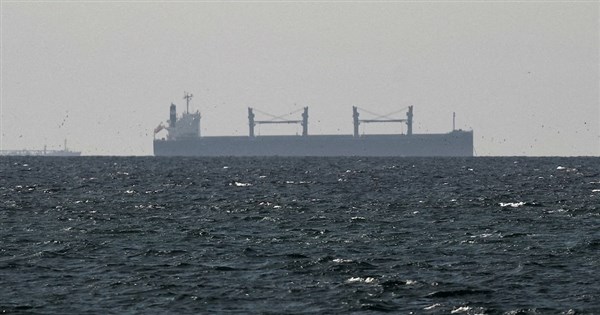
Strait of Hormuz Not Fully Halted: Eight Ships Still Pass on First Day of US Blockade
Despite the US imposing a blockade on the Strait of Hormuz, shipping traffic was minimally affected on the first day, with at least eight vessels, including three Iran-linked tankers, passing through. The US Central Command stated no ships successfully breached the blockade. Industry sources noted war risk insurance costs hadn't risen but additional weekly expenses were incurred, and a shipping broker predicted a significant reduction in commercial activity.
📋 Article Processing Timeline
- 📰 Published: April 15, 2026 at 09:49
- 🔍 Collected: April 15, 2026 at 10:01 (12 min after Published)
- 🤖 AI Analyzed: April 15, 2026 at 17:24 (7h 22m after Collected)
US-Iran War Key News
Central News Agency
(Central News Agency Singapore/London 14th Comprehensive Foreign Report) Data shows that after the United States began implementing a blockade on ships heading to Iranian ports on the 13th, the impact on shipping through the Strait of Hormuz today was limited. At least 8 vessels passed through the waterway that day, including 3 Iran-linked oil tankers.
Reuters reported that US President Trump announced the blockade after the US and Iran failed to reach an agreement in negotiations in Islamabad, the capital of Pakistan, last weekend.
This blockade measure brings more uncertainty to shipping operators, oil companies, and war risk insurance agencies. Industry insiders stated that since the US and Israel began fighting Iran on February 28, shipping volume has been only a small fraction of the previous daily traffic of over 130 passages.
The U.S. Central Command stated on social media platform X, "In the initial 24 hours, no vessels successfully passed the US blockade," adding that 6 ships turned back as instructed by the US military and re-entered Iranian ports.
The three Iran-linked ships that passed through the Strait of Hormuz were not heading to Iranian ports, so they were not affected by the blockade.
According to data from the London Stock Exchange Group (LSEG), the Panama-flagged medium-sized tanker "Peace Gulf" is heading to Hamriyah Port in the United Arab Emirates. This tanker typically transports Iranian petrochemical naphtha to other non-Iranian Middle Eastern ports for re-export to Asia.
Prior to this, two US-sanctioned oil tankers passed through this narrow waterway.
According to data from energy market intelligence firm Kpler, an oil tanker named "Murlikishan" is heading to Iraq and is expected to load fuel oil on the 16th. This tanker previously transported Russian and Iranian oil.
LSEG and Kpler data show that another sanctioned oil tanker, "Rich Starry," carrying approximately 250,000 barrels of methanol, may be the first ship to pass through the Strait of Hormuz and exit the Persian Gulf since the blockade began.
"Rich Starry" and its owner, Shanghai Xuanrun Shipping Co., Ltd., were sanctioned by the US for engaging in transactions with Iran. The Chinese company could not be immediately reached for comment.
The Chinese Ministry of Foreign Affairs stated that the US blockade of Iranian ports is "dangerous and irresponsible" and warned that it would only escalate tensions, but did not specify whether Chinese ships were passing through the Strait of Hormuz.
A notice issued by the US military to mariners, seen by Reuters, stated that humanitarian aid would be exempt from the blockade.
Fabrizio Coticchia, a professor of political science at the University of Genoa in Italy, said: "The US does not need to blockade all types of ships or entry into the Strait of Hormuz; the US can conduct intermittent blockades."
He said, "Ships will not be attacked, but will be diverted," adding that US warships will be deployed in the Gulf of Oman outside the strait.
Industry insiders stated that although war risk insurance costs have not risen since the blockade began, additional weekly expenses still amount to hundreds of thousands of dollars, and policies are usually re-evaluated by underwriters every 48 hours.
Shipping brokerage BRS reported, "The possibility of the Middle East returning to 'normal' now seems more distant than a week ago, especially after the US military began the blockade... Commercial shipping activity in the Strait of Hormuz is expected to be minimal or almost zero in the foreseeable future." (Compiler: Hsu Rui-cheng) 1150415
Choose to stand with facts, every sponsorship you make is a force to protect press freedom.
Download the Central News Agency's "First-hand News" APP to stay updated with the latest news.
The text, images, and videos on this website may not be reproduced, publicly broadcast, publicly transmitted, or utilized without authorization.
Central News Agency
(Central News Agency Singapore/London 14th Comprehensive Foreign Report) Data shows that after the United States began implementing a blockade on ships heading to Iranian ports on the 13th, the impact on shipping through the Strait of Hormuz today was limited. At least 8 vessels passed through the waterway that day, including 3 Iran-linked oil tankers.
Reuters reported that US President Trump announced the blockade after the US and Iran failed to reach an agreement in negotiations in Islamabad, the capital of Pakistan, last weekend.
This blockade measure brings more uncertainty to shipping operators, oil companies, and war risk insurance agencies. Industry insiders stated that since the US and Israel began fighting Iran on February 28, shipping volume has been only a small fraction of the previous daily traffic of over 130 passages.
The U.S. Central Command stated on social media platform X, "In the initial 24 hours, no vessels successfully passed the US blockade," adding that 6 ships turned back as instructed by the US military and re-entered Iranian ports.
The three Iran-linked ships that passed through the Strait of Hormuz were not heading to Iranian ports, so they were not affected by the blockade.
According to data from the London Stock Exchange Group (LSEG), the Panama-flagged medium-sized tanker "Peace Gulf" is heading to Hamriyah Port in the United Arab Emirates. This tanker typically transports Iranian petrochemical naphtha to other non-Iranian Middle Eastern ports for re-export to Asia.
Prior to this, two US-sanctioned oil tankers passed through this narrow waterway.
According to data from energy market intelligence firm Kpler, an oil tanker named "Murlikishan" is heading to Iraq and is expected to load fuel oil on the 16th. This tanker previously transported Russian and Iranian oil.
LSEG and Kpler data show that another sanctioned oil tanker, "Rich Starry," carrying approximately 250,000 barrels of methanol, may be the first ship to pass through the Strait of Hormuz and exit the Persian Gulf since the blockade began.
"Rich Starry" and its owner, Shanghai Xuanrun Shipping Co., Ltd., were sanctioned by the US for engaging in transactions with Iran. The Chinese company could not be immediately reached for comment.
The Chinese Ministry of Foreign Affairs stated that the US blockade of Iranian ports is "dangerous and irresponsible" and warned that it would only escalate tensions, but did not specify whether Chinese ships were passing through the Strait of Hormuz.
A notice issued by the US military to mariners, seen by Reuters, stated that humanitarian aid would be exempt from the blockade.
Fabrizio Coticchia, a professor of political science at the University of Genoa in Italy, said: "The US does not need to blockade all types of ships or entry into the Strait of Hormuz; the US can conduct intermittent blockades."
He said, "Ships will not be attacked, but will be diverted," adding that US warships will be deployed in the Gulf of Oman outside the strait.
Industry insiders stated that although war risk insurance costs have not risen since the blockade began, additional weekly expenses still amount to hundreds of thousands of dollars, and policies are usually re-evaluated by underwriters every 48 hours.
Shipping brokerage BRS reported, "The possibility of the Middle East returning to 'normal' now seems more distant than a week ago, especially after the US military began the blockade... Commercial shipping activity in the Strait of Hormuz is expected to be minimal or almost zero in the foreseeable future." (Compiler: Hsu Rui-cheng) 1150415
Choose to stand with facts, every sponsorship you make is a force to protect press freedom.
Download the Central News Agency's "First-hand News" APP to stay updated with the latest news.
The text, images, and videos on this website may not be reproduced, publicly broadcast, publicly transmitted, or utilized without authorization.
FAQ
What was the purpose of the US blockade of the Strait of Hormuz?
The US announced the blockade on ships heading to Iranian ports after negotiations with Iran failed, aiming to increase pressure on Iran.
What was the shipping situation in the Strait of Hormuz on the first day of the blockade?
On the first day of the blockade, at least eight vessels, including three Iran-linked tankers, passed through the Strait of Hormuz. These tankers were not heading to Iranian ports, so they were not affected by the blockade.