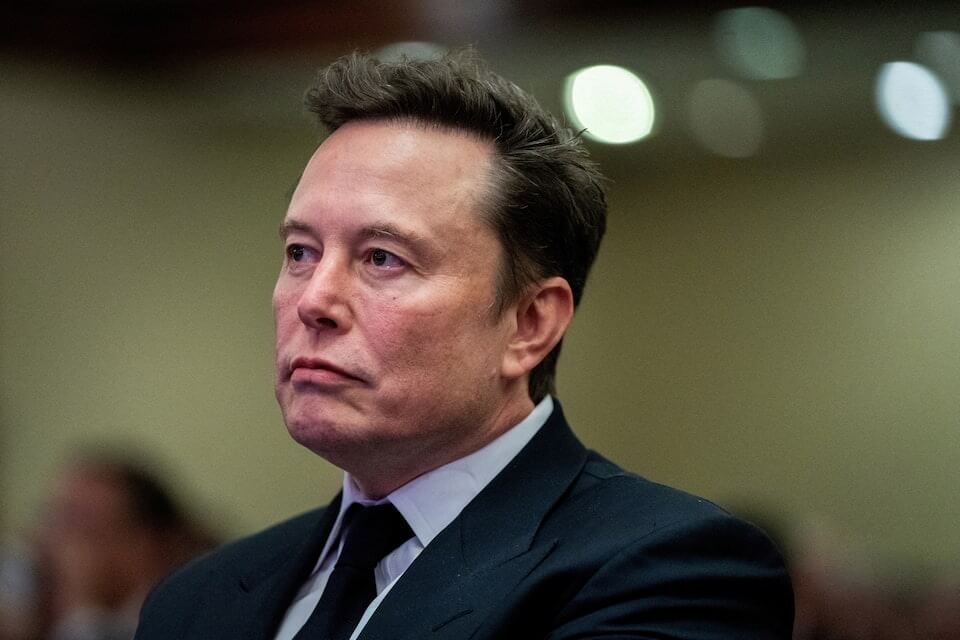
Starlink's Entry into South Africa Blocked Again as Musk Refuses 30% Black Ownership
Elon Musk's Starlink faces renewed obstacles in South Africa due to his refusal to comply with the "Black Economic Empowerment Act," which mandates foreign telecom companies to allocate at least 30% of local shares to historically disadvantaged Black communities. Musk claims he is denied a license because he is not Black and rejected bribery attempts. South African officials suggest he conduct business elsewhere.
📋 Article Processing Timeline
- 📰 Published: April 15, 2026 at 19:47
- 🔍 Collected: April 15, 2026 at 20:01 (14 min after Published)
- 🤖 AI Analyzed: April 15, 2026 at 20:26 (24 min after Collected)
JOHANNESBURG (CNA) – Starlink, led by Elon Musk, CEO of Starlink and Tesla, who hails from South Africa, has repeatedly faced obstacles in launching its internet service in the country. This is due to Musk's refusal to agree to the "Black Economic Empowerment Act," which requires at least 30% Black ownership.
According to a BBC report, Musk had previously rejected and publicly criticized the "Black Economic Empowerment Act," leading to the stagnation of the Starlink project in South Africa.
The "Black Economic Empowerment Act" stipulates that foreign telecommunications companies must allocate at least 30% of local equity to historically disadvantaged groups. This primarily refers to South Africa's majority Black population, who were completely unable to keep up with economic development under the past apartheid system.
On April 12, Musk reiterated on social media platform X that although he was born in South Africa, the country would not issue a license to Starlink "just because I am not Black." He further stated, "Several times, people have come to ask me for bribes, pretending that South African Starlink is run by Black people, so they can get a license, but I have my principles and am unwilling to do so."
Vincent Magwenya, spokesperson for the South African Presidency, also responded on X, saying, "The United Nations has 193 member states, and you can earn a lot in 192 of those markets. Go do business elsewhere!"
Solly Malatsi, South Africa's Minister of Communications and Digital Technologies, stated in an interview with "The Citizen" on April 14 that although other equivalent investment regulations could help Starlink get started, the Electronic Communications Act still requires companies to sell 30% of their shares, which would cause Starlink to lose its competitive advantage.
Bismark Tyobeka, President of North-West University, told The Citizen that Starlink's commitment to provide free service to 5,000 rural schools, enabling 2.4 million students to access high-speed internet, is a large-scale empowerment for everyone (regardless of skin color), and Black people would benefit greatly.
Political economist Dale McKinley, however, pointed out in the report that if Starlink were exempted from the "Black Economic Empowerment Act," it would be tantamount to handing over South Africa's sovereignty to this business tycoon. This would set a precedent that anyone rich enough could change the rules at will.
The debate over whether Starlink can be exempted from the "Black Economic Empowerment Act" is intensifying, with multiple organizations citing equality clauses in the constitution to emphasize plans to legally challenge any attempt to allow Starlink to obtain a license.
Starlink is a satellite internet service developed by Musk's SpaceX, controlling thousands of low-earth orbit satellites to provide high-speed internet globally. More than 20 African countries currently use Starlink services. (Editor: Chang Chih-hsuan) 2026-04-15
According to a BBC report, Musk had previously rejected and publicly criticized the "Black Economic Empowerment Act," leading to the stagnation of the Starlink project in South Africa.
The "Black Economic Empowerment Act" stipulates that foreign telecommunications companies must allocate at least 30% of local equity to historically disadvantaged groups. This primarily refers to South Africa's majority Black population, who were completely unable to keep up with economic development under the past apartheid system.
On April 12, Musk reiterated on social media platform X that although he was born in South Africa, the country would not issue a license to Starlink "just because I am not Black." He further stated, "Several times, people have come to ask me for bribes, pretending that South African Starlink is run by Black people, so they can get a license, but I have my principles and am unwilling to do so."
Vincent Magwenya, spokesperson for the South African Presidency, also responded on X, saying, "The United Nations has 193 member states, and you can earn a lot in 192 of those markets. Go do business elsewhere!"
Solly Malatsi, South Africa's Minister of Communications and Digital Technologies, stated in an interview with "The Citizen" on April 14 that although other equivalent investment regulations could help Starlink get started, the Electronic Communications Act still requires companies to sell 30% of their shares, which would cause Starlink to lose its competitive advantage.
Bismark Tyobeka, President of North-West University, told The Citizen that Starlink's commitment to provide free service to 5,000 rural schools, enabling 2.4 million students to access high-speed internet, is a large-scale empowerment for everyone (regardless of skin color), and Black people would benefit greatly.
Political economist Dale McKinley, however, pointed out in the report that if Starlink were exempted from the "Black Economic Empowerment Act," it would be tantamount to handing over South Africa's sovereignty to this business tycoon. This would set a precedent that anyone rich enough could change the rules at will.
The debate over whether Starlink can be exempted from the "Black Economic Empowerment Act" is intensifying, with multiple organizations citing equality clauses in the constitution to emphasize plans to legally challenge any attempt to allow Starlink to obtain a license.
Starlink is a satellite internet service developed by Musk's SpaceX, controlling thousands of low-earth orbit satellites to provide high-speed internet globally. More than 20 African countries currently use Starlink services. (Editor: Chang Chih-hsuan) 2026-04-15
FAQ
What is the main reason Starlink cannot operate in South Africa?
The main reason is Elon Musk's refusal to comply with the "Black Economic Empowerment Act," which mandates foreign telecommunications companies to allocate at least 30% of their shares to Black communities.
How has Elon Musk commented on the situation in South Africa?
Musk stated on social media platform X that he is denied a license because he is not Black and that he has rejected bribery attempts to pretend Starlink is Black-owned.