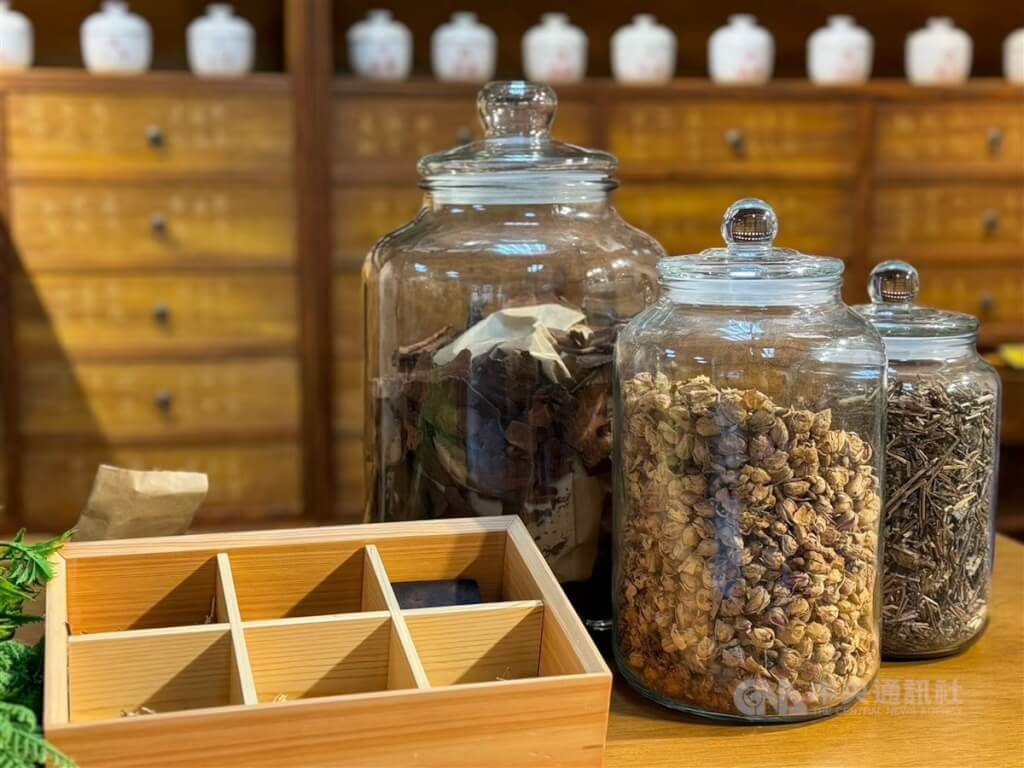
The Ministry of Health and Welfare (MOHW) has announced a draft regulation, for the first time setting limits on the usage of low-dose Chinese medicinal products. They will not be allowed to share names with 38 traditional Chinese medicine formulas recorded in ancient texts. In the future, health foods will not be allowed to use names like "Siwu Tang" or "Guilu Erxian Jiao." However, medicinal meals and "Sishen Tang" sold in restaurants can still retain their names. Xie Caibei, section chief of the Department of Chinese Medicine and Pharmacy, MOHW, explained that this institutionalization aims to clarify the management attributes of "food" and "medicine" to balance public safety and dietary culture. The draft specifies Chinese medicinal materials for food use, dividing them into two categories: 75 items with traditional edible culture (e.g., lily, lotus leaf) and 73 items requiring special safety attention (e.g., purslane, adzuki bean) with daily consumption limits. Products containing over 50% Chinese medicinal materials or exceeding 50% of the minimum daily dosage for specific second-category items will be managed as medicines. However, certain conditions, such as obtaining a health food permit, may exempt them from medicinal management. Xie Caibei emphasized that health food concentrations and proportions of Chinese medicinal materials must not exceed draft limits to prevent public misunderstanding. Names identical to 38 traditional formulas will be prohibited to avoid confusion with medicinal effects. Su Yichang, director of the Department of Chinese Medicine and Pharmacy, clarified that the regulation targets health foods from pharmaceutical and food factories, not self-purchased materials or restaurant dishes. The draft, titled "Standards for the Recognition of Chinese Medicinal Materials as Food Ingredients and Their Product Attributes," includes five key points and has a 60-day public comment period.
FACT BOX
- Source: CNA (Central News Agency)
- Category: regulation