Central News Agency (CNA) - New Delhi, April 16 - Middle East conflicts have led to energy supply shortages, severely affecting global livelihoods and economies. India, also affected, faces threats to its economic growth, a widening fiscal deficit, and the rupee hitting new lows. Some officials stated that the destructive power of this conflict is comparable to the shock caused by the COVID-19 pandemic.
Indian officials, speaking on condition of anonymity, indicated that the war in the Middle East has had a severe impact on India's development trajectory, with the economic shock being comparable to that of the COVID-19 pandemic. They noted that it may take several years to mitigate this damage.
The officials stated that the government is drawing on its experience from responding to the COVID-19 pandemic to address the impacts of natural gas shortages and soaring oil prices on businesses and citizens. One proposed measure includes a credit guarantee program worth potentially up to 2.5 trillion rupees (approximately NT$846.4 billion) for small and medium-sized enterprises and related industries.
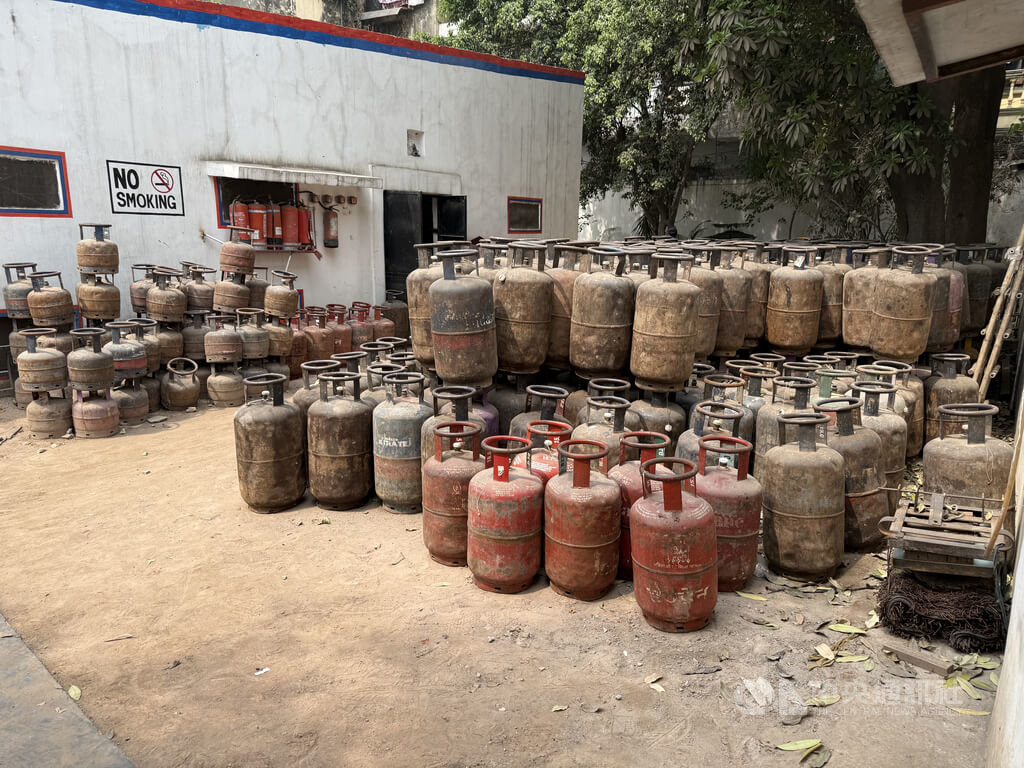
Indian officials directly involved in policy-making stated that the government is working to manage this crisis. This includes measures to ensure energy security and stabilize prices. India, which is highly dependent on imported energy and is the world's third-largest oil consumer, sources about 90% of its natural gas from the Middle East. Even if the Middle East conflict ends soon, related infrastructure damage will require time for repairs. Energy products, including liquefied petroleum gas (LPG), may take several years to return to normal supply. Therefore, the damage caused by this conflict is comparable to the COVID-19 pandemic six years ago.
Despite the Indian government's assertions that economic growth is expected to remain between 6.8% and 7.2% in the current fiscal year ending March 2027, some economists believe the energy crisis triggered by the war could derail India's economic growth trajectory. Goldman Sachs Group Inc. has lowered its forecast for India's economic growth rate to 5.9%, while Oxford Economics Ltd. has revised its prediction down to 6.2%.
Following the outbreak of the Middle East conflict, the Indian government has implemented several fiscal measures to protect livelihoods and the economy. These include significant reductions in gasoline and diesel taxes to help stabilize oil prices, a series of relief plans for exporters whose main customers are in the Middle East, and the establishment of a stabilization fund of US$6.2 billion (approximately NT$195.7 billion) to help the Indian economy withstand the impact.
The Indian government's fiscal deficit expanded to 9.5% of GDP in the 2020-2021 fiscal year due to various stimulus measures introduced during the pandemic. Economists estimate that the fiscal deficit for the current fiscal year is projected to exceed 5% of GDP due to the surge in oil prices caused by the Middle East conflict.
The surge in India's energy import expenditures and the widening fiscal deficit have worried foreign investors. In the first three months of this year, nearly US$19 billion (approximately NT$600 billion) of foreign capital has withdrawn from the Indian market, almost equivalent to the entire year's figure in 2025. This has led to the rupee depreciating to a historical low against the US dollar, falling below 95.
The surge in oil prices has impacted the Indian economy, with the government currently absorbing the associated losses. However, if the Strait of Hormuz continues to be blockaded, keeping oil prices high, the Indian public may eventually have to bear these economic losses themselves.
Approximately 20% of the world's oil and natural gas is transported through the Strait of Hormuz. Any disruption to this vital global energy supply route would have a significant impact on the circulation of energy-related commodities internationally. (Editor: Chen Cheng-kung) 2026-04-16.
Stand with the facts. Your sponsorship is the power to protect journalistic freedom. Download the CNA 'First News' APP for real-time updates. Text, images, and videos on this website may not be reproduced, publicly broadcast, or transmitted and utilized without authorization. Keywords:
FACT BOX
- Source: CNA (Central News Agency)
- Category: Survey
- Organizations: Goldman Sachs Group Inc. / Oxford Economics Ltd.
- Products / services: Energy (Oil, Natural Gas) / Financial services