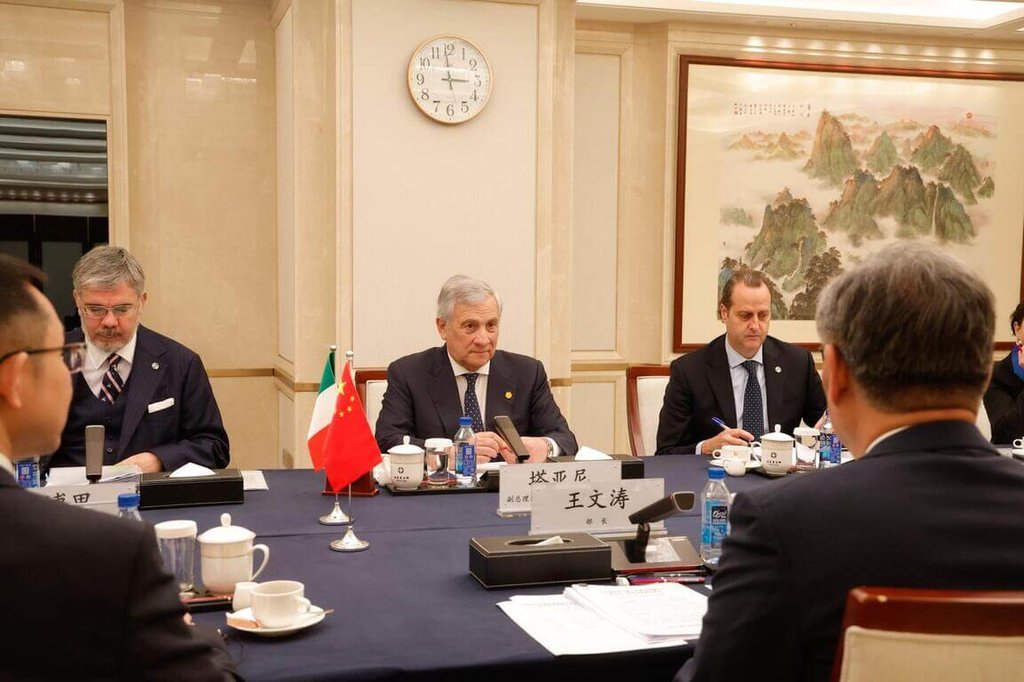
Italian Foreign Minister Visits China, Hopes Beijing Will Help Stop Iran, Ukraine Wars
Italian Deputy Prime Minister and Foreign Minister Antonio Tajani visited China to discuss bilateral trade and seek Beijing's assistance in resolving the Middle East and Ukraine conflicts. Italy is concerned about the global energy crisis caused by stalled Iran negotiations and the blockade of the Strait of Hormuz, hoping China will play an active role in stopping conflicts and initiating effective negotiations. Both countries also discussed rebalancing trade and investment, and removing barriers for Italian products entering the Chinese market.
📋 Article Processing Timeline
- 📰 Published: April 17, 2026 at 08:46
- 🔍 Collected: April 17, 2026 at 09:01 (15 min after Published)
- 🤖 AI Analyzed: April 17, 2026 at 17:07 (8h 6m after Collected)
US-Iran War Key News
Central News Agency
(Central News Agency reporter Huang Ya-shih, Rome, 16th) With US-Iran negotiations stalled and the blockade of the Strait of Hormuz causing a global energy crisis, Italian Deputy Prime Minister and Foreign Minister Antonio Tajani visited China today. In addition to discussing bilateral economic and trade issues, he will focus on the Middle East and Ukraine war issues. Italy hopes Beijing will play an active role in helping to stop conflicts and initiate effective negotiations.
The Italian Ministry of Foreign Affairs issued a press release stating that Tajani (Antonio Tajani) will visit China from the 16th to the 18th. His first stop today is Beijing, where he will hold a bilateral meeting with Chinese Minister of Commerce Wang Wentao and co-chair the 16th Italy-China Joint Economic Committee meeting. This committee is a bilateral economic cooperation mechanism under the 'Comprehensive Strategic Partnership Framework' established by Italy and China in 2004.
Tajani's visit to China follows Chinese Foreign Minister Wang Yi's visit to Rome last October, marking another high-level bilateral meeting between Italy and China.
Tajani also co-chaired the 'Italy-China Business Forum,' attended by about 50 Italian and Chinese companies. Tajani also participated in the signing ceremony of the 'Italy-China E-commerce Action Plan,' which includes opening an 'Italian Pavilion' on major Chinese e-commerce platforms and promoting 'Made in Italy' products.
The Italian Ministry of Foreign Affairs stated that the topics discussed included how to attract more 'qualified' Chinese companies to invest in Italy, China's export controls on rare earths and critical minerals, and how to help Italian companies more easily enter the Chinese market.
Tajani then held a bilateral meeting with Wang Yi. The Italian Ministry of Foreign Affairs pointed out that the meeting aimed to discuss Italy-China relations and major international crises. 'Given that Russian Foreign Minister Lavrov (Sergei Lavrov) just visited China, Tajani will emphasize China's key role in influencing Moscow, which can help promote trust-building negotiations and resolve the Ukraine war.'
Regarding the Middle East crisis, the Italian Ministry of Foreign Affairs stated that Tajani expressed his concern about the breakdown of US-Iran negotiations, emphasizing that the blockade of the Strait of Hormuz has caused significant economic and energy impacts. China can play a crucial role in promoting the resumption of negotiations and mediating with the Iranian regime in Tehran.
The Italian Ministry of Foreign Affairs pointed out that the blockade of the Strait of Hormuz also affects fertilizer prices. High fertilizer prices may have serious consequences for agriculture in Africa and other vulnerable regions. Tajani urged China, as the world's largest fertilizer producer, to cooperate and reiterated Italy's support for the UN initiative on transporting fertilizers and humanitarian supplies through the Strait of Hormuz.
According to data from the Italian Ministry of Foreign Affairs, both sides also discussed how to implement the '2024-2027 Italy-China Three-Year Action Plan,' focusing on rebalancing trade and investment, and eliminating barriers for Italian products entering the Chinese market. China remains Italy's largest trading partner in Asia and the second-largest trading partner among non-EU countries. Bilateral trade is expected to approach 75 billion euros (approximately 2.8 trillion New Taiwan dollars) by 2025, an increase of 11.2% from 2024.
In terms of cultural activities, Tajani will co-officiate with Chinese Minister of Culture and Tourism Sun Yelie at the opening of the 'Tribute to Masters: From Leonardo da Vinci to Caravaggio – Masterpieces of the Italian Renaissance' exhibition at the National Art Museum of China in Beijing. This exhibition is the first of three planned by the Uffizi Gallery in Italy.
Additionally, in Shanghai from April 17 to 18, Tajani will inaugurate the 'Wonderful Italy' exhibition during 'Made in Italy Day' and meet with Italian business representatives in China. (Editor: Tang Sheng-yang) 1150417
Choose to stand with facts, every sponsorship you make is a force to protect press freedom.
Download the Central News Agency 'First-hand News' APP to stay updated with the latest news.
The text, images, and videos on this website may not be reproduced, publicly broadcast, or publicly transmitted and used without authorization.
Central News Agency
(Central News Agency reporter Huang Ya-shih, Rome, 16th) With US-Iran negotiations stalled and the blockade of the Strait of Hormuz causing a global energy crisis, Italian Deputy Prime Minister and Foreign Minister Antonio Tajani visited China today. In addition to discussing bilateral economic and trade issues, he will focus on the Middle East and Ukraine war issues. Italy hopes Beijing will play an active role in helping to stop conflicts and initiate effective negotiations.
The Italian Ministry of Foreign Affairs issued a press release stating that Tajani (Antonio Tajani) will visit China from the 16th to the 18th. His first stop today is Beijing, where he will hold a bilateral meeting with Chinese Minister of Commerce Wang Wentao and co-chair the 16th Italy-China Joint Economic Committee meeting. This committee is a bilateral economic cooperation mechanism under the 'Comprehensive Strategic Partnership Framework' established by Italy and China in 2004.
Tajani's visit to China follows Chinese Foreign Minister Wang Yi's visit to Rome last October, marking another high-level bilateral meeting between Italy and China.
Tajani also co-chaired the 'Italy-China Business Forum,' attended by about 50 Italian and Chinese companies. Tajani also participated in the signing ceremony of the 'Italy-China E-commerce Action Plan,' which includes opening an 'Italian Pavilion' on major Chinese e-commerce platforms and promoting 'Made in Italy' products.
The Italian Ministry of Foreign Affairs stated that the topics discussed included how to attract more 'qualified' Chinese companies to invest in Italy, China's export controls on rare earths and critical minerals, and how to help Italian companies more easily enter the Chinese market.
Tajani then held a bilateral meeting with Wang Yi. The Italian Ministry of Foreign Affairs pointed out that the meeting aimed to discuss Italy-China relations and major international crises. 'Given that Russian Foreign Minister Lavrov (Sergei Lavrov) just visited China, Tajani will emphasize China's key role in influencing Moscow, which can help promote trust-building negotiations and resolve the Ukraine war.'
Regarding the Middle East crisis, the Italian Ministry of Foreign Affairs stated that Tajani expressed his concern about the breakdown of US-Iran negotiations, emphasizing that the blockade of the Strait of Hormuz has caused significant economic and energy impacts. China can play a crucial role in promoting the resumption of negotiations and mediating with the Iranian regime in Tehran.
The Italian Ministry of Foreign Affairs pointed out that the blockade of the Strait of Hormuz also affects fertilizer prices. High fertilizer prices may have serious consequences for agriculture in Africa and other vulnerable regions. Tajani urged China, as the world's largest fertilizer producer, to cooperate and reiterated Italy's support for the UN initiative on transporting fertilizers and humanitarian supplies through the Strait of Hormuz.
According to data from the Italian Ministry of Foreign Affairs, both sides also discussed how to implement the '2024-2027 Italy-China Three-Year Action Plan,' focusing on rebalancing trade and investment, and eliminating barriers for Italian products entering the Chinese market. China remains Italy's largest trading partner in Asia and the second-largest trading partner among non-EU countries. Bilateral trade is expected to approach 75 billion euros (approximately 2.8 trillion New Taiwan dollars) by 2025, an increase of 11.2% from 2024.
In terms of cultural activities, Tajani will co-officiate with Chinese Minister of Culture and Tourism Sun Yelie at the opening of the 'Tribute to Masters: From Leonardo da Vinci to Caravaggio – Masterpieces of the Italian Renaissance' exhibition at the National Art Museum of China in Beijing. This exhibition is the first of three planned by the Uffizi Gallery in Italy.
Additionally, in Shanghai from April 17 to 18, Tajani will inaugurate the 'Wonderful Italy' exhibition during 'Made in Italy Day' and meet with Italian business representatives in China. (Editor: Tang Sheng-yang) 1150417
Choose to stand with facts, every sponsorship you make is a force to protect press freedom.
Download the Central News Agency 'First-hand News' APP to stay updated with the latest news.
The text, images, and videos on this website may not be reproduced, publicly broadcast, or publicly transmitted and used without authorization.
FAQ
What is the main purpose of Italian Foreign Minister Tajani's visit to China?
The main purpose is to discuss bilateral economic and trade issues, and to seek China's assistance in resolving the Middle East and Ukraine conflicts.
What role does Italy expect China to play in the conflicts?
Italy hopes China will play an active role in helping to stop the conflicts and initiate effective negotiations, particularly regarding Iran and Ukraine.