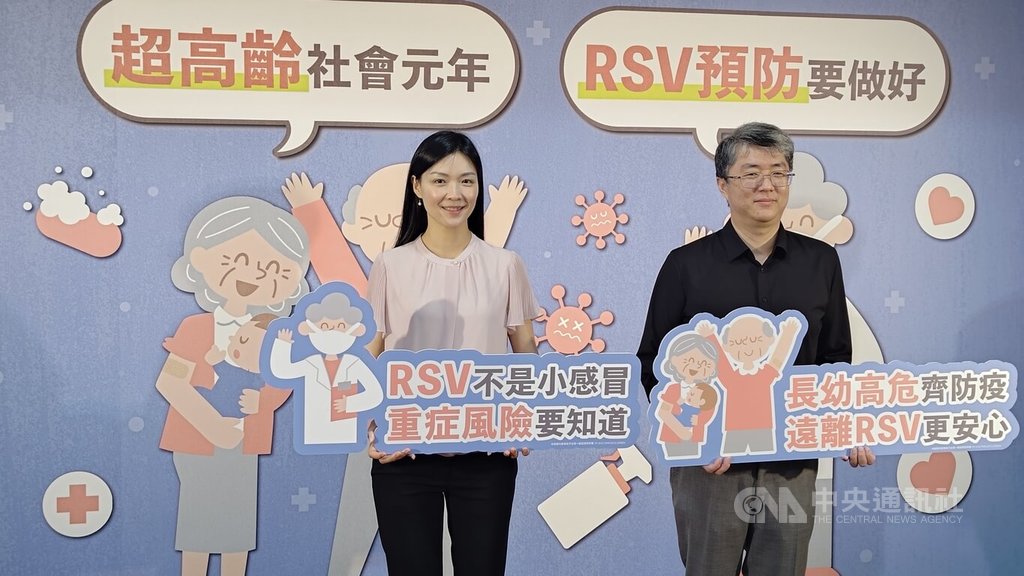
(Central News Agency reporter Shen Pei-hua, Taipei, April 15) Respiratory syncytial virus (RSV) is the primary cause of severe lower respiratory tract infections in infants and young children, but elderly family members should also be wary of cross-infection. Doctors warn that one in four elderly patients hospitalized with RSV dies within one year, and the risk of stroke and disability also increases.
RSV is considered a health killer for infants and young children, primarily affecting children under 5 years old, but the elderly should also be cautious. Dr. Tsao Yu-ting, a physician from the Taiwan Association of Family Medicine, reminded at a health education press conference today that the infectious period after an infant is infected can last up to 3 to 4 weeks, putting cohabiting elderly individuals at risk of prolonged exposure to cross-infection.
Dr. Tsao Yu-ting stated that pneumonia has long been the third leading cause of death in Taiwan. RSV is one of the main causes of pneumonia; studies show that one in ten elderly patients hospitalized for pneumonia is infected with RSV. Furthermore, if an elderly person is hospitalized with RSV, one in four dies within one year.
Dr. Yao Tsung-han, a physician from the Department of Internal Medicine at National Taiwan University Hospital, pointed out that RSV infection damages the respiratory tract's defense mechanisms, and about 30% of patients develop bacterial infections, most commonly pneumococcus, Staphylococcus aureus, and Haemophilus influenzae. These bacteria are usually harmless in the body, but when the respiratory tract is damaged, bacteria can penetrate and cause infection.
Dr. Yao Tsung-han shared findings from a new study published in JAMA in February this year, which revealed that among RSV-hospitalized patients aged 50 and above, over 20% experienced one or more acute cardiovascular events, and the risk of stroke increased within six months after hospitalization.
"Getting RSV once does not grant 'invincibility.' People of all ages can be repeatedly infected," Dr. Tsao Yu-ting emphasized. Although initial RSV infection symptoms are often common respiratory symptoms like runny nose, cough, and fever, they can rapidly worsen into severe manifestations such as asthma and difficulty breathing. Healthy adults often have mild or asymptomatic RSV infections, potentially unknowingly bringing the virus home and transmitting it to vulnerable infants or elderly individuals.
With the advent of a super-aged society, Dr. Yao Tsung-han stated that among the four respiratory disease vaccines (RSV, influenza, COVID-19, and pneumococcal), RSV is the only one not covered by public funding. He suggested that adults aged 75 and above, and high-risk groups aged 60 to 74 (those with chronic lung disease, cardiovascular disease, chronic liver or kidney disease, or residents of long-term care facilities), if economically feasible, should consider self-funded vaccination after physician evaluation.
FACT BOX
- Source: CNA (Central News Agency)
- Category: research