Helping Gastric Cancer Patients Maintain Quality of Life: Doctors Reveal New "Perioperative" Treatment Method
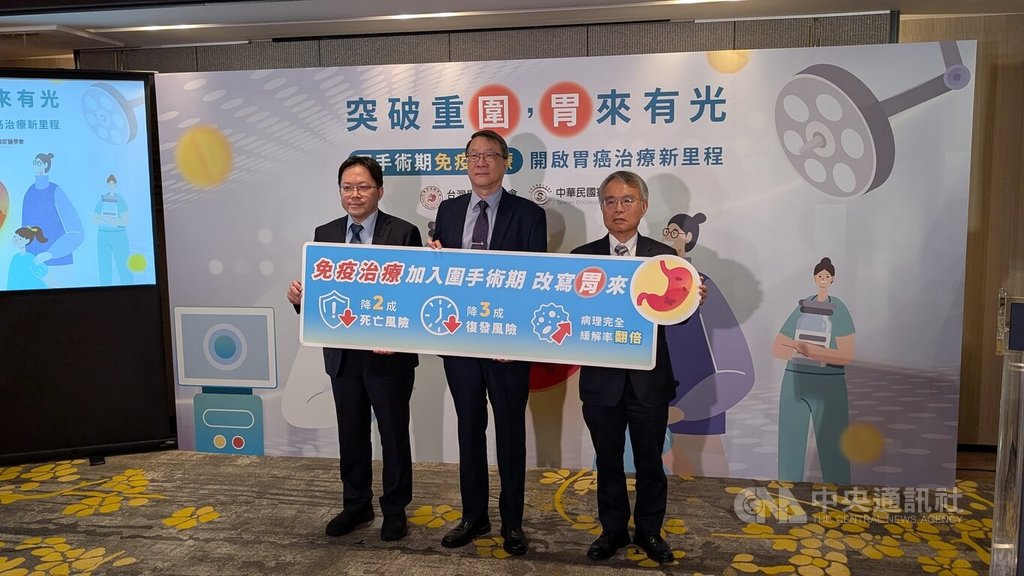
Gastric cancer patients face risks of total gastrectomy, impacting quality of life. "Perioperative immunotherapy" shows promise in reducing recurrence, metastasis, and postoperative mortality. This treatment can potentially reduce recurrence risk by 30% and mortality risk by 20% compared to traditional chemotherapy.
📋 Article Processing Timeline
- 📰 Published: April 16, 2026 at 19:29
- 🔍 Collected: April 16, 2026 at 20:01 (32 min after Published)
- 🤖 AI Analyzed: April 16, 2026 at 20:22 (20 min after Collected)
Central News Agency
(Central News Agency reporter Tseng Yi-ning, Taipei, 16th) In the past, gastric cancer patients with large tumors or tumors in critical locations might face the risk of total gastrectomy, affecting their quality of life and requiring lifelong vitamin B12 and iron supplementation. Doctors point out that "perioperative immunotherapy" is expected to help reduce the risk of recurrence, metastasis, and postoperative mortality.
According to data from the Ministry of Health and Welfare, gastric cancer has long been among the top 10 causes of cancer incidence and mortality in Taiwan, with over 2,000 patients dying from gastric cancer each year.
Dr. Shen Yen-sheng, President of the Taiwan Gastric Cancer Society, explained at a health education press conference today that most gastric cancer patients in Taiwan are diagnosed at stages 2 or 3. In the past, treatment mainly focused on surgery, but research shows that up to 60% of patients experience cancer recurrence after surgery; among these, most recur within 5 years, and once recurrent, it often progresses to stage 4, with survival rates significantly dropping to 6%.
Surgical resection can also cause other problems, Shen Yen-sheng pointed out. If a large part of the stomach is removed due to a large tumor or its location, it will not only affect absorption but also impact nutrients such as vitamin B12 and iron, leading to anemia and slow recovery for patients. Therefore, if drugs can first shrink the tumor and preserve more of the stomach, it can significantly improve patients' quality of life and enhance postoperative survival.
Dr. Chen Jen-hsi, President of the Republic of China Cancer Society, stated that in the past, resectable gastric cancer patients were mainly treated with surgery combined with postoperative chemotherapy. In recent years, "perioperative" treatment has shifted the strategy to deployment before surgery; first, to shrink the tumor volume, improve the success rate of surgery, enhance postoperative quality of life, and clear invisible micrometastases in advance; continuous medication after surgery can continue to clear invisible residual cancer cells, reducing the risk of future recurrence and metastasis.
Dr. Fang Wen-liang, Deputy Director of the Gastric Tumor Medical Center at Taipei Veterans General Hospital, pointed out that "perioperative immunotherapy" has become a treatment trend for resectable gastric cancer in recent years. Through three stages: neoadjuvant therapy before surgery, surgery, and adjuvant therapy after surgery, for patients with deeper invasion or lymph node metastasis, or larger tumors but still deemed operable stage 4 by doctors, it can reduce the risk of recurrence by 30% and the risk of death by 20% compared to traditional chemotherapy.
Fang Wen-liang mentioned that a 57-year-old male patient, who sought medical attention due to abnormal weight loss, was diagnosed with resectable stage 3 gastric cancer. After perioperative immunotherapy and partial gastrectomy and gastroesophageal reconstruction surgery, he achieved pathological complete response, with no residual cancer cells detected. Follow-up for 2 years has shown no tumor recurrence. (Editor: Kuan Chung-wei) 1150416
Choose to stand with facts, every sponsorship you make is a force to protect press freedom.
Download the Central News Agency "First-hand News" APP to get the latest news instantly.
The text, images, and videos on this website may not be reproduced, publicly broadcast, or publicly transmitted and used without authorization.
(Central News Agency reporter Tseng Yi-ning, Taipei, 16th) In the past, gastric cancer patients with large tumors or tumors in critical locations might face the risk of total gastrectomy, affecting their quality of life and requiring lifelong vitamin B12 and iron supplementation. Doctors point out that "perioperative immunotherapy" is expected to help reduce the risk of recurrence, metastasis, and postoperative mortality.
According to data from the Ministry of Health and Welfare, gastric cancer has long been among the top 10 causes of cancer incidence and mortality in Taiwan, with over 2,000 patients dying from gastric cancer each year.
Dr. Shen Yen-sheng, President of the Taiwan Gastric Cancer Society, explained at a health education press conference today that most gastric cancer patients in Taiwan are diagnosed at stages 2 or 3. In the past, treatment mainly focused on surgery, but research shows that up to 60% of patients experience cancer recurrence after surgery; among these, most recur within 5 years, and once recurrent, it often progresses to stage 4, with survival rates significantly dropping to 6%.
Surgical resection can also cause other problems, Shen Yen-sheng pointed out. If a large part of the stomach is removed due to a large tumor or its location, it will not only affect absorption but also impact nutrients such as vitamin B12 and iron, leading to anemia and slow recovery for patients. Therefore, if drugs can first shrink the tumor and preserve more of the stomach, it can significantly improve patients' quality of life and enhance postoperative survival.
Dr. Chen Jen-hsi, President of the Republic of China Cancer Society, stated that in the past, resectable gastric cancer patients were mainly treated with surgery combined with postoperative chemotherapy. In recent years, "perioperative" treatment has shifted the strategy to deployment before surgery; first, to shrink the tumor volume, improve the success rate of surgery, enhance postoperative quality of life, and clear invisible micrometastases in advance; continuous medication after surgery can continue to clear invisible residual cancer cells, reducing the risk of future recurrence and metastasis.
Dr. Fang Wen-liang, Deputy Director of the Gastric Tumor Medical Center at Taipei Veterans General Hospital, pointed out that "perioperative immunotherapy" has become a treatment trend for resectable gastric cancer in recent years. Through three stages: neoadjuvant therapy before surgery, surgery, and adjuvant therapy after surgery, for patients with deeper invasion or lymph node metastasis, or larger tumors but still deemed operable stage 4 by doctors, it can reduce the risk of recurrence by 30% and the risk of death by 20% compared to traditional chemotherapy.
Fang Wen-liang mentioned that a 57-year-old male patient, who sought medical attention due to abnormal weight loss, was diagnosed with resectable stage 3 gastric cancer. After perioperative immunotherapy and partial gastrectomy and gastroesophageal reconstruction surgery, he achieved pathological complete response, with no residual cancer cells detected. Follow-up for 2 years has shown no tumor recurrence. (Editor: Kuan Chung-wei) 1150416
Choose to stand with facts, every sponsorship you make is a force to protect press freedom.
Download the Central News Agency "First-hand News" APP to get the latest news instantly.
The text, images, and videos on this website may not be reproduced, publicly broadcast, or publicly transmitted and used without authorization.
FAQ
What problems do gastric cancer patients face?
Gastric cancer patients may face the risk of total gastrectomy depending on the size and location of the tumor, leading to a decrease in quality of life and requiring lifelong nutritional supplementation.
What is "perioperative immunotherapy"?
"Perioperative immunotherapy" is a three-stage treatment consisting of neoadjuvant therapy before surgery, surgery, and adjuvant therapy after surgery. It aims to shrink tumors, improve surgical success rates, enhance postoperative quality of life, and reduce the risk of recurrence and metastasis.