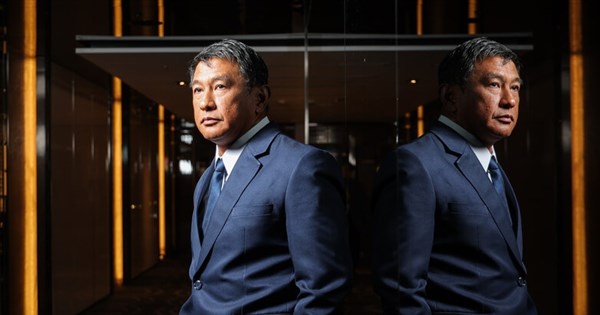
Former Philippine General: China's 'Black Zone Operations,' Philippines Seeks Support Through Transparency
A former Philippine Army Lieutenant General, Leodevic B. Guinid, stated that China's actions in the South China Sea are illegal, coercive, aggressive, and deceptive, classifying them as 'black zone operations.' He emphasized that the Philippines will uphold transparency to expose China's behavior and garner international support. Guinid also highlighted the relevance of Taiwan Strait security to Philippine national security and advocated for Noncombatant Evacuation Operations (NEO) in the event of a conflict.
📋 Article Processing Timeline
- 📰 Published: April 15, 2026 at 19:27
- 🔍 Collected: April 15, 2026 at 19:32 (4 min after Published)
- 🤖 AI Analyzed: April 15, 2026 at 19:43 (11 min after Collected)
Taipei, April 15 (CNA) Former Philippine Army Lieutenant General Leodevic B. Guinid stated in an exclusive interview with CNA that China's illegal, coercive, aggressive, and deceptive actions in the South China Sea, which Taiwan also faces similar situations, should be called "black" zone operations. The Philippines will uphold the principle of transparency to expose China's actions and seek support from various countries.
Guinid, who previously served as the Deputy Commander of the Philippine Army, attended the "Shield of Democracy: First Island Chain All-Society Resilience Cooperation International Forum" organized by the Formosa Club, which invited important international military and strategic leaders.
When Guinid visited Taiwan last year at the invitation of the Institute for National Defense and Security Research, he shared the Philippines' experience in responding to China's maritime incursions, defining related actions as "ICAD," which stands for Illegal, Coercive, Aggressive, and Deceptive.
He pointed out that Taiwan also faces similar "ICAD" situations from China, making intelligence sharing among countries regarding China's behavior very important, and experience exchange even more crucial.
Regarding how to respond to China's actions, Guinid shared the Philippine experience, stating that if China engages in illegal actions, the Philippines will act according to law, citing the South China Sea arbitration ruling to uphold its position. When China employs coercive tactics, the Philippines will restrain its own actions and avoid provocation. As China is accustomed to deception, the Philippines adheres to the principle of transparency, showing the truth to the world and leading domestic and foreign media to the front lines to let everyone understand the facts.
Guinid explained that to gain support from like-minded countries, especially those that also adhere to rules-based order, the transparency principle advocated by the Philippines not only contrasts with China's ICAD actions but also occupies the moral high ground in public opinion.
Guinid explained that China's relevant actions are no longer gray zone operations, because gray is between white and black, but China's illegal, coercive, aggressive, and deceptive actions are "black" zone operations. The Philippines is also continuously educating its people about the purpose and nature of China's actions in the South China Sea and the Indo-Pacific region, China's ambition to become a regional hegemon to counter the United States, and how this will affect various democratic countries.
Guinid mentioned that if people unite against aggression, they will achieve victory. This is a common issue for both the Philippines and Taiwan. China is aggressive and making progress in cognitive warfare; China not only manipulates information in mainstream media but also uses cyber armies and influencers through social media to shape the thinking of Taiwanese and Filipino people. Therefore, Taiwan and the Philippines must fight back to ensure that people obtain correct results under correct thinking.
Regarding the impact of Taiwan Strait security on the Philippines, Guinid, from the perspective of an army general, stated that it concerns Philippine national security. The military will naturally assess the impact of various potential events, such as considering whether northern Luzon in the Philippines would be attacked to prevent foreign reinforcements to Taiwan, and northern Luzon is also the closest civilian evacuation point to Taiwan.
According to statistics from the Immigration Agency and the Ministry of Labor, there are currently about 180,000 Filipinos in Taiwan, of whom 170,000 are migrant workers.
Regarding how to evacuate Filipinos in Taiwan if China attacks Taiwan, Guinid stated that he recommends establishing Noncombatant Evacuation Operations (NEO), because not only Filipinos but also foreign citizens from the United States, South Korea, and other countries residing in Taiwan would be affected, and Taiwanese people might also want to evacuate.
He pointed out that northern Luzon in the Philippines is the closest evacuation point to Taiwan, but the Philippines cannot complete the operation alone. Taiwan, Japan, the United States, and the Philippines should all participate, and preparations should be made before a crisis arises. (Editors: Lin Ke-lun, Chang Ruo-yao) 1150415
Guinid, who previously served as the Deputy Commander of the Philippine Army, attended the "Shield of Democracy: First Island Chain All-Society Resilience Cooperation International Forum" organized by the Formosa Club, which invited important international military and strategic leaders.
When Guinid visited Taiwan last year at the invitation of the Institute for National Defense and Security Research, he shared the Philippines' experience in responding to China's maritime incursions, defining related actions as "ICAD," which stands for Illegal, Coercive, Aggressive, and Deceptive.
He pointed out that Taiwan also faces similar "ICAD" situations from China, making intelligence sharing among countries regarding China's behavior very important, and experience exchange even more crucial.
Regarding how to respond to China's actions, Guinid shared the Philippine experience, stating that if China engages in illegal actions, the Philippines will act according to law, citing the South China Sea arbitration ruling to uphold its position. When China employs coercive tactics, the Philippines will restrain its own actions and avoid provocation. As China is accustomed to deception, the Philippines adheres to the principle of transparency, showing the truth to the world and leading domestic and foreign media to the front lines to let everyone understand the facts.
Guinid explained that to gain support from like-minded countries, especially those that also adhere to rules-based order, the transparency principle advocated by the Philippines not only contrasts with China's ICAD actions but also occupies the moral high ground in public opinion.
Guinid explained that China's relevant actions are no longer gray zone operations, because gray is between white and black, but China's illegal, coercive, aggressive, and deceptive actions are "black" zone operations. The Philippines is also continuously educating its people about the purpose and nature of China's actions in the South China Sea and the Indo-Pacific region, China's ambition to become a regional hegemon to counter the United States, and how this will affect various democratic countries.
Guinid mentioned that if people unite against aggression, they will achieve victory. This is a common issue for both the Philippines and Taiwan. China is aggressive and making progress in cognitive warfare; China not only manipulates information in mainstream media but also uses cyber armies and influencers through social media to shape the thinking of Taiwanese and Filipino people. Therefore, Taiwan and the Philippines must fight back to ensure that people obtain correct results under correct thinking.
Regarding the impact of Taiwan Strait security on the Philippines, Guinid, from the perspective of an army general, stated that it concerns Philippine national security. The military will naturally assess the impact of various potential events, such as considering whether northern Luzon in the Philippines would be attacked to prevent foreign reinforcements to Taiwan, and northern Luzon is also the closest civilian evacuation point to Taiwan.
According to statistics from the Immigration Agency and the Ministry of Labor, there are currently about 180,000 Filipinos in Taiwan, of whom 170,000 are migrant workers.
Regarding how to evacuate Filipinos in Taiwan if China attacks Taiwan, Guinid stated that he recommends establishing Noncombatant Evacuation Operations (NEO), because not only Filipinos but also foreign citizens from the United States, South Korea, and other countries residing in Taiwan would be affected, and Taiwanese people might also want to evacuate.
He pointed out that northern Luzon in the Philippines is the closest evacuation point to Taiwan, but the Philippines cannot complete the operation alone. Taiwan, Japan, the United States, and the Philippines should all participate, and preparations should be made before a crisis arises. (Editors: Lin Ke-lun, Chang Ruo-yao) 1150415
FAQ
How are China's actions in the South China Sea classified?
According to former Philippine Army Lieutenant General Leodevic B. Guinid, China's actions are classified as 'black zone operations' due to their illegal, coercive, aggressive, and deceptive (ICAD) nature.
How does the Philippines plan to respond to China's actions?
The Philippines will adhere to the principle of transparency, exposing China's actions to the world to gain support from like-minded countries, especially those that uphold a rules-based order.
What is the impact of Taiwan Strait security on the Philippines?
Taiwan Strait security is a matter of Philippine national security. The military assesses potential impacts, including the possibility of northern Luzon being attacked to prevent foreign reinforcements to Taiwan, and its role as the closest civilian evacuation point for Taiwan.