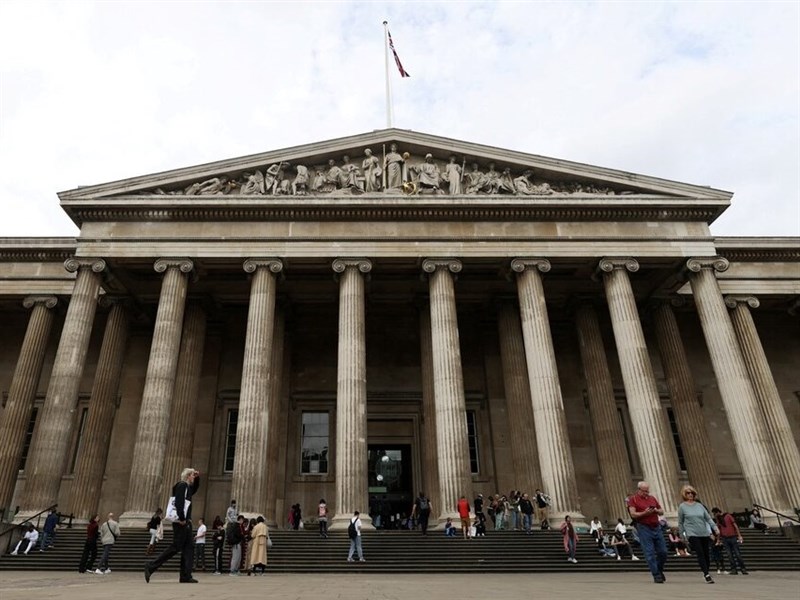
Beijing's Censorship Affects UK Book Publishing, Even Lenin's Photo Falls Victim
Major UK cultural institutions, including the British Museum, face Beijing's censorship when printing books in China. To cut costs, they print in China but are forced to remove "sensitive" content like Taiwan, Tibet, or Tiananmen Square. The V&A Museum, for example, had historical maps and a photo of Lenin censored, requiring content changes to proceed with printing. This highlights how UK government-funded institutions yield to Chinese pressure.
📋 Article Processing Timeline
- 📰 Published: April 15, 2026 at 09:21
- 🔍 Collected: April 15, 2026 at 09:31 (10 min after Published)
- 🤖 AI Analyzed: April 15, 2026 at 17:59 (8h 27m after Collected)
Central News Agency
(Central News Agency reporter Chen Yun-yu, London, 14th) Major British cultural and artistic institutions such as the British Museum often choose to print exhibition catalogs and other books in China due to cost considerations, but this exposes them to the risk of censorship by Beijing authorities. Even a photo of former Soviet leader Lenin was once removed due to "sensitive" considerations.
"The Guardian" reported today that it has become common practice for internationally renowned British museums and art galleries, such as the British Museum, British Library, Victoria and Albert (V&A) Museum, and Tate Gallery, to choose to print catalogs in China, because Chinese manufacturers can meet customer needs at about half the price of British or other European countries.
However, Beijing's censorship mechanism also extends to publications printed by these British institutions in China. According to the report, if there are themes or images considered "sensitive" by Beijing authorities, such as Taiwan, Tibet, the Tiananmen Incident, democratic movements, Buddhism, and other religious beliefs, the British side may have to compromise to ensure smooth printing of publications.
In addition to censorship from China, the report points out that another phenomenon worth noting is that relevant British institutions are apparently willing to "cooperate" and comply with China's pressure and control, and make necessary adjustments, even if the process may cause inconvenience to the British side itself. Institutions such as the British Museum are supported by the British government budget.
"The Guardian" obtained information from British museums and art galleries through the "Freedom of Information Act" and found the influence of China's censorship system on operators and their British customers. The report takes the V&A as an example to show the meticulous extent of official Chinese censorship and self-censorship by operators.
According to the report, for the exhibition catalog of "The Music is Black" (tentative translation: This Music is Black), a special exhibition on British African and Caribbean music to be opened on the 18th at the V&A East London branch (V&A East), a map of the international trade routes of the British Empire in the 1930s was originally included. However, the cooperating Chinese printing company informed the V&A by email last November that the Chinese censorship authorities had objections to the map.
The Chinese operator stated that a map on page 10 of the V&A's submitted catalog was "related to China," but after Chinese official review, it was not approved.
The operator explained that the submitted map showed "China's territorial boundaries," and "we need to use a standard map approved by the Chinese government." The Chinese operator suggested that the V&A delete this map or replace it with other images.
According to the report, although the V&A was confused by the operator's statement, it ultimately chose to comply with the request. Internal emails from the V&A show that China's strict censorship mechanism forced the British side to suspend printing to modify the file.
One V&A internal email mentioned: "This is a historical map, showing British colonial rule, and has nothing to do with China, but China also appears on the map, but that is enough to be a reason for not passing censorship!"
Another email showed that museum staff told Gus Casely-Hayford, director of the V&A East London branch, that it was too late to find another printer.
This email mentioned: "We were aware of the sensitivity of modern maps before, but now it seems that even historical maps are quite sensitive. We have ordered printing paper, so it is regrettable that it is too late to move the printing work to Europe." The museum finally replaced the originally planned map with a historical photo that did not show China at all.
Another case cited by "The Guardian" report was the V&A's exhibition of Fabergé's egg works, the Russian Tsar's imperial jeweler, held in 2021. At that time, the V&A also printed the exhibition catalog in China and agreed to remove a map and a photo of Lenin (Vladimir Lenin) from the submitted file.
According to the report, the Chinese printer at the time said that Lenin's photo might be considered "sensitive" by the censorship authorities. The V&A team told the curator via email that the Chinese printing factory could not print the "revolution/Lenin image" at the beginning of the curator's essay.
The V&A team member who sent this email seemed to apologize, writing, "I should have expected this, but (China's) list of restrictions is constantly changing."
"The Guardian" report did not further explain the specific reason why Lenin's photo was "sensitive," for example, whether it was related to how Lenin was presented or interpreted, or whether the "sensitive" part was actually not Lenin, but "revolution."
The V&A responded to "The Guardian" report by stating that the modifications requested by China were "insignificant."
The V&A stated in a statement that the museum carefully considers the printing location of each book on a case-by-case basis; sometimes it is printed in China, but the museum still strictly controls the content. The museum is willing to make minor, slight modifications that do not affect the narrative. If the museum has any concerns about any modification request, it will naturally stop production.
According to the report, the British Museum refused to respond to "The Guardian"'s questions about China's censorship practices, only stating that the museum cooperates with several printers in Europe and Asia, and the criteria include printing quality, material availability, timeline, and price.
The current chairman of the British Museum is George Osborne, who served as Chancellor of the Exchequer during the Conservative government from 2010 to 2016 and promoted the so-called golden era of UK-China relations.
On the other hand, the British Library claimed that it had never encountered problems related to censorship due to printing catalogs in China. The Tate Gallery stated that it had never changed the content of any book due to requests from the printing factory. (Editor: Wei Shu) 1150415
Choose to stand with the facts, every sponsorship you make is a force to protect press freedom.
Download the Central News Agency "First-hand News" APP to stay updated with the latest news.
The text, images, and videos on this website may not be reproduced, publicly broadcast, publicly transmitted, or utilized without authorization.
(Central News Agency reporter Chen Yun-yu, London, 14th) Major British cultural and artistic institutions such as the British Museum often choose to print exhibition catalogs and other books in China due to cost considerations, but this exposes them to the risk of censorship by Beijing authorities. Even a photo of former Soviet leader Lenin was once removed due to "sensitive" considerations.
"The Guardian" reported today that it has become common practice for internationally renowned British museums and art galleries, such as the British Museum, British Library, Victoria and Albert (V&A) Museum, and Tate Gallery, to choose to print catalogs in China, because Chinese manufacturers can meet customer needs at about half the price of British or other European countries.
However, Beijing's censorship mechanism also extends to publications printed by these British institutions in China. According to the report, if there are themes or images considered "sensitive" by Beijing authorities, such as Taiwan, Tibet, the Tiananmen Incident, democratic movements, Buddhism, and other religious beliefs, the British side may have to compromise to ensure smooth printing of publications.
In addition to censorship from China, the report points out that another phenomenon worth noting is that relevant British institutions are apparently willing to "cooperate" and comply with China's pressure and control, and make necessary adjustments, even if the process may cause inconvenience to the British side itself. Institutions such as the British Museum are supported by the British government budget.
"The Guardian" obtained information from British museums and art galleries through the "Freedom of Information Act" and found the influence of China's censorship system on operators and their British customers. The report takes the V&A as an example to show the meticulous extent of official Chinese censorship and self-censorship by operators.
According to the report, for the exhibition catalog of "The Music is Black" (tentative translation: This Music is Black), a special exhibition on British African and Caribbean music to be opened on the 18th at the V&A East London branch (V&A East), a map of the international trade routes of the British Empire in the 1930s was originally included. However, the cooperating Chinese printing company informed the V&A by email last November that the Chinese censorship authorities had objections to the map.
The Chinese operator stated that a map on page 10 of the V&A's submitted catalog was "related to China," but after Chinese official review, it was not approved.
The operator explained that the submitted map showed "China's territorial boundaries," and "we need to use a standard map approved by the Chinese government." The Chinese operator suggested that the V&A delete this map or replace it with other images.
According to the report, although the V&A was confused by the operator's statement, it ultimately chose to comply with the request. Internal emails from the V&A show that China's strict censorship mechanism forced the British side to suspend printing to modify the file.
One V&A internal email mentioned: "This is a historical map, showing British colonial rule, and has nothing to do with China, but China also appears on the map, but that is enough to be a reason for not passing censorship!"
Another email showed that museum staff told Gus Casely-Hayford, director of the V&A East London branch, that it was too late to find another printer.
This email mentioned: "We were aware of the sensitivity of modern maps before, but now it seems that even historical maps are quite sensitive. We have ordered printing paper, so it is regrettable that it is too late to move the printing work to Europe." The museum finally replaced the originally planned map with a historical photo that did not show China at all.
Another case cited by "The Guardian" report was the V&A's exhibition of Fabergé's egg works, the Russian Tsar's imperial jeweler, held in 2021. At that time, the V&A also printed the exhibition catalog in China and agreed to remove a map and a photo of Lenin (Vladimir Lenin) from the submitted file.
According to the report, the Chinese printer at the time said that Lenin's photo might be considered "sensitive" by the censorship authorities. The V&A team told the curator via email that the Chinese printing factory could not print the "revolution/Lenin image" at the beginning of the curator's essay.
The V&A team member who sent this email seemed to apologize, writing, "I should have expected this, but (China's) list of restrictions is constantly changing."
"The Guardian" report did not further explain the specific reason why Lenin's photo was "sensitive," for example, whether it was related to how Lenin was presented or interpreted, or whether the "sensitive" part was actually not Lenin, but "revolution."
The V&A responded to "The Guardian" report by stating that the modifications requested by China were "insignificant."
The V&A stated in a statement that the museum carefully considers the printing location of each book on a case-by-case basis; sometimes it is printed in China, but the museum still strictly controls the content. The museum is willing to make minor, slight modifications that do not affect the narrative. If the museum has any concerns about any modification request, it will naturally stop production.
According to the report, the British Museum refused to respond to "The Guardian"'s questions about China's censorship practices, only stating that the museum cooperates with several printers in Europe and Asia, and the criteria include printing quality, material availability, timeline, and price.
The current chairman of the British Museum is George Osborne, who served as Chancellor of the Exchequer during the Conservative government from 2010 to 2016 and promoted the so-called golden era of UK-China relations.
On the other hand, the British Library claimed that it had never encountered problems related to censorship due to printing catalogs in China. The Tate Gallery stated that it had never changed the content of any book due to requests from the printing factory. (Editor: Wei Shu) 1150415
Choose to stand with the facts, every sponsorship you make is a force to protect press freedom.
Download the Central News Agency "First-hand News" APP to stay updated with the latest news.
The text, images, and videos on this website may not be reproduced, publicly broadcast, publicly transmitted, or utilized without authorization.
FAQ
What is the main reason for British cultural institutions to print in China?
It is for cost reduction, as it can be done at about half the price of printing in the UK or other European countries.
What kind of "sensitive" content is requested to be removed by Chinese censorship?
Content such as Taiwan, Tibet, the Tiananmen Incident, democratic movements, Buddhist and other religious beliefs, or maps related to Chinese territory.
In the case of the V&A Museum, what kind of images were subject to censorship?
A map of the international trade routes of the British Empire in the 1930s and a photo of Lenin were subject to censorship.