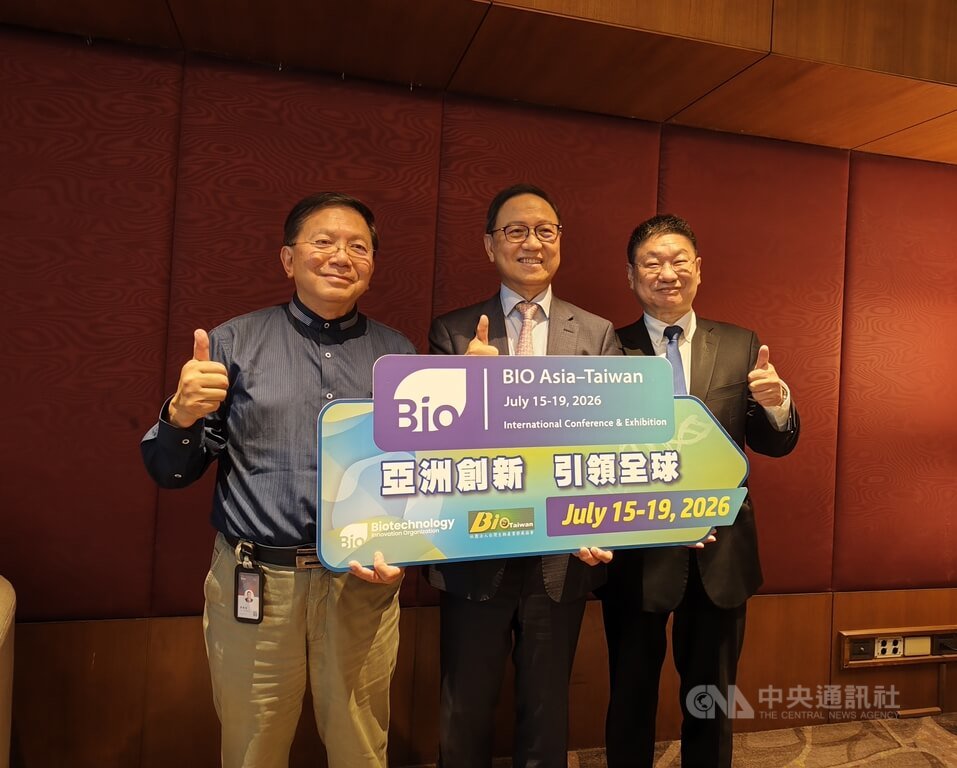
Asian Biotechnology Conference to be Held on July 15, Focusing on AI Integration to Strengthen International Links
The 2026 Asian Biotechnology Conference will take place from July 15-19, centered on the theme of "AI Integration" to accelerate the industrialization of biotech innovation. Conference Chairman Lee Chung-hee announced that this year's event will be the largest ever, with over 10,000 matchmaking sessions, 2,200 exhibition booths, and participation from more than 20 countries. The conference aims to leverage AI to enhance the entire biotech value chain, from research and development to market entry, showcasing new opportunities for rapid commercialization.
📋 Article Processing Timeline
- 📰 Published: April 14, 2026 at 17:56
- 🔍 Collected: April 14, 2026 at 18:31 (34 min after Published)
- 🤖 AI Analyzed: April 14, 2026 at 20:52 (2h 20m after Collected)
Taipei, April 14 (CNA) - The 2026 Asian Biotechnology Conference is set to take place from July 15 to 19, with a central theme of "AI Integration" aimed at accelerating the industrialization of biotech innovation. According to Lee Chung-hee, Chairman of the Asian Biotechnology Conference, this year's event is expected to break records with over 10,000 matchmaking meetings, an exhibition scale of 2,200 booths, and participation from more than 20 national pavilions and regional cooperation forums.
The Asian Biotechnology Conference, co-hosted by the Taiwan Bio Industry Organization and the global Biotechnology Innovation Organization, held a media briefing today. Under the theme "Asian Innovation, Global Leadership," the conference aims to connect global innovation, investment, regulation, and supply chains to create an international platform for accelerating the industrialization of biotech innovation.
Lee stated that the main focus of this year's conference is AI integration, noting that AI has the most applications in the healthcare and life science sectors.
He highlighted three key features of this year's conference: showcasing new opportunities for rapid commercialization in the new era of AI, demonstrating the new advantages of Asia's biomedical industry, and expanding international and academic participation.
Lee further explained that the most direct impact of AI application is in new drug development, where it can reduce experimental work through prediction and computer simulation. AI can also be applied to clinical trial design, regulatory review, and even subsequent sales and application.
He cited the example of new drug development, which can cost between USD 1 billion and 2 billion from development to market launch. Accelerating this process with AI can help reduce costs and lead to more reasonable drug prices, which is crucial for both Taiwan and the broader Asian market.
Lee emphasized that the core competitiveness of the biotech industry lies in the speed of "From Bench to Bedside," meaning the efficiency of translating academic research into clinical applications for patients. AI technology offers a new capability for accelerated integration. Therefore, the conference has planned several seminars to fully utilize AI to connect all aspects of the chain, including scientific research, innovation, investment, regulation, and supply, demonstrating new opportunities to speed up the industrialization of biotech innovation.
Furthermore, with the growing interest from international investment institutions and industries, this year's conference has expanded in terms of business matchmaking, international participation, and regional cooperation. Asia has become a new market of focus for the global biotech industry, enhancing Taiwan's visibility on the world stage.
He also noted that biotech development in various Asian countries has shown unique characteristics and achievements in recent years. For example, the results of Taiwan's large-scale precision medicine project were recently published in the leading scientific journal Nature, attracting global attention and high interest. These distinctive projects will also be presented and discussed at this year's conference to highlight the innovative features of the biotech industries in Asian countries. (Editor: Chang Liang-chih) 1150414
The Asian Biotechnology Conference, co-hosted by the Taiwan Bio Industry Organization and the global Biotechnology Innovation Organization, held a media briefing today. Under the theme "Asian Innovation, Global Leadership," the conference aims to connect global innovation, investment, regulation, and supply chains to create an international platform for accelerating the industrialization of biotech innovation.
Lee stated that the main focus of this year's conference is AI integration, noting that AI has the most applications in the healthcare and life science sectors.
He highlighted three key features of this year's conference: showcasing new opportunities for rapid commercialization in the new era of AI, demonstrating the new advantages of Asia's biomedical industry, and expanding international and academic participation.
Lee further explained that the most direct impact of AI application is in new drug development, where it can reduce experimental work through prediction and computer simulation. AI can also be applied to clinical trial design, regulatory review, and even subsequent sales and application.
He cited the example of new drug development, which can cost between USD 1 billion and 2 billion from development to market launch. Accelerating this process with AI can help reduce costs and lead to more reasonable drug prices, which is crucial for both Taiwan and the broader Asian market.
Lee emphasized that the core competitiveness of the biotech industry lies in the speed of "From Bench to Bedside," meaning the efficiency of translating academic research into clinical applications for patients. AI technology offers a new capability for accelerated integration. Therefore, the conference has planned several seminars to fully utilize AI to connect all aspects of the chain, including scientific research, innovation, investment, regulation, and supply, demonstrating new opportunities to speed up the industrialization of biotech innovation.
Furthermore, with the growing interest from international investment institutions and industries, this year's conference has expanded in terms of business matchmaking, international participation, and regional cooperation. Asia has become a new market of focus for the global biotech industry, enhancing Taiwan's visibility on the world stage.
He also noted that biotech development in various Asian countries has shown unique characteristics and achievements in recent years. For example, the results of Taiwan's large-scale precision medicine project were recently published in the leading scientific journal Nature, attracting global attention and high interest. These distinctive projects will also be presented and discussed at this year's conference to highlight the innovative features of the biotech industries in Asian countries. (Editor: Chang Liang-chih) 1150414
FAQ
What is the main theme of the 2026 Asian Biotechnology Conference?
The main theme is "AI Integration," focusing on using artificial intelligence to accelerate innovation and industrialization in the biotechnology sector.
How can AI impact the cost of drug development according to the article?
By accelerating processes like prediction and simulation, AI can help reduce the drug development cost, which can be as high as 1 to 2 billion US dollars, and lead to more reasonable drug prices.