Artemis II Key Figure Kjell Lindgren Best Understands Astronauts' Return to Earth Experience
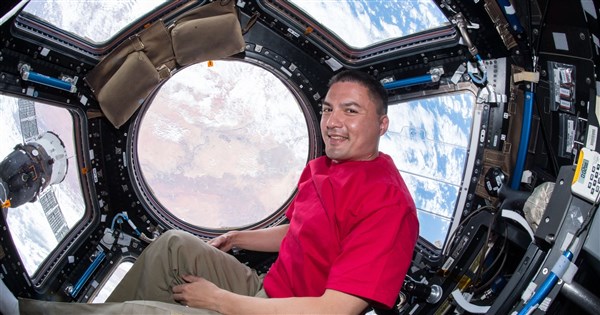
Taiwanese-American astronaut Kjell Lindgren, who has spent years helping train the four Artemis II astronauts, appeared on national television to describe the astronauts' re-entry experience. He explained the intense gravitational forces they endure and the need for physical readjustment. Lindgren, with extensive ISS experience, highlighted the importance of exercise and expressed confidence in NASA's successful mission operations.
📋 Article Processing Timeline
- 📰 Published: April 16, 2026 at 11:46
- 🔍 Collected: April 16, 2026 at 12:01 (15 min after Published)
- 🤖 AI Analyzed: April 16, 2026 at 12:14 (13 min after Collected)
Central News Agency
(Los Angeles, April 15) - Kjell Lindgren, a Taiwanese-American astronaut who has assisted in training the four Artemis II astronauts for many years, appeared on national television on the day the mission was completed, explaining that astronauts returning to Earth feel like "four times their body weight is pressing on their chest."
NASA astronaut Kjell Lindgren will visit Taiwan starting April 21st. The Artemis II spacecraft successfully splashed down off the coast of California on April 10th, completing the first human circumlunar mission in over 50 years. Lindgren, as the Deputy Director of Flight Operations, participated in astronaut training for many years.
On the day of the successful splashdown of Artemis II, Lindgren appeared on live broadcasts of Fox News and CBS, using his own experience of two space missions and 311 days living on the space station to explain to viewers.
He explained that the spacecraft uses Earth's atmospheric resistance to decelerate from 25,000 miles per hour to zero, and astronauts experience four times their body weight, feeling "as if something is heavily pressing on their chest." He said this is an inevitable experience during reentry, "I know they must have been feeling excited and expectant."
Lindgren spent about six months on each of his two previous missions on the space station. He explained that upon returning to Earth, the most crucial adaptations for the human body are to readjust the sense of balance and for "your brain to re-understand how much effort your body needs to exert to withstand gravity."
He said that to help his body adapt to gravity during reentry, he exercised for two hours every day on the space station to maintain physical strength. The Artemis II astronauts, after a 10-day mission, might experience slight dizziness and loss of balance, but they would not have lost too much muscle and bone density, allowing for quicker adaptation.
As Deputy Director of Flight Operations, Lindgren participated in the training of these four astronauts. He was both a superior and a classmate, and a good friend to them. In the live interview, he said, "Of the four astronauts on this mission, two are my classmates, and the other two are also very good friends."
When the spacecraft splashed down off the coast of California, he was in the observation deck behind the control room, watching the live broadcast with the astronauts' families. He said that having experienced two missions himself, he could best understand the families' feelings, which must have been very tense; but everyone had confidence in NASA, which relies on the cooperation of a vast team and precise division of labor, with the goal of ensuring the astronauts' safe return. (Editor: Tian Ruihua) 1150416
Stand with the facts, your every sponsorship is a force to protect press freedom
Download the CNA "One-stop News" APP to get the latest news in real-time
Text, images, and videos on this website may not be reproduced, publicly broadcast, or publicly transmitted and used without authorization.
(Los Angeles, April 15) - Kjell Lindgren, a Taiwanese-American astronaut who has assisted in training the four Artemis II astronauts for many years, appeared on national television on the day the mission was completed, explaining that astronauts returning to Earth feel like "four times their body weight is pressing on their chest."
NASA astronaut Kjell Lindgren will visit Taiwan starting April 21st. The Artemis II spacecraft successfully splashed down off the coast of California on April 10th, completing the first human circumlunar mission in over 50 years. Lindgren, as the Deputy Director of Flight Operations, participated in astronaut training for many years.
On the day of the successful splashdown of Artemis II, Lindgren appeared on live broadcasts of Fox News and CBS, using his own experience of two space missions and 311 days living on the space station to explain to viewers.
He explained that the spacecraft uses Earth's atmospheric resistance to decelerate from 25,000 miles per hour to zero, and astronauts experience four times their body weight, feeling "as if something is heavily pressing on their chest." He said this is an inevitable experience during reentry, "I know they must have been feeling excited and expectant."
Lindgren spent about six months on each of his two previous missions on the space station. He explained that upon returning to Earth, the most crucial adaptations for the human body are to readjust the sense of balance and for "your brain to re-understand how much effort your body needs to exert to withstand gravity."
He said that to help his body adapt to gravity during reentry, he exercised for two hours every day on the space station to maintain physical strength. The Artemis II astronauts, after a 10-day mission, might experience slight dizziness and loss of balance, but they would not have lost too much muscle and bone density, allowing for quicker adaptation.
As Deputy Director of Flight Operations, Lindgren participated in the training of these four astronauts. He was both a superior and a classmate, and a good friend to them. In the live interview, he said, "Of the four astronauts on this mission, two are my classmates, and the other two are also very good friends."
When the spacecraft splashed down off the coast of California, he was in the observation deck behind the control room, watching the live broadcast with the astronauts' families. He said that having experienced two missions himself, he could best understand the families' feelings, which must have been very tense; but everyone had confidence in NASA, which relies on the cooperation of a vast team and precise division of labor, with the goal of ensuring the astronauts' safe return. (Editor: Tian Ruihua) 1150416
Stand with the facts, your every sponsorship is a force to protect press freedom
Download the CNA "One-stop News" APP to get the latest news in real-time
Text, images, and videos on this website may not be reproduced, publicly broadcast, or publicly transmitted and used without authorization.