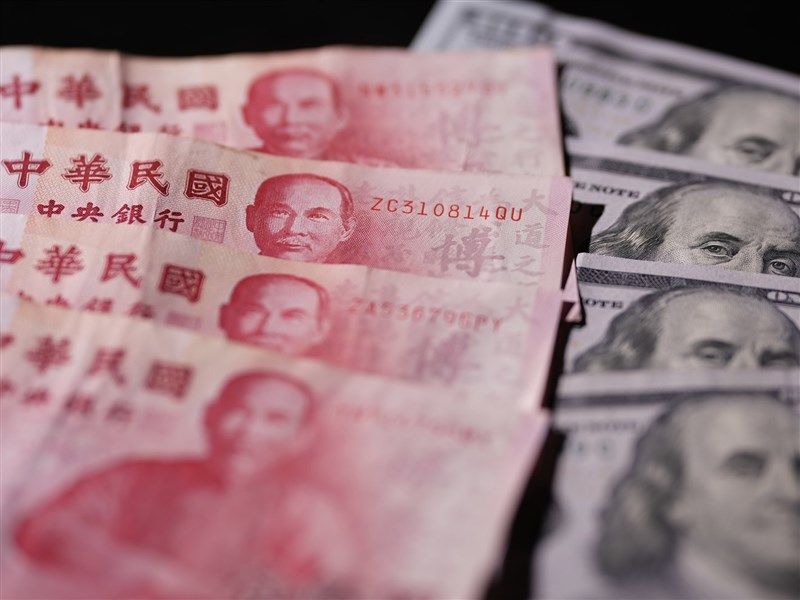
On April 13, the New Taiwan Dollar (NTD) depreciated by 5.9 cents against the US Dollar, closing at 31.785, ending a four-day appreciation streak. The total transaction volume in the Taipei and Yuanta foreign exchange markets was US$2.0025 billion. The failure of US-Iran ceasefire talks led to renewed risk aversion and an increase in the US Dollar index, causing most Asian currencies to weaken. US President Trump ordered a blockade of the Strait of Hormuz, escalating tensions. Japanese and Korean stock markets closed lower. The Taiwan stock market closed at a new high of 35457.29 points, rising by 39.46 points, driven by strong performance in passive components. Foreign investors withdrew NTD 16.13 billion from the Taiwan stock market and remitted funds out of the foreign exchange market, contributing to the NTD's depreciation. The NTD opened at 31.76 against the US Dollar and depreciated to a low of 31.848 during trading, a drop of 1.22 cents. Exporters actively sold foreign currency above 31.8, and the Central Bank intervened at the close, allowing the NTD to recover to the 31.7 level. Foreign exchange traders noted that the lack of positive progress in US-Iran talks indicates ongoing geopolitical risks, casting a shadow over financial markets. However, after nearly a month and a half of conflict, the negative impact is becoming somewhat blunted, leading to reduced trading volume and a weaker, consolidating foreign exchange market. The Central Bank stated its intention to stabilize the foreign exchange market to alleviate imported inflation pressure, which traders believe will calm market sentiment. Without significant negative news, the NTD is not expected to fall sharply, with an estimated trading range of 31.7 to 32.1 this week. Rising international oil prices and their potential negative chain effects on industries and the economy remain a concern.
FACT BOX
- Source: CNA (Central News Agency)
- Category: financial