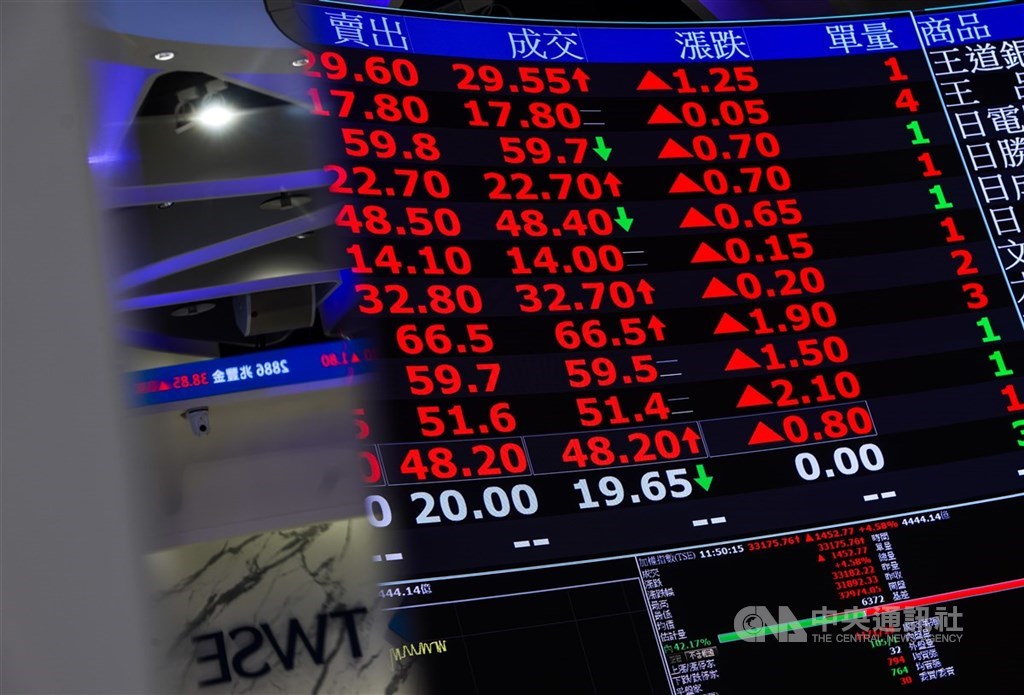
(Central News Agency reporter Pan Chih-yi, Taipei, 13th) Affected by geopolitical events, the stock market has experienced severe volatility this year, but the enthusiasm for active fund investment has not diminished, but rather increased. The latest data from fund trading platform FundRich Securities shows that in the first quarter, the platform added nearly 20,000 new accounts, and the overall subscription amount grew by 80% compared to the same period last year, with the monthly regular fixed-amount deduction amount exceeding NT$4 billion for the first time.
After the Financial Supervisory Commission (FSC) promoted the "Taiwan Individual Investor Savings Account (TISA)" system, the public's concept of investment and financial management has matured. Taking this year as an example, despite multiple impacts from inflation, interest rate policies, and geopolitical events, it has not interrupted people's long-term investment behavior, and has even prompted more young professionals to join the ranks of financial management.
According to FundRich statistics, the platform added nearly 20,000 new accounts in the first quarter, more than double the number in the same period last year, and the overall subscription amount grew by 80% compared to the same period last year. Among them, regular fixed-amount investments also increased by 40%, and the monthly deduction amount exceeded NT$4 billion for the first time, indicating that in a volatile market, many people tend to invest rationally and regularly, implementing long-term financial plans.
Lin Ping-hui, chairman of FundRich, said that regular fixed-amount investments have a low capital threshold, especially with the Taiwan Individual Investor Savings Account fund, which allows investments starting from a minimum of NT$1,000 per month, and there is no need to worry about whether it is a high or low point. He said that by entering the market in batches, investors can avoid buying at a concentrated high point, and can buy more fund units when the market is sluggish, effectively averaging out the holding cost in the long run, making it easier to achieve the goal of long-term personal wealth accumulation.
Lin Ping-hui pointed out that for investors with ample capital who also want to accelerate their deployment in a volatile market, they can set up automatic additional investments at low points in their regular fixed-amount contract. When the market falls by a preset margin, they can systematically increase their investment positions according to the pre-set deduction amount, without having to constantly monitor the market. This allows them to seize the opportunity to enter the market during downturns, making their investment strategy more flexible and amplifying long-term investment returns.
He emphasized that ordinary people may lack the time or professional ability to conduct in-depth research, and the international political and economic situation is even more unpredictable. Even a stock god would find it difficult to grasp the absolute entry point. Instead of worrying about bubble risks, it is better to use "regular fixed-amount investment" for long-term orderly investment, so that emotions do not fluctuate with market volatility, which is the key to investment success. (Editor: Yang Kai-hsiang) 1150413
Choose to stand with facts; every sponsorship you provide is a force for protecting press freedom.
Download the Central News Agency "First-hand News" APP to stay updated with the latest news.
Text, images, and videos on this website may not be reproduced, publicly broadcast, or publicly transmitted and used without authorization. Keywords: None
FACT BOX
- Source: CNA (Central News Agency)
- Category: financial