Iran War Boosts China's Green Energy and South Korean/European Arms Industries as Winners
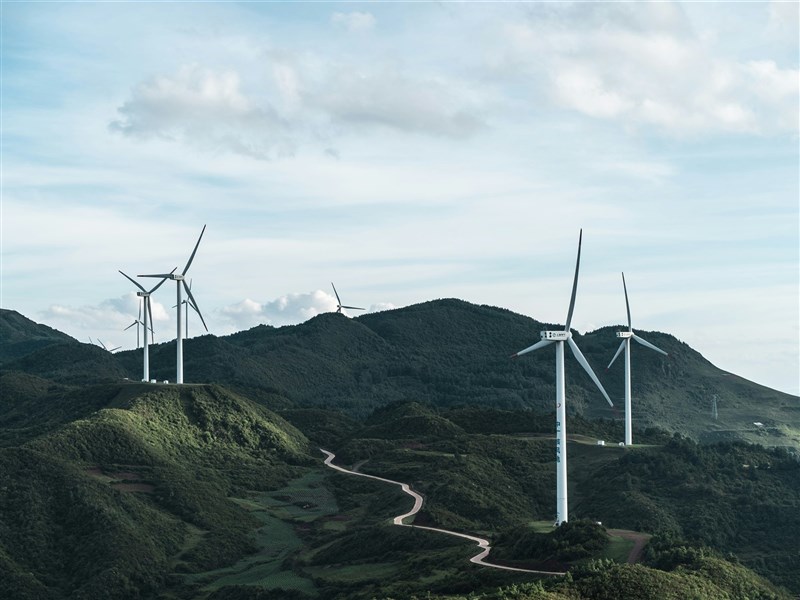
The war in Iran has disrupted oil and gas exports from the Middle East, accelerating the adoption of renewable energy and driving demand for China's green technology. Meanwhile, after inventory depletion and with U.S. production unable to cope, Persian Gulf countries are turning to South Korea, Ukraine, and other nations to replenish their arsenals.
📋 Article Processing Timeline
- 📰 Published: April 13, 2026 at 12:44
- 🔍 Collected: April 13, 2026 at 12:51 (7 min after Published)
- 🤖 AI Analyzed: April 13, 2026 at 14:47 (1h 56m after Collected)
US-Iran War Special Report
Central News Agency
(CNA Washington, 12th, Comprehensive Foreign Report) The war in Iran has disrupted oil and gas exports from the Middle East, prompting countries to accelerate the adoption of renewable energy and boosting demand for China's green energy technology. After depletion from Iran's attacks and with U.S. production capacity unable to meet demand, Persian Gulf countries are turning to South Korea, Ukraine, and others to replenish their arms.
The Wall Street Journal, citing data from the International Energy Agency (IEA), shows that China accounts for about 80% of global solar technology manufacturing and over 70% of global electric vehicle production. According to Chinese customs data compiled by Ember, China's exports of green energy technology (including solar panels, electric vehicles, wind turbines, and batteries) were close to $20 billion in February this year.
'China already completely dominates (green energy),' said Euan Graham, an analyst at the clean energy think tank Ember. 'They are likely to be the big winners after this crisis. We do expect a significant surge in China's clean tech exports.'
Although U.S. President Donald Trump stated in early April that countries should buy more American oil and gas to cope with the uncertainty in the Middle East, the key difference between renewable energy and fossil fuels is that buyers only need to pay once for a solar power plant or wind turbine, whereas buying oil and gas requires continuous imports.
Furthermore, some countries, including China, that have previously accelerated their transition to renewable energy are in a better position to handle the current crisis. In China's case, over 50% of its electricity comes from domestically mined coal, with another 40% from low-carbon power generation.
Since the outbreak of the Iran war, the trend of renewable energy transition has accelerated. As rising fuel prices increase the appeal of plug-in vehicles, China's electric vehicle exports in March this year more than doubled compared to the same period last year. UK power supplier Octopus Energy said its solar panel sales in March surged by 78% compared to February. Sales of heat pumps (a low-carbon technology that extracts heat from the air to heat homes) also doubled in the same month.
Beijing designated solar energy and electric vehicles as strategic industries years ago, and local governments poured funds into related sectors, sparking fierce competition. As a result, although China now dominates these technologies, it suffers from oversupply and eroded profits for domestic companies. However, after the Iran war broke out, the low prices became highly attractive to overseas buyers, turning into a boon.
A renewable energy product exporter in Qingdao, China, said his sales in March this year were about three times that of the same period last year.
Additionally, after six weeks of airstrikes depleted their air defense stockpiles, Saudi Arabia, Qatar, and the United Arab Emirates plan to purchase South Korean air defense systems, Ukrainian drones, and British micro-missiles. This wave of foreign procurement highlights the current U.S. predicament of being unable to meet global military-industrial demand.
Sources familiar with the matter revealed that Saudi Arabia has contacted Japan, which produces interceptor missiles for the Patriot air defense system, and has inquired with South Korean companies like Hanwha and LIG Nex1 about expediting the delivery of M-SAM systems. The M-SAM is a Korean-made medium-range air defense weapon that the UAE has used to shoot down Iranian drones.
Saudi Arabia has also signed a defense cooperation agreement with Ukraine, focusing on weapons production and experience sharing. Qatar has also signed a cooperation agreement with Ukraine, and its officials recently visited a drone interception training site in Ukraine. However, Ukrainian arms manufacturers may not have surplus stock or export capacity, as they must first meet high domestic demand, and exports also require government approval.
The Wall Street Journal stated bluntly that the core of the problem is that U.S. arms production cannot keep up with global demand in wartime. The Trump administration facilitated a total of $23 billion in U.S. arms sales to the UAE, Kuwait, and Jordan, including air defense systems, radar, and Patriot PAC-3 missiles, but most deliveries will take several years. (Compiled by: Chen Yi-wei) 1150413
Central News Agency
(CNA Washington, 12th, Comprehensive Foreign Report) The war in Iran has disrupted oil and gas exports from the Middle East, prompting countries to accelerate the adoption of renewable energy and boosting demand for China's green energy technology. After depletion from Iran's attacks and with U.S. production capacity unable to meet demand, Persian Gulf countries are turning to South Korea, Ukraine, and others to replenish their arms.
The Wall Street Journal, citing data from the International Energy Agency (IEA), shows that China accounts for about 80% of global solar technology manufacturing and over 70% of global electric vehicle production. According to Chinese customs data compiled by Ember, China's exports of green energy technology (including solar panels, electric vehicles, wind turbines, and batteries) were close to $20 billion in February this year.
'China already completely dominates (green energy),' said Euan Graham, an analyst at the clean energy think tank Ember. 'They are likely to be the big winners after this crisis. We do expect a significant surge in China's clean tech exports.'
Although U.S. President Donald Trump stated in early April that countries should buy more American oil and gas to cope with the uncertainty in the Middle East, the key difference between renewable energy and fossil fuels is that buyers only need to pay once for a solar power plant or wind turbine, whereas buying oil and gas requires continuous imports.
Furthermore, some countries, including China, that have previously accelerated their transition to renewable energy are in a better position to handle the current crisis. In China's case, over 50% of its electricity comes from domestically mined coal, with another 40% from low-carbon power generation.
Since the outbreak of the Iran war, the trend of renewable energy transition has accelerated. As rising fuel prices increase the appeal of plug-in vehicles, China's electric vehicle exports in March this year more than doubled compared to the same period last year. UK power supplier Octopus Energy said its solar panel sales in March surged by 78% compared to February. Sales of heat pumps (a low-carbon technology that extracts heat from the air to heat homes) also doubled in the same month.
Beijing designated solar energy and electric vehicles as strategic industries years ago, and local governments poured funds into related sectors, sparking fierce competition. As a result, although China now dominates these technologies, it suffers from oversupply and eroded profits for domestic companies. However, after the Iran war broke out, the low prices became highly attractive to overseas buyers, turning into a boon.
A renewable energy product exporter in Qingdao, China, said his sales in March this year were about three times that of the same period last year.
Additionally, after six weeks of airstrikes depleted their air defense stockpiles, Saudi Arabia, Qatar, and the United Arab Emirates plan to purchase South Korean air defense systems, Ukrainian drones, and British micro-missiles. This wave of foreign procurement highlights the current U.S. predicament of being unable to meet global military-industrial demand.
Sources familiar with the matter revealed that Saudi Arabia has contacted Japan, which produces interceptor missiles for the Patriot air defense system, and has inquired with South Korean companies like Hanwha and LIG Nex1 about expediting the delivery of M-SAM systems. The M-SAM is a Korean-made medium-range air defense weapon that the UAE has used to shoot down Iranian drones.
Saudi Arabia has also signed a defense cooperation agreement with Ukraine, focusing on weapons production and experience sharing. Qatar has also signed a cooperation agreement with Ukraine, and its officials recently visited a drone interception training site in Ukraine. However, Ukrainian arms manufacturers may not have surplus stock or export capacity, as they must first meet high domestic demand, and exports also require government approval.
The Wall Street Journal stated bluntly that the core of the problem is that U.S. arms production cannot keep up with global demand in wartime. The Trump administration facilitated a total of $23 billion in U.S. arms sales to the UAE, Kuwait, and Jordan, including air defense systems, radar, and Patriot PAC-3 missiles, but most deliveries will take several years. (Compiled by: Chen Yi-wei) 1150413