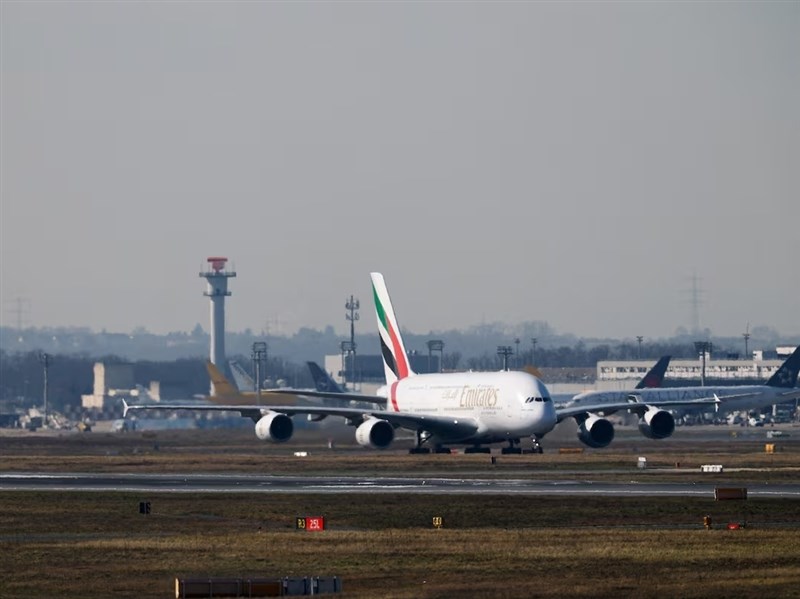
Central News Agency, Brussels, April 12 (Comprehensive Foreign Report) - European airport operators have warned that if the Strait of Hormuz is not fully reopened within three weeks, airports across Europe will face a "systemic" shortage of jet fuel, which will severely hamper air connectivity and bring economic shocks.
ACI Europe, whose member airports handle over 95% of Europe's commercial air traffic, stated that declining jet fuel reserves are being exacerbated by "military activities impacting supply and demand."
According to a letter obtained by the Financial Times, ACI Europe warned the European Commissioner for Transport, Apostolos Tzitzikostas, of the growing industry concern over jet fuel supply disruptions, emphasizing the need for the EU to proactively monitor and act.
"If a significant and stable restoration of passage through the Strait of Hormuz is not achieved within the next three weeks, a systemic jet fuel shortage in the EU will become a reality," the letter stated. It also reminded that with the summer tourist season approaching, many EU economies rely on air travel which underpins the entire tourism ecosystem.
"A supply crunch would severely disrupt airport operations and air connectivity. A systemic jet fuel shortage would have a severe economic impact across Europe," ACI Europe said in the letter, calling for EU-wide supply monitoring to coordinate an industry response.
Some Asian countries, like Vietnam, have already started rationing jet fuel due to supply shortages. While there is no widespread shortage in Europe yet, fuel prices have doubled, and airlines have warned that flight cancellations may become more frequent.
A systemic shortage means the problem is no longer just high fuel prices, but also that "fuel may not be available even if you have the money." This would lead to large-scale flight cancellations at airports, and the sharp drop in air traffic would impact the economy.
Business intelligence and analysis firm Argus Media pointed out that the benchmark price for jet fuel in Northwest Europe closed at $1,573 per ton on the 9th, far higher than the pre-Iran war level of about $750 per ton.
European airlines stated that fuel inventories should be sufficient for several weeks, but suppliers cannot guarantee continued supply into May. The rise in jet fuel prices has made some routes unprofitable, and some airlines have already started reducing flights.
Due to disruptions from major suppliers, four airports in Italy had already implemented restrictions on jet fuel in early April. (Translation: Chen Yi-wei) 1150413
FACT BOX
- Source: CNA (Central News Agency)
- Category: Survey
- Organizations: Argus Media