Amid Frequent Cases of Sexual Assault, Child Abuse, and Fraud, KMT Lawmakers Propose Referendum on Caning
Multiple lawmakers from Taiwan's opposition KMT party have announced a push for a referendum to introduce 'caning' for crimes such as sexual assault, child abuse, and major fraud. This move, aimed at responding to public opinion favoring harsher punishments, is likely to spark a significant social debate.
📋 Article Processing Timeline
- 📰 Published: April 13, 2026 at 12:45
- 🔍 Collected: April 13, 2026 at 12:51 (6 min after Published)
- 🤖 AI Analyzed: April 13, 2026 at 13:01 (9 min after Collected)
Central Message
(CNA, Taipei, 13th, Reporter Liu Kuan-ting) In response to the continuous occurrence of serious crimes such as sexual assault, child abuse, and high-value fraud in recent years, several Kuomintang (KMT) legislators, including Hung Meng-kai, announced today that they will promote a "referendum on caning." Hung explained that this is not for emotionally escalating punishment but aims to respond to the people's expectations for the state's duty of protection and the bottom line of social security through a process that combines democracy and the rule of law.
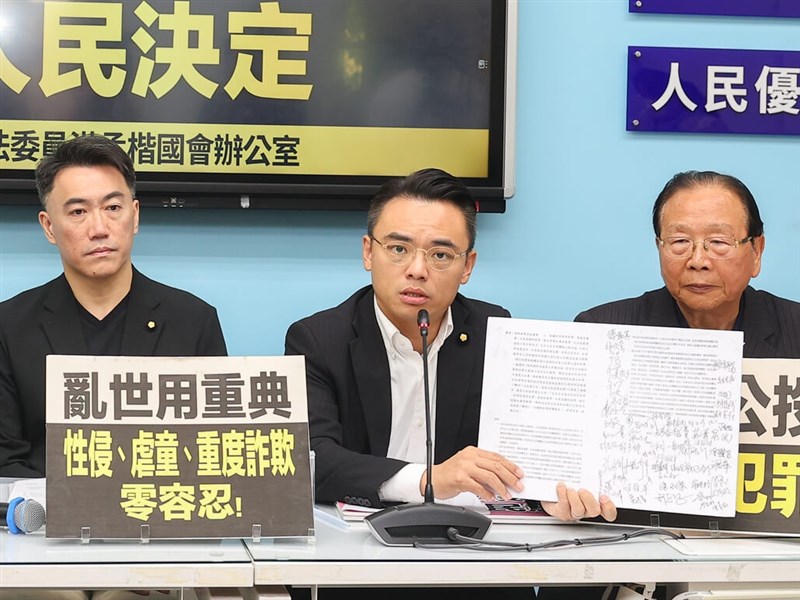
Hung held a press conference today with KMT legislators Lin Pei-hsiang, Lo Chih-chiang, Huang Chien-hao, Lin Te-fu, Liao Wei-hsiang, and Yang Chiung-ying to announce the proposal for a policy referendum on "establishing a special criminal law system (caning) for specific serious crimes." They advocate that, following democratic procedures, the question of whether the state needs to establish a more deterrent special criminal law system for specific serious crimes should be put to the people for a collective opinion, serving as an important basis for subsequent system planning and legislative work.
Hung stated that as cases of sexual assault, child abuse, and major fraud repeatedly occur, and the nature of these crimes becomes more malicious, complex, and organized, whether the state can still respond to society's expectations for public safety, procedural justice, and victim protection with its existing criminal law framework has become a major policy issue that must be seriously addressed.
Hung pointed out that proposing a referendum this time is not to directly create criminal penalties through a referendum, nor to replace the legislative power of the Legislative Yuan or the judicial and sentencing powers of the courts in individual cases. Instead, it is to allow the public to make a choice on a major policy direction in accordance with the provisions of the Referendum Act, forming a clear, legitimate, and democratically based public mandate.
Huang Chien-hao said that proposing the referendum is to respond to public opinion. According to opinion polls, 70% of the public favors introducing caning for crimes of sexual assault, child abuse, and fraud. During the discussion process of this referendum, the general public can discuss and debate whether the human rights of criminals are more important, or the peaceful and prosperous life of the general public is more important.
Lo Chih-chiang urged Democratic Progressive Party (DPP) legislators to stand with the public and not vote against it; once the caning referendum is approved by the Legislative Yuan, he will ask the Central Election Commission to implement it according to the law, and referendums will no longer be confiscated.
Liao Wei-hsiang emphasized that the goal is not to write criminal law directly through a referendum, but to let the public express whether Taiwan should establish a special punishment system for crimes such as sexual assault, child abuse, high-value fraud, and aggravated fraud. He believes that they should not let more families continue to wait, endure, and be deceived while everyone does nothing.
Lin Pei-hsiang stated that proposing the referendum is not to deny human rights, but to restore the due dignity and safety to victims while protecting the rights of perpetrators. He understands that this is a difficult and controversial issue, but they cannot evade the responsibility of letting the people speak. The spirit of the referendum is to return the right of choice to the people. He hopes to open a rational debate and discussion on how to find a balance between protecting human rights and deterring crime in a society under the rule of law. (Edited by: Chang Jo-yao, Su Chih-tsung) 1150413
(CNA, Taipei, 13th, Reporter Liu Kuan-ting) In response to the continuous occurrence of serious crimes such as sexual assault, child abuse, and high-value fraud in recent years, several Kuomintang (KMT) legislators, including Hung Meng-kai, announced today that they will promote a "referendum on caning." Hung explained that this is not for emotionally escalating punishment but aims to respond to the people's expectations for the state's duty of protection and the bottom line of social security through a process that combines democracy and the rule of law.
Hung held a press conference today with KMT legislators Lin Pei-hsiang, Lo Chih-chiang, Huang Chien-hao, Lin Te-fu, Liao Wei-hsiang, and Yang Chiung-ying to announce the proposal for a policy referendum on "establishing a special criminal law system (caning) for specific serious crimes." They advocate that, following democratic procedures, the question of whether the state needs to establish a more deterrent special criminal law system for specific serious crimes should be put to the people for a collective opinion, serving as an important basis for subsequent system planning and legislative work.
Hung stated that as cases of sexual assault, child abuse, and major fraud repeatedly occur, and the nature of these crimes becomes more malicious, complex, and organized, whether the state can still respond to society's expectations for public safety, procedural justice, and victim protection with its existing criminal law framework has become a major policy issue that must be seriously addressed.
Hung pointed out that proposing a referendum this time is not to directly create criminal penalties through a referendum, nor to replace the legislative power of the Legislative Yuan or the judicial and sentencing powers of the courts in individual cases. Instead, it is to allow the public to make a choice on a major policy direction in accordance with the provisions of the Referendum Act, forming a clear, legitimate, and democratically based public mandate.
Huang Chien-hao said that proposing the referendum is to respond to public opinion. According to opinion polls, 70% of the public favors introducing caning for crimes of sexual assault, child abuse, and fraud. During the discussion process of this referendum, the general public can discuss and debate whether the human rights of criminals are more important, or the peaceful and prosperous life of the general public is more important.
Lo Chih-chiang urged Democratic Progressive Party (DPP) legislators to stand with the public and not vote against it; once the caning referendum is approved by the Legislative Yuan, he will ask the Central Election Commission to implement it according to the law, and referendums will no longer be confiscated.
Liao Wei-hsiang emphasized that the goal is not to write criminal law directly through a referendum, but to let the public express whether Taiwan should establish a special punishment system for crimes such as sexual assault, child abuse, high-value fraud, and aggravated fraud. He believes that they should not let more families continue to wait, endure, and be deceived while everyone does nothing.
Lin Pei-hsiang stated that proposing the referendum is not to deny human rights, but to restore the due dignity and safety to victims while protecting the rights of perpetrators. He understands that this is a difficult and controversial issue, but they cannot evade the responsibility of letting the people speak. The spirit of the referendum is to return the right of choice to the people. He hopes to open a rational debate and discussion on how to find a balance between protecting human rights and deterring crime in a society under the rule of law. (Edited by: Chang Jo-yao, Su Chih-tsung) 1150413