Taipei, April 13 (CNA) To strengthen the exchange of patient data among medical institutions and introduce the FHIR standard, the Ministry of Health and Welfare (MOHW) aims to achieve electronic medical record interoperability across all medical centers in Taiwan this year. This will gradually extend to smaller hospitals and clinics, with initial plans to encourage participation through health insurance payments, and future consideration for mandatory legislation and inclusion in hospital evaluations.
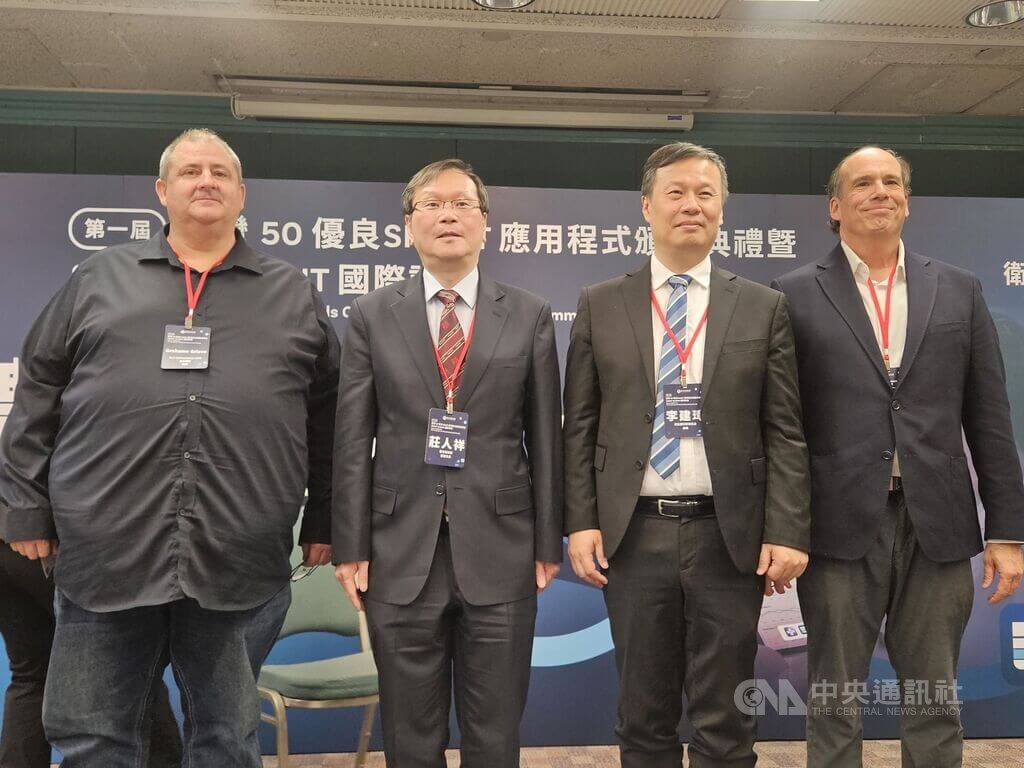
The MOHW today held its first excellent SMART application award ceremony and international forum. SMART is a concept for promoting substitutable medical applications and reusable technology in the medical field, not limited to third-party certification frameworks. The full meaning of SMART on FHIR is Substitutable Medical Applications, Reusable Technologies on Fast Healthcare Interoperability Resources.
Legislation would facilitate the promotion of interoperability and integration of medical information systems. Kenneth D. Mandl, founder of SMART and professor at Harvard Medical School, shared at an international press conference that electronic medical records are widespread in the United States, but in the past, data was easy to store but difficult to retrieve. With the passage of the 21st Century Cures Act, health data is now required to be open for software development applications, promoting the circulation of medical information.
Regarding whether Taiwan will move towards mandatory legislation for medical institutions to implement the FHIR standard, MOHW Deputy Minister Chuang Jen-hsiang stated that relevant standards and digital infrastructure are still emerging concepts and challenges for Taiwanese medical institutions. At this stage, encouraging promotion through the national health insurance system is more effective than simply enforcing it through legislation, as legislative penalties might increase pressure on medical institutions and hinder initial progress.
Li Chien-chang, Director of the MOHW Department of Information Management, further explained that the four-year Next-Generation Digital Healthcare Platform project is now in its third year. The first two years were mainly used to formulate FHIR standards and related processes. Last year, trial interoperability of electronic medical records was completed at MacKay Memorial Hospital, Taichung Chung Shan Medical University Hospital, and Chang Gung Memorial Hospital. This year's goal is to complete the connection of electronic medical records across all medical centers in Taiwan.
Li Chien-chang said that in 2027, the plan is to achieve simultaneous interoperability for regional and district hospitals; in 2028, all medical institutions, including health centers and clinics, will be included in the scope of electronic medical record interoperability. The strategy is to first familiarize hospitals with the entire framework before planning relevant legislation. Experts have suggested incorporating the FHIR standard into medical evaluations, and its feasibility will be considered in the next hospital evaluation reform.
Li Chien-chang pointed out that FHIR is like the WWW of electronic medical records, Fast Healthcare Interoperability Resources, which has the advantage of high data interoperability and can solve the dilemma of lacking a unified data exchange standard. It is a new generation of international medical data exchange standards used worldwide.
However, most medical institutions in Taiwan still use old formats, and there are more than 30 different medical record systems. Li Chien-chang said this leads to all health data being in "isolated islands." Even with today's advanced information technology, two medical centers in Taiwan cannot exchange patient data via computer; they must burn CDs or print paper records. Only through the FHIR standard and related digital infrastructure can this deadlock be broken.
Li Chien-chang stated that as medical information moves from closed systems to cross-hospital and cross-system interoperability, in the future, when people seek medical treatment at different medical institutions, relevant health data can be instantly connected with authorization, eliminating the need to repeatedly carry paper medical records or undergo unnecessary duplicate examinations. Doctors can also more quickly grasp patients' medical history and medication records, improving diagnostic efficiency and quality. (Editor: Chen Ching-fang) 1150413
FACT BOX
- Source: CNA (Central News Agency)
- Category: regulation