(Central News Agency) How long has it been since you did something purely out of love? Do we focus too much on achieving goals and forget how to be fun and interesting people? To resist the 'struggle culture,' lawyer Karen Walrond (Karen Walrond) decided to embark on an 'amateur hobby' experiment. She tried pottery, swimming, playing the piano, surfing, and even photographing the galaxy, among other things she was not good at. The process was not smooth, but she found joy and growth in it.
This series of adventures began with a kitchen conversation. Walrond felt that she did not have anything she could call 'specialized,' and her husband tried to comfort her but realized that he could not really say what she was good at. The more she thought about it, the more confused Walrond became. She began to research this issue. She was satisfied with her life, but this beautiful life had little to do with 'professional' or 'technical proficiency.' 'From career to parenting, almost everything I have done brings happiness, mostly from the act of 'trying' itself.' In an age of pursuing excellence, can't being an amateur be okay?
Thus, Walrond began her amateur hobby experiment, letting go of the pursuit of perfection, embracing every attempt and failure with curiosity, finding the ability to play, and finding a way to slow down. Central News obtained authorization to share part of the content with you.
Except for a few exceptions, I have spent most of my life doing things without much adventurous spirit. It is best to stay in a comfortable corner, and in an ideal state, it should be accompanied by a cup of hot tea.
As someone deeply entrenched in the comfort zone, I secretly harbor resentment towards those who advise me to step out of it. After all, why do it? Who decides it's a good thing? The comfort zone is like a warm blanket, especially cozy when wrapped around you. You go ahead and have fun outside the comfort zone, I'll stay here, thank you.
However, deep down, I have always been pondering: Is this excessive dependence on the comfort zone harming self-development? Julia Cameron, author of 'The Artist's Way,' explains: 'Moderate adventure can stimulate vitality because it expands the boundaries of self-definition.' This self-definition comes from the crystallization of all our life experiences. Therefore, I doubt that closing oneself off and not adding new experiences is beneficial for expanding self-definition. More importantly, research shows that when we step out of the comfort zone, our stress tolerance is enhanced. Our perception of the world will expand accordingly, and we will have a better understanding of our position. Ultimately, we will give ourselves agency, not only to know ourselves more deeply but also to realize that everyone has the power to create an ideal life.
Kristen Butler, in 'The Comfort Zone,' offers a new perspective on the concept of the comfort zone. She distinguishes the comfort zone from the 'complacency zone'—when we are in the latter mindset, we hear this kind of voice: 'The status quo is fine, why seek more? Dreams are meaningless because hope will only bring disappointment in the end.' When we see experts skillfully perform an activity and think, 'If I try, I will look stupid,' we are already deeply trapped in the complacency zone. On the other hand, if we resolutely refuse the idea of trying new things, even if a corner of our heart is actually curious, we are wandering in the complacency zone.
On the other hand, the comfort zone is a domain where we feel safe and can therefore expand. Butler writes: 'When standing in the comfort zone, you will listen to your inner guidance rather than others' advice. You will establish healthy boundaries and gain respect. Thus, you begin to live in your own way, not following the map planned for you by others.'
I like this redefinition. Perhaps the comfort zone is not, as everyone thinks, a state of stagnation, nor is it a cage that must be escaped, but a safe harbor that allows us to freely explore how far we can go if we fully immerse ourselves, explore the boundaries of our potential, and then take steps forward.
We don't need to actually leave the comfort zone to expand it. This idea fascinates me. If we intentionally maintain an amateur status, is it not to escape the comfort zone, but to gradually stretch its boundaries until it is spacious enough to accommodate those new, adventurous, and brave things?
A few years later, when I chatted with my friend Aimee Woodall, this idea resurfaced. She told me about her story of expanding her comfort zone—simply by walking in the forest.
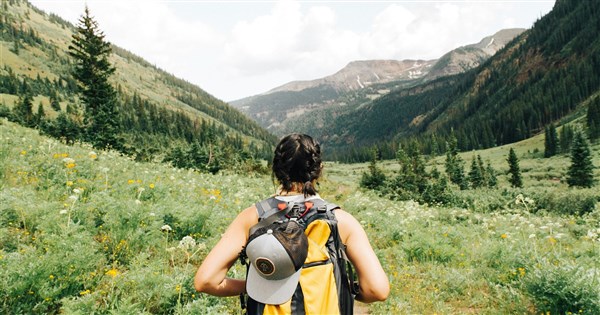
The Appalachian Trail is a winding trail along the eastern coast of the United States, stretching from Georgia to Maine, said to be the longest hiking trail in the world. Incredibly, I had known Aimee for 10 years before I knew she had hiked the entire 3,500-kilometer trail alone.
I didn't think she couldn't do it; I just never thought Aimee, the executive director of a successful brand strategy and creative agency in Houston, would be interested in such a thing. She admitted that embarking on a hiking journey, trekking deep into the wilderness for several months, was indeed not like her style.
Aimee told me she had heard of the trail a few years ago. At the time, she was sitting on a high stool at the bar of a restaurant in North Carolina. Two backpackers came in and sat next to her. 'Before that, I had never heard of the Appalachian Trail, but after talking to them, I was completely captivated,' she told me. 'It sounded like an adventure I could handle. I have healthy legs, a strong body, and I love the mountains. So, years later, when an important relationship broke down and I needed to readjust myself, I remembered that conversation.'
The most amazing thing is that when Aimee decided to embark on the Appalachian Trail, she had actually never really hiked before. If, as she planned, she was to walk from the southern end to the northern end, she had to set out in a specific season to complete the entire route before winter. The last challenge for hikers is Mount Katahdin in Maine, and snowfall makes climbing dangerous. When Aimee made her decision, there were only about four weeks left until departure. To arrive at Katahdin in time, she had to quickly make a plan.
So she bought a pair of hiking boots and walked around at home to break them in.
'Well, let me get this straight,' I said, 'just a few weeks after deciding to go, you flew to Georgia to start this journey, wearing newly bought hiking boots, and alone? This is a complete leap out of the comfort zone! Weren't you afraid?'
'Of course I was afraid, but it was precisely because everyone said I was crazy that their doubts gave me the motivation,' Aimee said. 'Besides, there was no time to hesitate. The schedule was set, and to arrive at Katahdin in time, I had to leave immediately.'
'It sounds like your attitude is: I will definitely climb the top of that damn mountain at the end of the trail to prove to everyone that I can do it.'
Aimee thought for a moment. 'To be honest, at that time, what was in my mind was: I will climb the damn peak at the end of the trail to prove to myself that I can do it.'
'Oh, that's a big difference,' I said.
'Yes. Besides, the worst that could happen is that I could leave the trail and go home at any time. But at that time, I was experiencing a major turning point in my life, and the option of going home was not attractive, so the reward of persevering was much more powerful than giving up.'
This is crucial: Aimee believed she could stop at any time if she needed to. This belief gave her a safety net, allowing her to take risks and creating space for her to break through herself and expand her comfort zone.
'You said this experience completely changed your life,' I opened my mouth, 'what did this trail teach you?'
'Aimee answered without hesitation, recalling her hiking journey, her eyes sparkling with light. 'I realized that as long as you dare to try, everything is possible.'
'But there's one more thing,' she added, 'another lesson the trail taught me—something I probably think about 15 times a day—is that as long as you take one step at a time, any goal can be achieved. I personally proved this metaphor: hiking through 14 states, walking 3,500 kilometers, all thanks to one step at a time. It's also because of this that I truly trained the ability to break down huge, overwhelming, even frightening plans into manageable small tasks.' I asked Aimee, if you had the chance to do it again, would you embark on the journey again?
'I don't know,' she said after a moment's thought. 'I feel there's no need. That experience only applied to that moment. But the Appalachian Trail did make me fall in love with hiking. It's weird, right? I did something big on a whim and ended up falling in love with it. So, although I might not go on a months-long hike in the near future, I do want to incorporate hiking into my life as much as possible.'
What a wonderful self-identity expansion. Aimee discovered this hobby while exploring the edges of her comfort zone and still enjoys it to this day, sharing the joy with her partner and young child. Now, she has become an amateur hiking enthusiast in the best possible way. (Book excerpt authorized by Yuezhi Culture; Editor: Wang Jiayu) 1150716
Choose to stand with facts, you
FACT BOX
- Source: CNA (Central News Agency)
- Category: Taiwan