Special Report on Europe's Energy Transformation (3 Parts)
By 2025, the EU's renewable energy share will surpass fossil fuels. However, with the explosion of AI computing power bringing a "tsunami of electricity consumption," Europe's green energy ideals are showing cracks, prompting many countries to re-strategize. Germany is experimenting with artificial suns, Italy is breaking a 40-year taboo to restart nuclear power and participate in hydrogen corridors, while France views nuclear energy as a strong asset. Europe is unveiling an "energy transformation" crucial for industrial development and geopolitical economic security.
BRUSSELS, June 24 (CNA) - The European Union is set to mark a historic high in renewable energy share in 2025, but the accompanying issues of "electricity that cannot be delivered" and "high electricity prices" serve as a warning that the green energy transition will not be smooth sailing. Facing changing geopolitical landscapes, AI-driven electricity consumption, and climate targets, many countries are re-strategizing, unveiling an "energy transformation" critical for Europe's industrial development and economic security.
According to several position papers from the European Investment Bank (EIB), Russia's invasion of Ukraine in 2022 exposed Europe's vulnerability from over-reliance on imported fossil fuels like Russian natural gas. The blockade of the Strait of Hormuz during the Iran-Iraq War in 2025 again triggered a global energy crisis. Through renewable energy sources like wind and solar power, Europe can withstand impacts from supply chain disruptions and geopolitical maneuvering.
To combat global warming, Europe has set climate goals to reduce greenhouse gas emissions by more than 55% compared to 1990 levels by the end of 2030 and achieve net-zero emissions by 2050. The gradual phasing out of fossil fuels is crucial for meeting these targets.
A report by the International Energy Agency (IEA) indicates that with the rise of Artificial Intelligence (AI), electricity consumption for data centers dedicated to training and developing AI is projected to double by 2030. To address the electricity gap, Italian Prime Minister Giorgia Meloni's cabinet has proposed and passed a "Return to Nuclear Energy Bill" through parliament, allocating 6 billion euros to promote hydrogen research. France, already a major nuclear power, is accelerating its nuclear expansion.
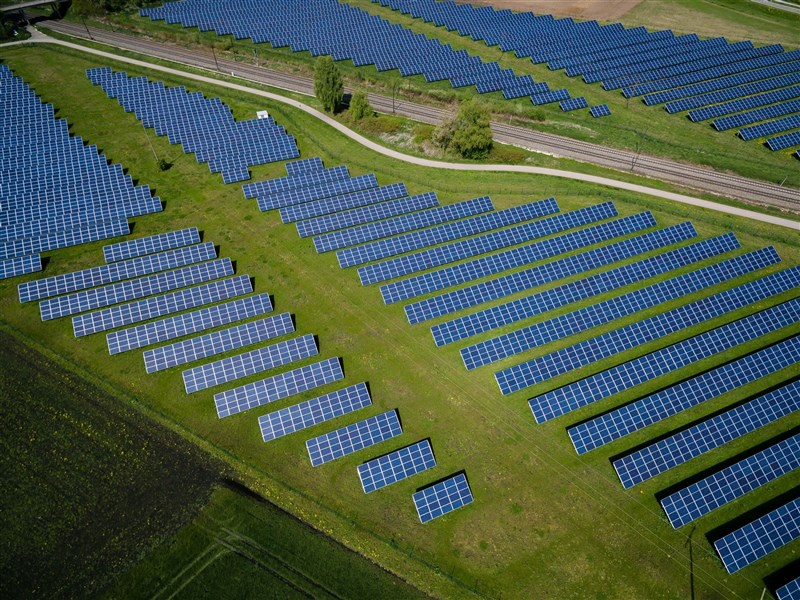
Ember, a renowned low-carbon and energy think tank, released the "European Electricity Review" in late January this year, analyzing the electricity generation and consumption data for the full year 2025 across the 27 EU member states to explore the continent's progress in transitioning from fossil fuels to clean electricity. The report shows that wind and solar power will account for 30% of electricity generation in the EU in 2025, surpassing fossil fuels' 29% and setting a new record.
Renewable energy accounts for 48% of the EU's total electricity generation. While extreme weather conditions led to a 12% decrease in hydropower and a 2% decrease in wind power, they boosted solar power generation. Furthermore, despite a slight decline, wind power remains the EU's second-largest source of electricity, accounting for 17% of total generation, higher than natural gas.
The trend of green energy transition has already brought structural changes across the EU. Last year, 14 out of the 27 EU member states generated more electricity from wind and solar than from fossil fuels. Over the past five years, the share of wind and solar power in the EU has grown significantly (from 20% in 2020 to 30% in 2025), while the share of fossil fuels has decreased from 37% to 29% during the same period.
EU natural gas generation increased by 8% in 2025, primarily due to reduced hydropower output. However, in the long term, natural gas in the EU continues its downward trend, with 2025 generation still 18% lower than the previous peak in 2019. Coal continues its rapid decline, accounting for a historical low of 9.2% of EU electricity generation last year, compared to nearly a quarter of EU electricity a decade ago.
However, many European countries are facing issues with aging grid infrastructure, leading to "green electricity that cannot be delivered" and forced curtailment, which could jeopardize energy security.
Another report from Ember warns that one in two grid operators in Europe faces "insufficient grid capacity," unable to connect newly built wind and solar projects to the transmission and distribution network. The problems are particularly severe in Austria, Bulgaria, Latvia, the Netherlands, Poland, Portugal, Romania, and Slovakia.
Notably, several large power systems, including those in Germany and Italy, have not disclosed their grid capacity data, implying that the scale of the problem could be more severe than analysts fear.
The British Broadcasting Corporation (BBC) reported that in Germany last year, over half of its electricity came from renewable sources, accounting for 59%, with coal power falling to 20% and natural gas around 13%.
However, Clean Energy Wire, a non-profit organization based in Germany, stated that in 2024, 3.5% of renewable electricity in Germany could not be delivered to end-users due to grid bottlenecks. In 2025, Germany was forced to "discard" as much as 9.6 TWh of wind and solar power (approximately 4% of Germany's renewable energy generation) due to the grid's inability to handle the load.
The UK faces similar issues. The non-profit think tank Centre for British Progress points out that the number and capacity limitations of substations make it difficult to accommodate new electricity generation, becoming a major bottleneck in most parts of the UK. However, large transmission projects often take 12 to 14 years to complete.
In Italy, large-scale ground-mounted solar power continued to surge in 2025, especially in the sun-drenched south (e.g., Sicily saw an 81% increase). However, the main industrial and electricity consumption centers are in the north. Grid bottlenecks severely impact the transmission of electricity from south to north.
The Wall Street Journal reported, citing an IEA analysis of 28 major economies, that household electricity prices in Germany are currently the highest among developed countries, while the UK has the most expensive industrial electricity. Italy is not far behind. The average electricity price for heavy industry in the EU region is about twice that of the United States and 50% higher than in China. As the share of renewable energy increases, so does the volatility of energy prices.
The causes of rising energy prices in Europe are numerous, including the rebound in natural gas prices after the COVID-19 pandemic, the energy crises triggered by the Russia-Ukraine war in 2022 and the Iran war this year. Furthermore, the green energy transition requires substantial infrastructure investment, including battery storage for periods without wind or sun and massive backup capacity, all of which are costly. Corporate executives and some economists do not shy away from admitting that rising electricity prices are, to some extent, related to the transition to renewable energy.
Now, with tight finances, European governments face difficult choices: either push ahead with accelerating the green energy transition or slow down the pace of transition to save costs, which could prolong the period of hardship.
Swedish Deputy Prime Minister and Minister for Energy Ebba Busch stated, "In global top competition, you cannot afford to let ideology dictate your energy system." She criticized Germany's over-reliance on solar and wind power, which leads to situations where, during periods of bad weather and insufficient generation, it has to rely on its neighbors – "sucking" large amounts of electricity from neighboring countries, thereby driving up electricity prices for others.
Busch added, "Without energy, there is no industry; without industry, there is no defense."
Goldman Sachs Research estimates that European investment in power generation and related infrastructure will reach 3 trillion euros (approximately 110 trillion New Taiwan dollars) over the next decade, double the amount invested in the past 10 years. For European countries already facing increasingly tight budgets due to an aging population, increased military spending, and rising debt interest, this will undoubtedly be another heavy burden. (Compiled by Chen Yi-wei) 115wei Chen) 06/24/115
FACT BOX
- Source: CNA (Central News Agency)
- Category: 國際
- Organizations: Ember / Clean Energy Wire / Centre for British Progress