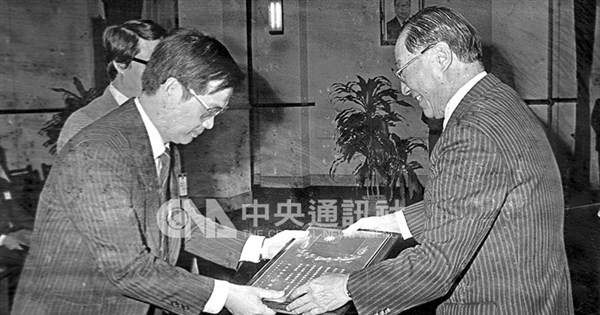
Born in Yingge in 1943, Dr. Chen Ding-shinn was a preeminent figure in hepatology, often humorously referring to himself as a 'Chen-Quixote' for his lifelong battle against viral hepatitis. His commitment was deeply personal; after losing his father to terminal liver cancer during his third year of medical school, Chen vowed to prevent similar tragedies caused by the disease.
Drawing inspiration from the resilient and tireless nature of the water buffalo he tended in his youth, Chen eschewed the lucrative path of private practice to focus on academic research. Throughout his tenure as a professor at National Taiwan University, he famously never took a research sabbatical, driven by the urgency of global scientific competition.
His research in 1973 established the causal link between the Hepatitis B virus and hepatocellular carcinoma, identifying mother-to-child vertical transmission as a primary route. This evidence laid the groundwork for Taiwan's pioneering 1984 mass vaccination program—the first of its kind globally—which saved millions from the long-term effects of the virus.
Despite never studying abroad or holding a doctoral degree, Chen's scientific impact earned him election as an Academician of Academia Sinica in 1992 at the age of 49. Later, he became the first Taiwanese medical professional to be elected as a foreign associate of the United States National Academy of Sciences.
FACT BOX
- Source: CNA (Central News Agency)
- Category: health/biography