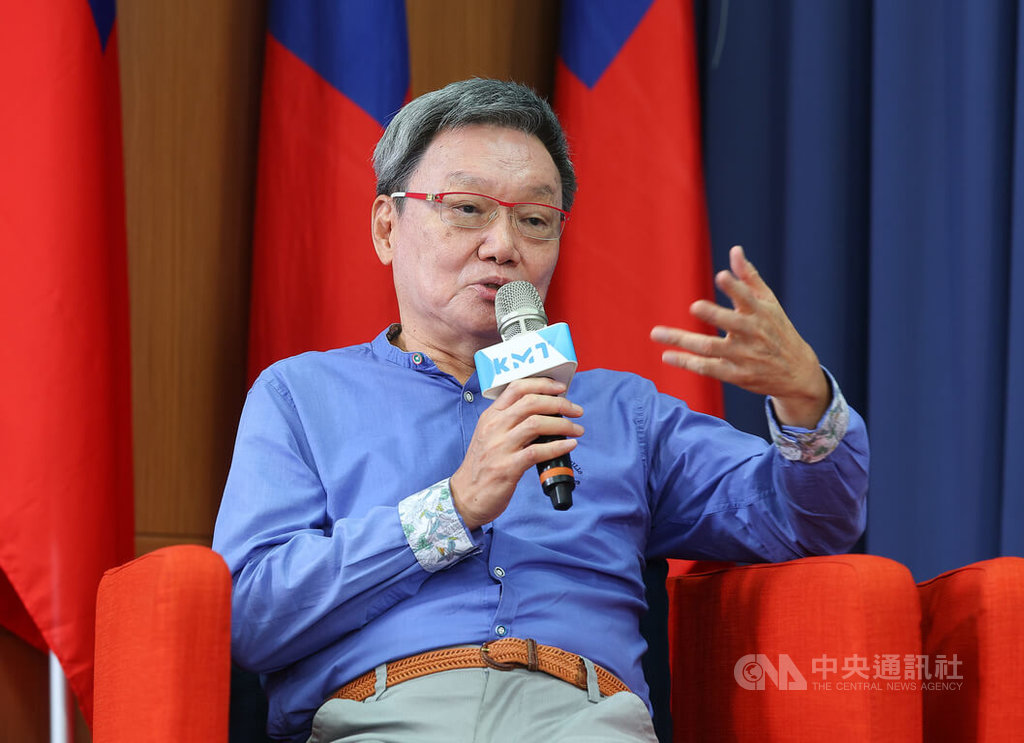
AIT Director Raymond Greene recently stated that maintaining the status quo serves as the foundation for cross-strait dialogue. In response, former National Security Council Secretary-General Su Chi noted that while he agrees a majority of Taiwanese support this, the core issue is that 'the status quo' has never been clearly defined. He questioned whether Greene is referring to the 2016 status quo or that of 2026, noting that the two are fundamentally different.
Greene previously remarked that Taiwan's major political parties share more common ground than perceived and suggested that the 70% public support for maintaining the status quo provides a strong basis for dialogue with Beijing. During a forum held at a documentary premiere, Su Chi emphasized the need to distinguish between 'reconciliation' and 'confrontation' in cross-strait policy. He critiqued that the concept of the status quo has evolved significantly since 2016, shifting from the engagement framework of the Ma Ying-jeou era to a current stance defined by the 'mutual non-subordination' policy under the DPP.
Su argued that the Taiwanese public has been misled by the term 'status quo' for too long, failing to recognize that the political reality has shifted over the past decade. He urged the public to rethink the future direction of cross-strait relations. Former KMT Vice Chairman Chang Jung-kung added that if the U.S. misinterprets the current administration’s 'mutual non-subordination' stance as the standard status quo, it ignores the practical reality of diplomatic relations.
FACT BOX
- Source: CNA (Central News Agency)
- Category: politics