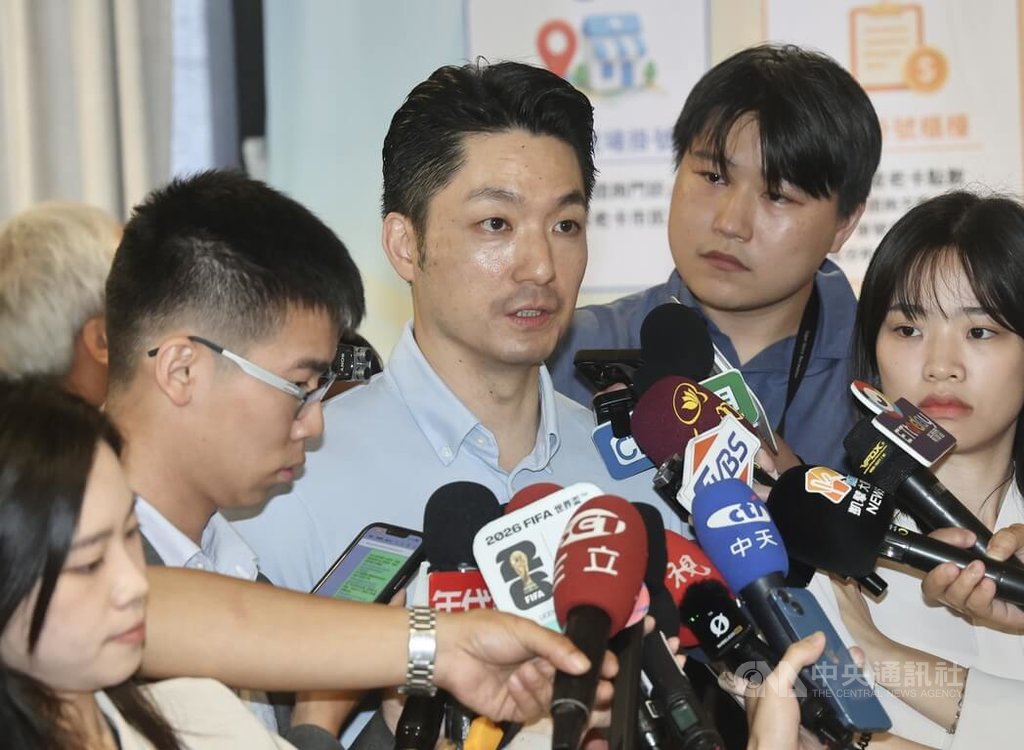
By Central News Agency reporter Yang Shu-min, Taipei, June 22
Taipei Mayor Chiang Wan-an announced today that the city will trial autonomous buses on 15 dedicated bus lanes starting in the second half of 2026. The Department of Transportation explained that the project will first select an implementation team through a bidding process, then gradually roll out the service. Domestically produced electric buses will be used as a principle, and any involvement of the 'red supply chain' is prohibited.
Deputy Director Chang Hua-chen of the Taipei City Department of Transportation told CNA that two bidding projects are currently planned for Beitou Science Park (Beishike) and the Xinyi dedicated bus lane. The goal is to finalize two implementation teams by the end of this year or early next year, with proposals submitted jointly by bus operators and system providers.
Chang said that around two to three system providers will collaborate with approximately five to six electric bus manufacturers. The Xinyi dedicated bus lane model will be used as the initial blueprint, with the remaining 14 routes to be replicated in phases.
The city aims to reach Level 3 (L3) autonomy by the second half of 2028, featuring self-driving capabilities with one onboard operator ready to intervene in exceptional situations. By 2029, during the Intelligent Transport Systems (ITS) World Congress hosted in Taipei, the system is expected to achieve Level 4 (L4) full autonomy and begin commercial operations. All buses will be domestically produced electric models, with cybersecurity and network connectivity complying with regulations and excluding any 'red supply chain' components.
Meanwhile, Democratic Progressive Party (DPP) Taipei mayoral candidate Shen Po-yang, speaking at the Legislative Yuan today, said that deploying autonomous buses requires not only electricity but also comprehensive supporting measures. Without proper infrastructure planning, it's difficult to envision a five- or ten-year future. He noted that he had proposed a comprehensive plan a month ago and praised Mayor Chiang for swiftly adopting his suggestions.
In response, the Department of Transportation stated it welcomes external recognition of the city's ongoing direction and emphasized that phased achievements will be evident this year. While Shen first mentioned autonomous buses in May, the Department said it had already briefed the city council and issued press releases on the topic last year.
The press release clearly stated: 'Beitou Science Park has been selected as the key demonstration zone, with the goal of launching commercial autonomous bus operations by 2029. To this end, the city government has established an Autonomous Bus Promotion Task Force to actively advance shuttle operations and related work.'
Regarding the 'underground intelligent system,' the Taipei City Public Works Bureau reported existing progress, including the creation of open data for Taipei's common utility tunnels. The tunnels are being progressively networked, enabling more accurate digital twin modeling and incorporating AI technology and robots for tunnel maintenance and management. The Zhongxiao Corridor Central Monitoring Center, scheduled for completion in August this year, is a prime example.
The Road Pipeline Management Center under the Department of Public Works stated that all pipeline maps in Taipei have been digitized for real-time access by various agencies. Additionally, Taipei has established a 3D pipeline digital platform to accelerate disaster response. (Edited by Hsiao Po-wen)
FACT BOX
- Source: CNA (Central News Agency)
- Category: Event