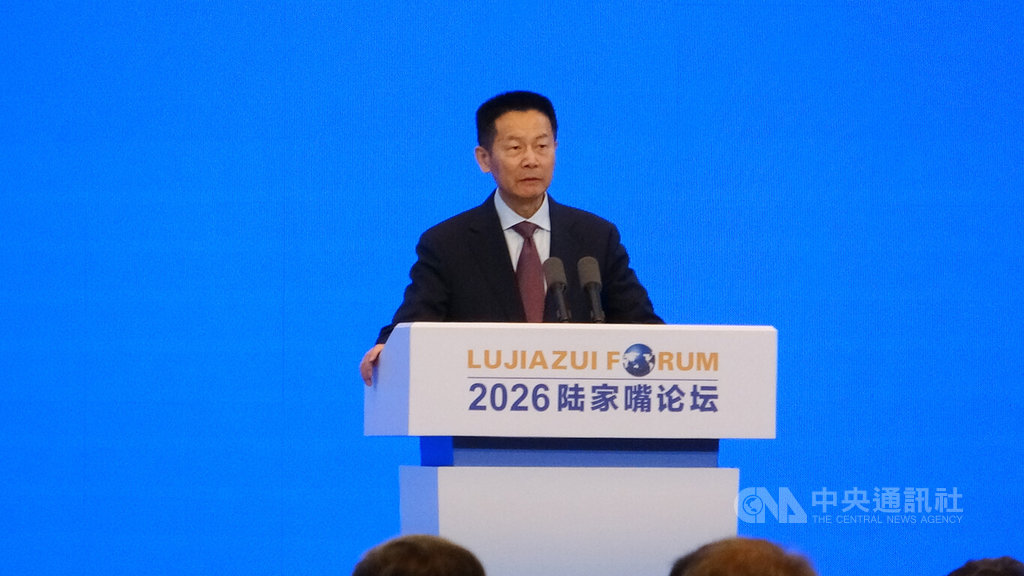
The 2026 Lujiazui Forum opened on the 17th at the Shangri-La Hotel in Pudong, Shanghai, drawing significant attention as a key platform for shaping China's financial future. Pan Gongsheng, Governor of the People's Bank of China (PBOC), announced six new financial policy measures.
First, Pan outlined improvements to the short-term interest rate adjustment mechanism. Second, a new repurchase facility for foreign central banks will be established. Third, a pilot program for offshore RMB foreign exchange trading will be launched in the Shanghai Free Trade Zone. The PBOC will authorize six banks—ICBC, Agricultural Bank of China, Bank of China, China Construction Bank, Bank of Communications, and CITIC Bank—to conduct these transactions via the China Foreign Exchange Trade System (CFETS) platform.
Fourth, the PBOC is studying the creation of a macro-prudential tool to provide emergency liquidity to non-bank financial institutions via swap arrangements during systemic stress in markets such as bonds. Fifth, in collaboration with the Shanghai municipal government and relevant agencies, the 'Action Plan for Developing Offshore Finance in Shanghai International Financial Center' will be released, promoting offshore financial services including offshore trade finance, offshore bonds under the FTZ framework, and international treasury centers. Sixth, the Interbank Market Data Repository has officially launched.
Meanwhile, Wu Qing, Chairman of the China Securities Regulatory Commission (CSRC), announced deepened reforms for the STAR Market and ChiNext to strengthen capital market support for 'new-quality productive forces.' The CSRC will support high-quality AI large model companies, as well as hard-tech firms in quantum technology, biomanufacturing, and embodied intelligence, in listing on the STAR Market.
Wu noted that technology sector market capitalization now exceeds 30% of A-shares, and 45% of companies with market caps over RMB 100 billion are tech firms. The CSRC will enforce strict supervision, severely punishing insider trading, market manipulation, and false disclosures. Over the past two years, 1,358 cases have been investigated, with fines and confiscations totaling RMB 35.3 billion.
Wu also highlighted the rapid expansion of AI applications in capital markets, which brings new challenges. The CSRC will issue timely guidance to enhance the safety and reliability of AI in investment research and customer service, while cracking down on illegal activities such as AI-driven stock recommendations, rumor spreading, and unauthorized trading.
Regarding cross-border supervision, Wu clarified that while illegal cross-border operations will be targeted, legally compliant cross-border investment activities by investors will continue to be supported.
Additionally, the Shanghai Digital RMB International Operations Center, announced last year, has now fully commenced operations. The Digital RMB Cross-border Settlement Comprehensive Service Platform (CBETS) has also officially launched, marking a significant step forward in RMB internationalization and digital currency adoption.
FACT BOX
- Source: CNA (Central News Agency)
- Category: Event