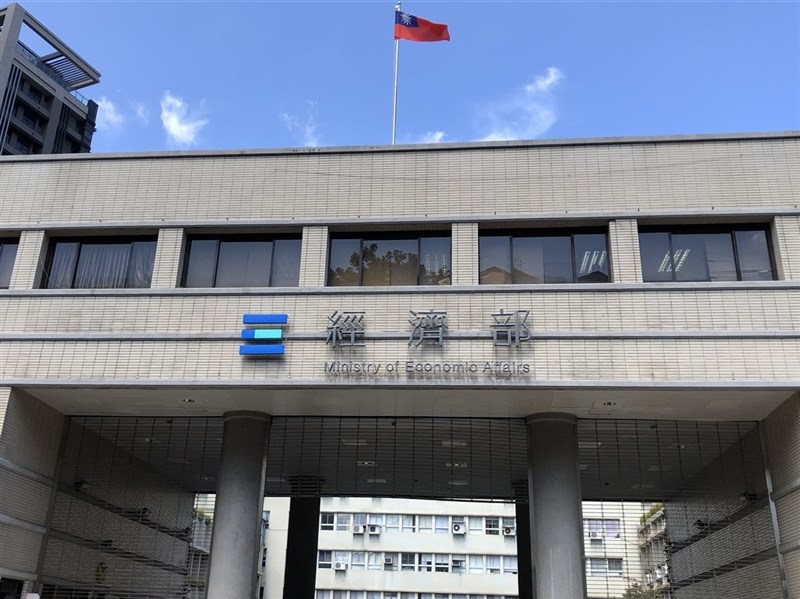
According to a report by Central News Agency (CNA) journalist Tseng Yun-ting from Taipei on the 17th, foreign media have reported that South Korea plans to invest up to 500 billion Korean won (approximately NT$10 billion) in the research and development of next-generation power semiconductors, aiming to establish a new semiconductor star industry following DRAM. If observed from Taiwan's R&D investment capacity, the Ministry of Economic Affairs has allocated a total of NT$30.2 billion for its science and technology special projects budget this year. The Ministry emphasizes that amid intensifying global technological competition, Taiwan must continue to increase R&D funding to maintain its industrial competitive edge.
The Legislative Yuan's Economic Committee will review the Ministry of Economic Affairs' budget for fiscal year 2026 (115th year) tomorrow. Recent foreign media reports indicate that the South Korean government will allocate as much as 500 billion Korean won under its 'Ultra-Innovative Economic Plan' (UIEP) for the mass production of next-generation power semiconductors, with the final investment possibly reaching 750 billion won—demonstrating South Korea’s strong ambitions in semiconductor development.
The Ministry of Economic Affairs stated that according to OECD statistics, Taiwan’s total R&D investment over the past five years has been less than half of South Korea’s, with R&D expenditure as a percentage of GDP approximately one percentage point lower than South Korea’s. Taiwan’s overall R&D scale also clearly lags behind Japan, indicating significant room for growth in scientific research investment.
In the face of increasingly fierce global technological competition, the Ministry stresses the need for continuous expansion of R&D resources. Through special science and technology programs, it supports collaboration among industry, academia, and research institutions to advance the development of forward-looking and key industrial technologies. This year’s special science and technology budget is set at NT$30.2 billion, a 29% increase from the previous year. Among this, the Industry Innovation R&D Program (Industry Sci-Tech Special Program) has been allocated NT$10 billion, a year-on-year increase of 53%, demonstrating the government’s determination to strengthen industrial innovation capabilities. The budget still awaits approval by the Legislative Yuan.
The Ministry further explained that under its science and technology projects, it has been continuously supporting research institutions such as the Industrial Technology Research Institute (ITRI) through the Department of Technical Development to carry out medium- to long-term technological planning in areas including semiconductors, silicon photonics, drones, robotics, biomedicine, and next-generation communications. Subsequently, technologies are commercialized through technology transfer, the A+ Enterprise Innovation R&D Enhancement Program, and the establishment of spin-off startups.
The Ministry emphasized that Taiwan’s success in the semiconductor industry is one of the outcomes of long-term scientific research investment. For example, TSMC originated from technology transfer and spin-off mechanisms at ITRI. In recent years, under the trend of AI semiconductor development, several testing and IP startup companies have been established.
Moreover, with support from the Department of Technical Development, ASML, the world’s largest semiconductor manufacturing equipment supplier, and Micron, a major memory manufacturer, have both invested in R&D centers and advanced mass production facilities in Taiwan, adopting local component supply chains, further strengthening Taiwan’s semiconductor ecosystem.
In recent years, the Department of Technical Development has also attracted international tech giants such as NVIDIA to establish R&D centers and headquarters in Taiwan through the A+ R&D subsidy program. Meanwhile, the Industrial Development Administration (IDA) is promoting the localization of advanced packaging equipment, helping traditional industries enter TSMC’s CoWoS advanced packaging supply chain and expanding business opportunities in the AI industry.
The Ministry believes these achievements demonstrate that R&D budget investments are gradually transforming into industrial competitiveness and economic growth momentum. Going forward, continued expansion of R&D funding is essential to strengthen Taiwan’s critical position in the global technology supply chain.
FACT BOX
- Source: CNA (Central News Agency)
- Category: Taiwan
- Organizations: ASML / Micron / NVIDIA