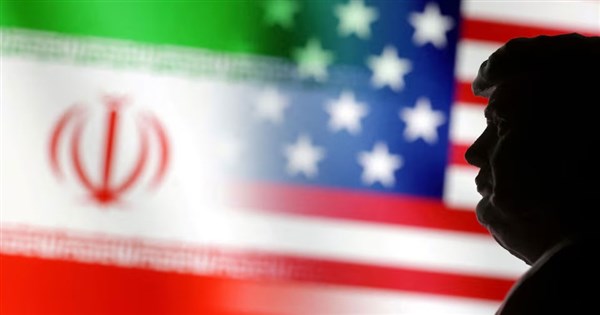
U.S.-Iran War Key News
(Washington/Tehran, 17th - CNA international report) Bloomberg reported that once the U.S. and Iran formally sign an interim agreement, Iran will immediately be allowed to export oil. Furthermore, upon completion of final peace negotiations aimed at resolving Iran's nuclear issue, Tehran could receive an economic development fund worth up to $300 billion.
According to Bloomberg News, the two nations plan to formally sign a memorandum of understanding (MOU) in Switzerland on the 19th of this month, finalizing previously reached terms and paving the way for 60 days of follow-up negotiations aimed at ending hostilities and strictly limiting Iran's nuclear program.
Neither Washington nor Tehran has officially released the text of the interim agreement. However, one insider revealed that the U.S. has already circulated the document among allies during the Group of Seven (G7) summit held in France.
Another source indicated that technical details remain to be finalized, meaning the exact wording of the document could still change before formal signing.
Despite this, Bloomberg notes that the outline of the agreement is emerging. A copy of the draft seen by Bloomberg shows that Iran will receive comprehensive economic revitalization benefits in exchange for ending its blockade of the Strait of Hormuz and reaffirming its commitment to never possess nuclear weapons.
Following the signing of the MOU, the U.S. Treasury will immediately grant sanctions exemptions for Iranian crude oil and petrochemical exports.
The U.S. will end its blockade of Iranian ports, and both nations will work to restore shipping traffic through the Strait of Hormuz to pre-war levels within 30 days.
Several tankers linked to Iran have already begun moving. Bloomberg's analysis of vessel tracking data shows that four ships have activated their transponders and appear to be exiting the Strait of Hormuz or the Gulf of Oman. Two of these vessels are supertankers capable of carrying 2 million barrels of crude oil each.
According to the draft agreement, the U.S. and its regional partners will develop a plan to assist Iran in restoring and promoting economic development, with financing totaling at least $300 billion (approximately NT$9.5 trillion).
However, former U.S. President Donald Trump previously stated that the U.S. would not fund this $300 billion.
Meanwhile, the draft's language on unfreezing Iranian overseas assets remains vague, merely stating that the U.S. commits to releasing these assets for full and unrestricted use, without specifying a timeline.
A U.S. official declined to discuss the draft's specifics but emphasized that Iran must fulfill its commitments—such as never possessing nuclear weapons, rendering enriched materials unusable, and allowing free passage through the Strait of Hormuz—to receive the benefits of the agreement.
Iran's semi-official Tasnim News Agency reported that Central Bank Governor Abdolnaser Hemmati stated Iran would demand 'full guarantees' for effectively accessing frozen funds after the interim agreement is formally signed.
Additionally, the draft agreement mentions that hostilities will end on 'all fronts, including Lebanon.' This requires the approval of Israeli Prime Minister Benjamin Netanyahu, who has so far refused to halt operations against the Lebanese militant group Hezbollah.
Under the agreement's terms, the U.S. will lift sanctions on Iran, but this commitment will only be implemented after final negotiations over the next two months. The U.S. will also withdraw troops from 'surrounding regions' within 30 days of reaching the final agreement. (Editor: Hung Pei-Ying) 1150617
FACT BOX
- Source: CNA (Central News Agency)
- Category: Taiwan