(Central News Agency reporter Chang Hsiung-feng, Taipei, June 17) The Environmental Department announced today that, in promoting its urban forest doubling initiative, it is simultaneously exploring ways to recycle newly generated waste wood. One of the options under consideration is converting it into 'biochar.' However, the carbon sequestration effectiveness and potential conversion into carbon credits still require further methodological research.
The National Climate Change Response Committee officially launched the 'National Climate Adaptation Green Shade Doubling Project' on April 30, aiming to achieve tangible cooling effects through increased urban tree planting.
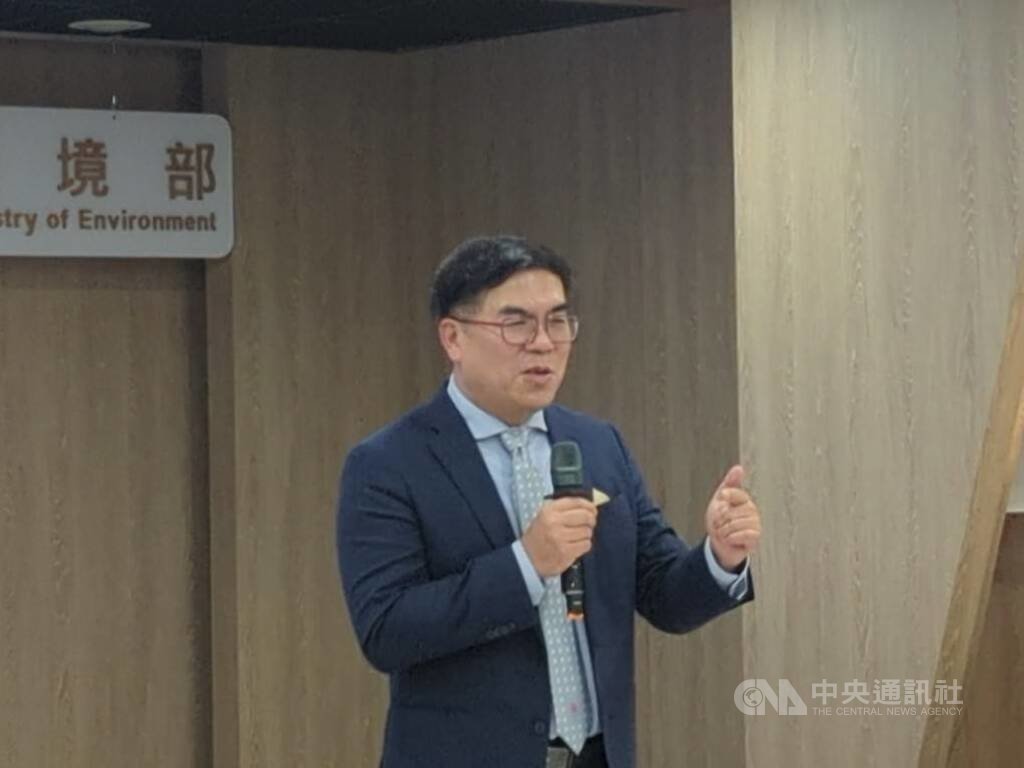
The Environmental Department held a press conference today titled 'Progress on Key Environmental Policies for Dragon Boat Festival.' Minister Peng Chi-ming stated that as the urban forest doubling plan progresses, more trees will be planted, leading to an increase in waste wood. In the past, waste wood was mostly incinerated or stockpiled; however, incineration increases greenhouse gas emissions, while stockpiling poses fire risks.
Peng emphasized that future waste wood will be processed toward circular reuse, with 'biochar' being one of the methods. For example, bamboo forests grow rapidly, yielding approximately 40 to 50 tons of carbon credits per hectare. In contrast, converting the same area's biomass into biochar could yield a carbon sequestration equivalent of about 200 tons.
The Department's Resource Circulation Agency added that biochar is an emerging topic. Traditionally, agricultural residues such as rice husks and straw, or woody plants, are converted into biochar through pyrolysis and used in agriculture or soil improvement.
The agency noted that if carbon credits are involved, the principles of Measurable, Reportable, and Verifiable (MRV) must be strictly followed. Subsequent efforts will require establishing methodologies to assess carbon reduction benefits across the entire lifecycle—from raw material sourcing to manufacturing and end-use—requiring further inventory and framework development.
The agency stated it will further discuss and revise relevant regulations with the Ministry of Agriculture to ensure legal compliance and continued advancement of the initiative. (Edited by Yang Sheng-ju) 1150617
FACT BOX
- Source: CNA (Central News Agency)
- Category: Taiwan