(Taipei Correspondent Wu Sheng-Hung, Singapore, June 17) According to the latest economist survey report released by the Monetary Authority of Singapore (MAS), the full-year economic growth forecast for 2023 has been slightly revised downward to 3.5%. Economists note that escalation or prolonged conflict in the Middle East remains one of the major risks facing Singapore's economy.
The United States and Iran have preliminarily reached an agreement, with plans to sign a peace deal and reopen the Strait of Hormuz, raising hopes for stable crude oil supply. According to MAS's latest economist survey released today, Singapore's economy grew 6.0% year-on-year in the first quarter of 2023, with a projected 4.3% growth in the second quarter. The full-year 2023 economic growth forecast has been slightly lowered from 3.6% in the March survey to 3.5%.
On the risk front, Singapore-based economists highlight that escalation or prolonged conflict in the Middle East is one of the primary risks to the economy. Meanwhile, if the technology cycle driven by artificial intelligence continues to gain momentum, it could boost Singapore's economic performance. However, a slowdown in related capital expenditures and broader spillover effects into financial markets could negatively impact the economic outlook.
Regarding inflation, the report indicates that the overall inflation rate in Q1 2023 was 1.5%, in line with the previous survey's forecast. Economists project the overall inflation rate for Q2 2023 to reach 2.1%, with core inflation expected at 1.6%. Core inflation, which excludes food and energy prices, is the key price indicator closely monitored by authorities.
In April 2023, heightened tensions in the Middle East pushed up energy prices, increasing upward pressure on the prices of imported goods and services. In response, the Monetary Authority of Singapore implemented a tightening monetary policy for the first time since October 2022. MAS stated that with rising imported energy costs, broader imported goods and service prices are expected to rise over the coming quarters.
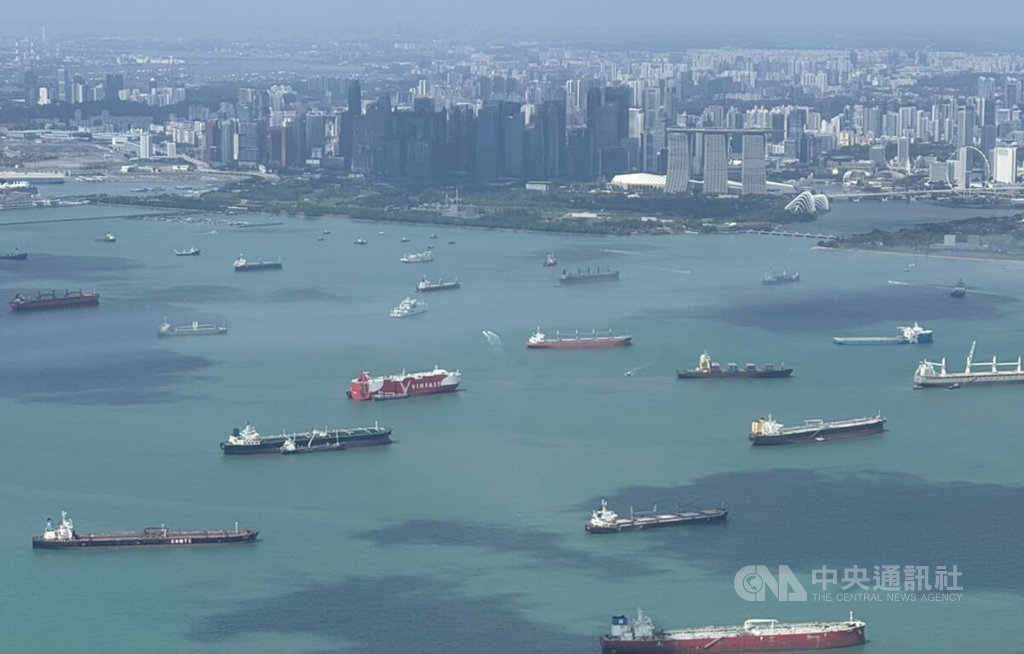
Singapore's marine fuel sales rebounded in May after a sluggish April, reaching a near two-month high, primarily due to an increase in vessel arrivals. Data from the Maritime and Port Authority of Singapore (MPA) shows that Singapore, one of the world's largest bunkering hubs, recorded marine fuel sales of 4.55 million tonnes in May, up 4.5% from April, though down 6.8% compared to the same month last year.
Chen Shiming, a veteran Singaporean journalist familiar with Southeast Asian financial dynamics, told Central News Agency that the rebound in marine fuel sales in May reflects not only a gradual recovery in regional trade activity but may also be linked to a temporary easing of geopolitical tensions in the Middle East. As some shipping routes return to their original paths, maritime traffic in the Asia region has stabilized. Given Singapore's status as one of the world's most critical marine fuel supply hubs, increased shipping activity typically translates directly into higher port calls and refueling demand, supporting the recovery in overall sales volume. (Edited by Wei-Shu) 1150617
FACT BOX
- Source: CNA (Central News Agency)
- Category: Survey