US-Iran War Key News
(Tokyo, June 16 — CNA,综合外电) Jotaro Tamura, President of Mitsui O.S.K. Lines (MOL), the world's largest tanker company, said shipowners will not resume transiting the Strait of Hormuz for several weeks until the US-Iran agreement is 'implemented' and safety is confirmed.
According to the UK's Financial Times, Tamura stated that despite the agreement between the US and Iran to reopen the Strait of Hormuz, many industry players will remain cautious and wait before resuming operations.
"It's not enough to have a simple agreement between countries," he said. "It must be implemented and translated into actual conditions in the Strait of Hormuz so that shipping companies can sail with confidence."
Tamura noted that since the outbreak of Middle East conflict in late February, there have been multiple reports of the Strait reopening, but access has ultimately not been restored.
"Given the experience of the past few months, I believe it is reasonable to assume it will take at least a few weeks, possibly even a month," he added.
Before the Middle East war, over one-fifth of the world's oil and liquefied natural gas passed through this strategic waterway, which is also vital for transporting grain and consumer goods into the Persian Gulf.
Mitsui O.S.K. Lines operates over 900 vessels, including more than 200 that transport crude oil, petroleum products, and chemicals, making it the world's largest tanker operator by vessel count.
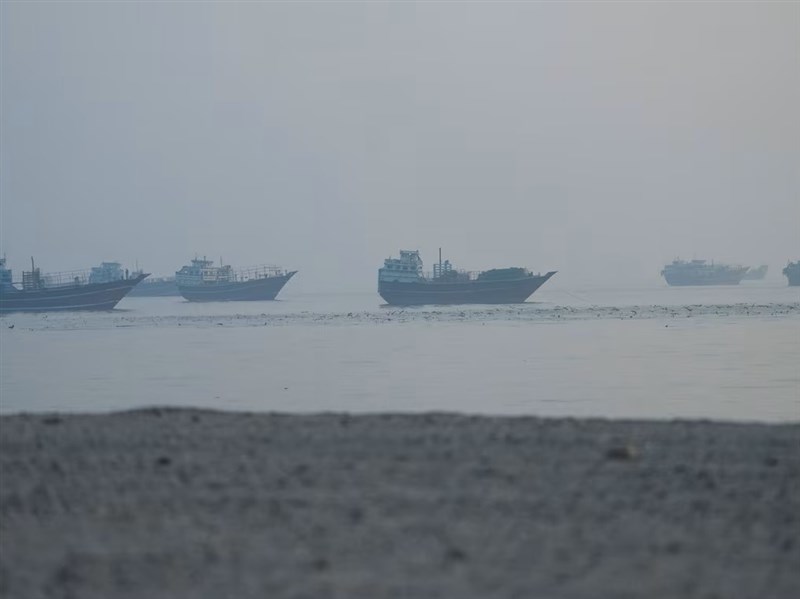
Other shipping companies and shipowners have called on the United Nations' International Maritime Organization (IMO) to coordinate the safe passage of approximately 500 vessels waiting to exit the Persian Gulf via the Strait of Hormuz.
IMO Secretary-General Arsenio Dominguez said the organization is "assessing the feasibility of safe navigation and trade to avoid potential dangers such as mines and congestion that could lead to accidents."
He added that the IMO continues to work on establishing a safe evacuation route for over 100 crew members stranded in the Persian Gulf for more than 100 days.
Hapag-Lloyd, one of the world's largest container shipping companies, called the peace agreement "encouraging" and expressed hope that its stranded vessels could depart "by this weekend."
Philip Belcher, Maritime Director of the International Association of Independent Tanker Owners (Intertanko), warned shipowners to "take a cautious approach" and conduct their own risk assessments before sailing.
Prior to the Iran conflict, around 135 vessels passed through the Strait daily. In recent weeks, that number has dropped to just a few, with some ships attempting to leave the Persian Gulf under cover of darkness and with GPS turned off.
Tamura, who took office in April, opposed Iran's attempts to charge fees for vessels passing through the Strait, citing violations of international law that guarantee freedom of navigation.
Before the US-Iran agreement, Mitsui OSK successfully escorted four vessels out of the Persian Gulf, but Tamura confirmed the company paid no fees to Iran. The company still has at least seven vessels waiting to transit the Strait of Hormuz.
Japanese Prime Minister Sanae Takagi stated that these transits were the result of Japan's diplomatic efforts. However, Tamura strongly implied that the successful passages were due to diplomatic coordination by countries such as Oman and India—nations linked to the vessels' flags, customers, or cargo destinations.
"In some successful transit cases, particularly under these circumstances, relevant authorities or governments conducted coordination, so we had some fortunate cases," Tamura said. (Compiled by Liu Shuqin) 1150616
FACT BOX
- Source: CNA (Central News Agency)
- Category: Taiwan
- Organizations: Mitsui OSK Lines / Hapag-Lloyd / International Maritime Organization