(Central News Agency reporter Shen Pei-yao, Taipei, June 16) Due to small market size and low usage volume, certain pediatric orphan drugs and medical devices often face shortages. Following the establishment of the 'Pediatric Clinical Essential Medicines and Medical Devices Dispatch Center' for centralized procurement, the Ministry of Health and Welfare (MOHW) has launched a trial program this year to pre-stock rare medications, with the first phase focusing on two categories: pediatric dialysis-related medical devices and heart disease medications.
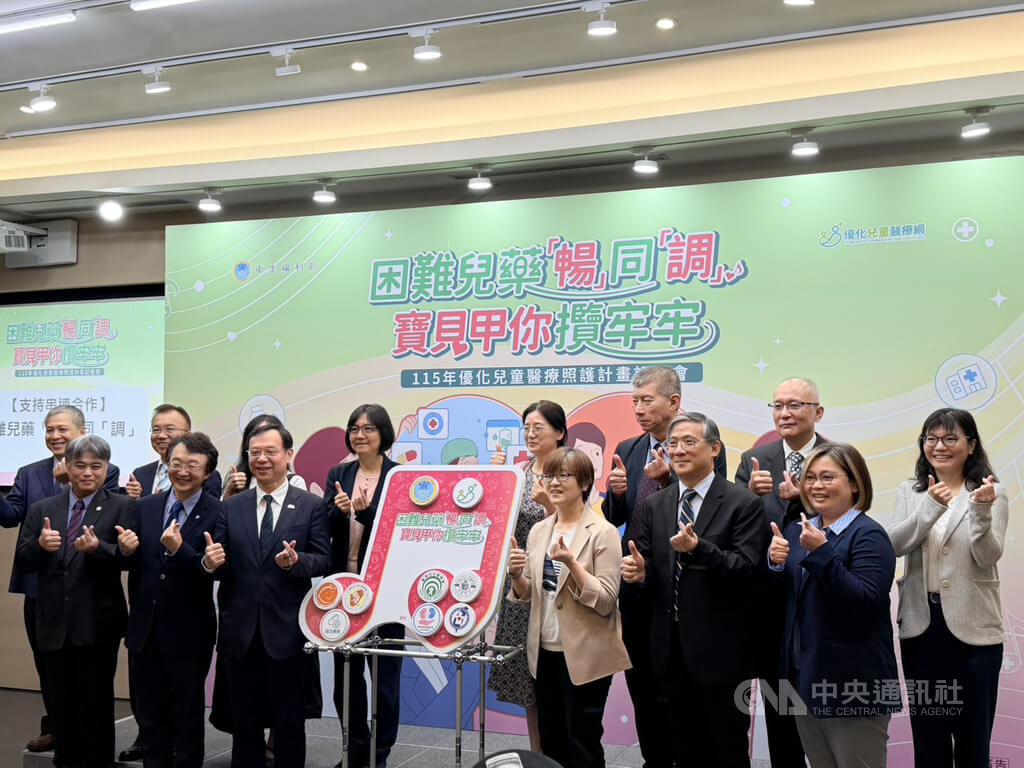
Medications and medical devices for children differ from those for adults, and some are difficult to obtain due to limited market scale. To address this, the Ministry of Health and Welfare entrusted China Medical University Children's Hospital in early 2020 to establish the 'Pediatric Clinical Essential Medicines and Medical Devices Dispatch Center.' The MOHW held a press conference today to announce the achievements, stating that it has collaborated with 183 hospitals (including 29 medical centers), 17 medical associations, and 47 suppliers to help hospitals and physicians rapidly access the most suitable pharmaceuticals and medical products for pediatric patients.
Liu Yueh-ping, Director-General of the MOHW's Department of Medical Affairs, explained that the dispatch center optimizes access to pediatric specialty pharmaceuticals through three key approaches: demand assessment and joint procurement, streamlining special application procedures and facilitating inter-hospital transfers, and identifying importers and supporting local manufacturing.
MOHW Minister Shih Chou-liang stated that the National Health Insurance (NHI) program has a surplus this year, with the first-quarter NHI point value reaching nearly NT$1.1 per point. As a result, the MOHW will no longer emphasize increasing point values but will instead adjust payment standards—especially for emergency, critical, rare, and difficult medical specialties, as well as obstetrics and pediatrics. In the second half of the year, adjustments to medical service payments exceeding NT$3 billion are expected.
In addition to streamlining processes, the dispatch center will now also assume a warehousing function. Prior to the press conference, Liu explained to reporters that this is to prevent treatment interruptions caused by delays in importing from abroad. During the COVID-19 pandemic, sea shipments took up to three months, risking medication gaps for children.
Currently, the trial includes one medication and one medical device: pediatric dialysis supplies and pediatric heart disease medication. Liu said whether to expand the program will be evaluated based on operational performance, with continued efforts to strengthen resource integration and distribution to ensure the quality of pediatric healthcare. (Edited by Li Heng-shan) 1150616
FACT BOX
- Source: CNA (Central News Agency)
- Category: Taiwan