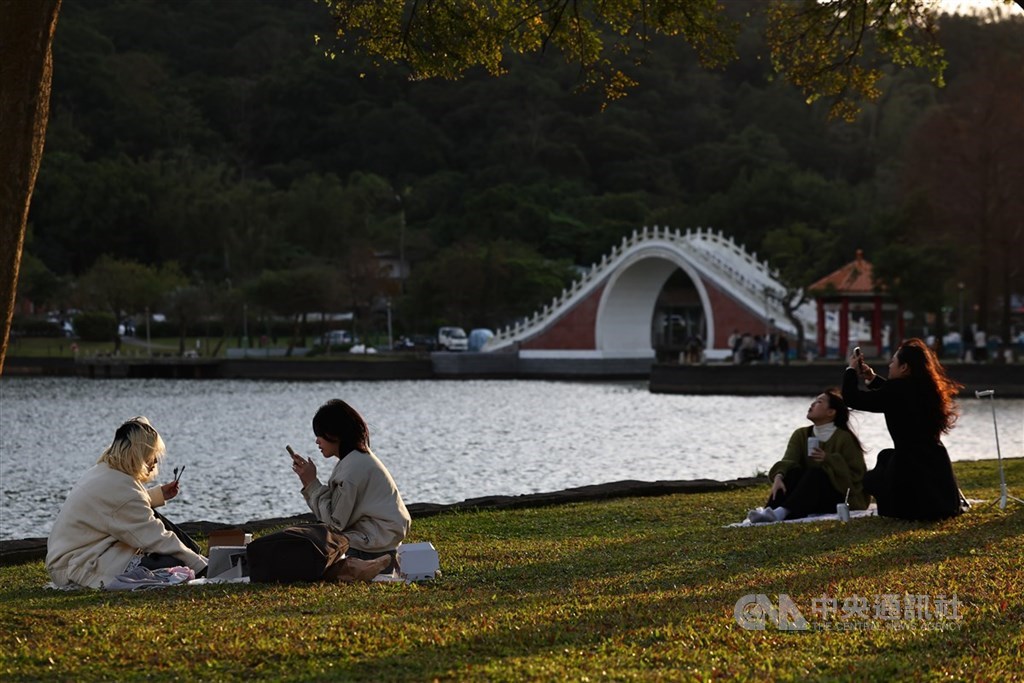
(CNA reporter Kao Hua-chien, Taipei, June 16) Media reports indicate that Kuomintang Taipei City Councilor Yu Shu-hui questioned on a political talk show on the 14th the legitimacy of the current Control Yuan’s investigation into why canoeing is prohibited at Dahu Park.
In response, Control Yuan members Fan Hsun-lu and Su Li-chiung issued a statement today, calling the criticism a serious misrepresentation and political smear. They emphasized that their investigation has never been about whether canoeing is allowed, but rather about 'government integrity toward the people,' 'the privatization of public docks,' and 'the implementation of the policy to return water to the people.'
The commissioners explained that the Dahu Park case originated when a group of civilian organizations passionate about water activities legally applied to the Taipei City Government for an event. However, despite existing regulations prohibiting boating in parks, the city government failed to promptly inform and reject the application. Instead, it repeatedly demanded additional documents such as insurance certificates and official paperwork, treating the public as if 'playing with people.'
The Control Yuan pointed out that after applicants had invested significant effort, the city finally denied the request citing pre-existing regulations and ecological concerns, sparking conflict and resentment between the applicant groups and local residents. The investigation targets this kind of bureaucratic arrogance—'going through the motions' and 'changing policies overnight.' Without basic governmental honesty, the rule of law collapses, and the Control Yuan has a duty to investigate.
More shockingly, the Taipei City Government claimed to the Control Yuan that citizens could freely canoe at four public waterfront docks along the Keelung River. However, upon site inspection, the commissioners found all these public docks had been outsourced to private firms, which posted 'Private Dock, No Entry' signs. Citizens were forced to launch from unmanaged rescue docks, risking accidents during low tide. Following strong intervention by the Control Yuan, the city was compelled to remove these privileged signs.
The commissioners noted that the Dahu Park case is merely a mirror reflecting broader challenges in implementing the 'returning water to the people' policy—such as fragmented application rules for water recreation, civil servants' fear of blame leading to reluctance in opening waterways, and inadequate accessible facilities and services.
They reported that after the Control Yuan formally urged the Executive Yuan to drive improvements, reforms have emerged: the lifting of the ban on the Laonong River in Maolin, year-round opening of Nan'ao waters, and the official groundbreaking of a 'dual-track outdoor sightseeing elevator cabin' at Zengwen Reservoir to uphold disabled citizens' right to water access. Additionally, regulatory improvements include a directive from the Ministry of Transportation requiring any future waterway restrictions to be preceded by professional academic research and consensus from local public hearings.
The Control Yuan stressed that investigating administrative flaws aims to promote transparent local governance, nationwide waterway access, and equal rights for vulnerable groups. Politicians maliciously distorting these macro-level investigations—concerning 'public rights, public asset justice, and equity for the disadvantaged'—not only erase the legal reform achievements co-created by countless frontline civil servants and the Control Yuan but also deal a severe blow to Taiwan's progress toward a freer, more advanced society. (Edited by Yang Lan-hsuan) 1150616
FACT BOX
- Source: CNA (Central News Agency)
- Category: Taiwan