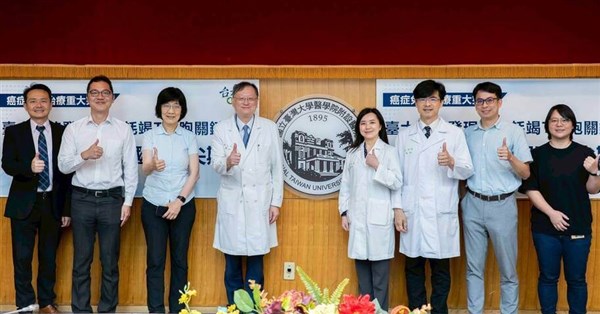
Lung cancer remains the leading cause of cancer-related deaths, with T cells serving as crucial soldiers in identifying and eliminating cancer cells. However, the tumor microenvironment often drives T cells into a state of exhaustion, diminishing their ability to proliferate and attack tumors. A research team from National Taiwan University Hospital has now discovered a new mechanism capable of reactivating terminally exhausted T cells, restoring their anti-tumor function and potentially enhancing the efficacy of cancer immunotherapy.
Since 2004, lung cancer has consistently ranked as the top cause of cancer mortality in Taiwan. Dr. Hsiung-Chi Tsai, Deputy Director of the Center for Advanced Medical Technologies and attending physician in the Department of Thoracic Medicine at NTU Hospital, explained during a press conference that over 40% of patients are diagnosed at an advanced stage, limiting treatment options. Current therapies include chemotherapy, targeted therapy, radiation therapy, and immunotherapy.
T cells are central to the immune system’s ability to detect and destroy cancer cells. However, prolonged exposure to tumor antigens leads to T cell exhaustion, characterized by a progressive loss of function. Immune checkpoint inhibitors, a form of immunotherapy, aim to reawaken these T cells and have been widely used across various cancers. Yet, resistance remains common, especially when T cells reach terminal exhaustion—a major bottleneck in treating late-stage lung cancer.
The NTU research team conducted large-scale drug screening using exhausted T cells isolated from lung cancer patients. They successfully identified a class of epigenetic drugs known as BET inhibitors that enhance the plasticity of terminally exhausted T cells, restore their functionality, and boost anti-tumor activity. The study revealed that BET inhibitors modulate immune metabolism by increasing intracellular polyamine levels within T cells, effectively reviving them from exhaustion.
Dr. Tsai explained that when the team suppressed key proteins in the polyamine biosynthesis pathway—either through gene editing or pharmacological inhibition—the immune-enhancing effects of BET inhibitors were completely abolished. This demonstrates that polyamine biosynthesis plays an indispensable role in T cell reinvigoration and may even reshape the fate of exhausted T cells, sustaining their long-term anti-cancer capabilities and improving the durability of immunotherapy.
In mouse models of lung cancer, tumor growth was significantly suppressed both by direct administration of BET inhibitors and by adoptive cell transfer of T cells previously treated with the drug. This study is the first to uncover the critical link between epigenetic regulation and metabolic reprogramming in T cells. The findings were published in the prestigious international journal Nature Immunology in May 2024.
Dr. Tsai emphasized that overcoming the limitations imposed by terminal T cell exhaustion not only opens new therapeutic avenues for lung cancer but also holds promise for other solid tumors that respond poorly to current immunotherapies. Future applications may include combination strategies with existing immune checkpoint inhibitors, CAR-T cell therapy, and other emerging cellular therapies, paving the way for next-generation cancer immunotherapies.
FACT BOX
- Source: CNA (Central News Agency)
- Category: Taiwan