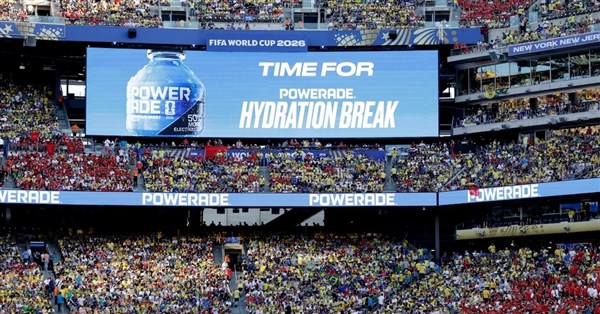
The 2026 FIFA World Cup has introduced 'cooling breaks' for the first time, aimed at mitigating the effects of summer heat in North America. While officially framed as a player health measure, the breaks have been criticized as greedy, disruptive to game rhythm, and potentially designed to maximize television advertising revenue.
According to AFP, Dutch captain Virgil van Dijk described the breaks as 'a bit intriguing,' adding, 'Every time the cooling break starts, the broadcast cuts to ads. It feels a bit... I don’t like it. I think it’s not great for neutral viewers at home either.'
On July 14, during Sweden’s 5-1 victory over Tunisia in Monterrey, Mexico, the crowd erupted in loud boos the moment the cooling break whistle sounded. The following day, fans at the air-conditioned stadium in Atlanta attending the Spain vs. Cape Verde match also responded with jeers during the cooling break.
Standard football matches do not include scheduled hydration breaks. However, at the North American World Cup, each match features two mandatory three-minute pauses—one in the middle of each half.
FIFA states the cooling break policy is designed to protect player health and is applied uniformly across all matches, regardless of venue or weather conditions.
In the United States, broadcasters immediately switch to commercial advertisements during these breaks—a common practice in American sports but unusual in global football.
Critics argue that FIFA’s real motive is financial gain. Some, including British football journalist Henry Winter, accuse the organization of prioritizing profit. Winter stated the tournament has effectively turned a two-half match into a four-quarter spectacle, warning, 'The greatest game on Earth is being ruined by the pursuit of massive advertising dollars.'
He cautioned that if this model spreads globally, domestic leagues could be next. 'It’s vital that nations resist collectively, or else our local broadcasts will be the next victims.'
Beyond commercial concerns, the breaks disrupt the natural rhythm and flow of the game. Several matches have seen dramatic shifts in momentum immediately after the pause, as coaches use the time to adjust tactics or issue instructions to struggling teams.
Curaçao, making their World Cup debut, equalized 1-1 against Germany in the 21st minute. However, their attacking momentum dissipated after the cooling break, and Germany went on to win 7-1.
Not all reactions are negative. Spain’s coach Luis de la Fuente supports the breaks, emphasizing player well-being: 'Maintaining such high-intensity physical output over long periods is extremely difficult. These pauses offer brief recovery moments, helping players recharge and maintain performance.'
He acknowledged, however, that not all host cities face extreme heat. For example, Los Angeles is forecasted to have temperatures between 15°C and 28°C, raising questions about the necessity of universal breaks.
Van Dijk advocated for flexibility: 'If it’s truly hot, cooling breaks are beneficial. But I believe each match should be assessed individually.' (Compiled by: Zhang Mingxuan) 1150616
FACT BOX
- Source: CNA (Central News Agency)
- Category: Event
- Organizations: FIFA