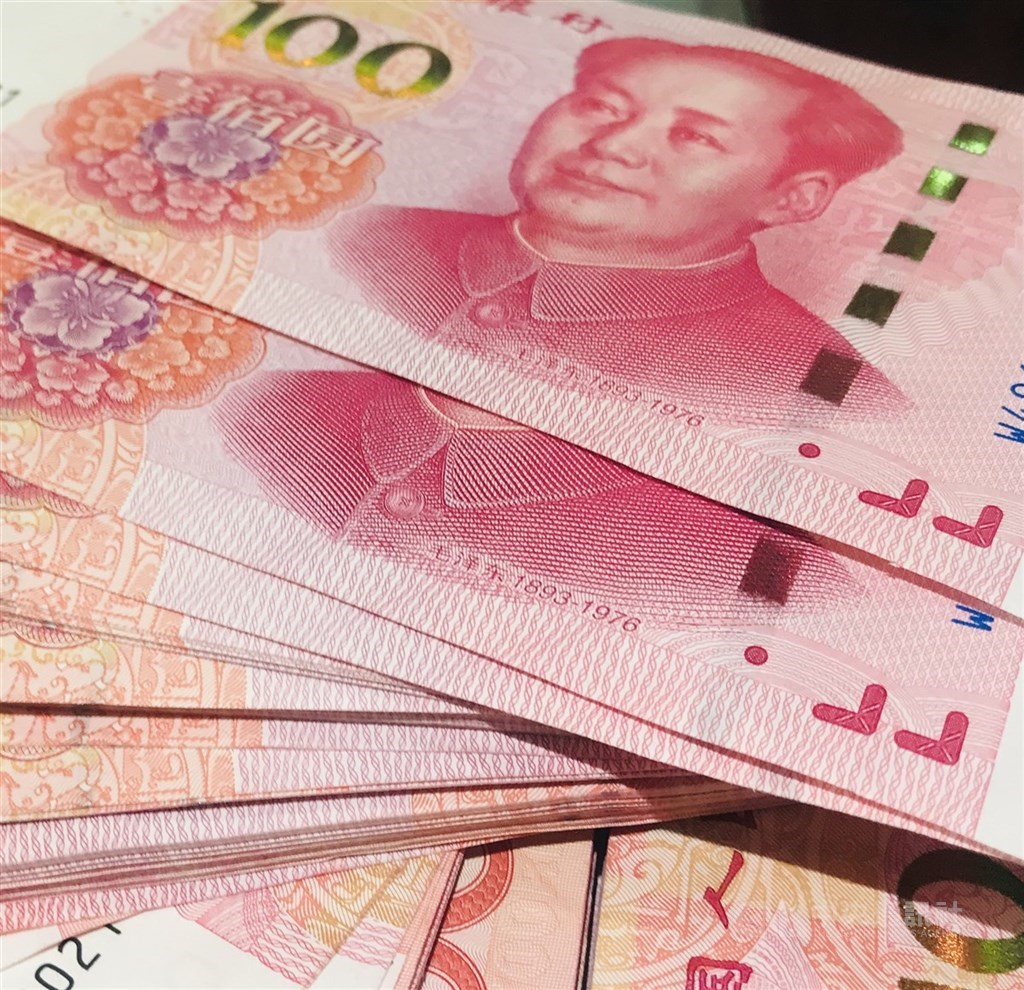
The Central Bank of the Republic of China (Taiwan) today released its May report on RMB operations at domestic banks. Due to heightened geopolitical tensions in the Middle East, companies have increasingly shifted funds to the US dollar as a safe-haven asset, leading to a second consecutive monthly decline in RMB deposit balances. The total balance dropped to RMB 104.681 billion, marking the lowest level in over 12 and a half years and approaching the critical threshold of RMB 100 billion.
According to central bank statistics, as of the end of May, RMB deposit balances at designated foreign exchange banks (DBUs) fell to RMB 80.777 billion, down RMB 1.044 billion from the previous month. International banking units (OBUs) also declined by RMB 1.063 billion, reaching RMB 23.904 billion. Combined, domestic banks’ RMB deposits totaled RMB 104.681 billion—the lowest since October 2010.
A central bank official explained that the continued drop in DBU deposits was driven not only by corporate payments for imports but primarily by concerns over the Middle East conflict. Throughout April and May, geopolitical tensions in the region intensified, with U.S.-Iran negotiations at a standstill, fueling risk-averse sentiment. Rising U.S. inflation expectations have led markets to anticipate a delay in Federal Reserve rate cuts—or even potential rate hikes—strengthening the U.S. dollar index.
Under these conditions, companies anticipating a stronger dollar and seeking hedging options have chosen to rebalance their portfolios toward the U.S. dollar.
Looking ahead, Pakistan, the mediator in the U.S.-Iran conflict, announced a peace agreement confirmed by both sides, with a signing ceremony scheduled for June 19 in Switzerland. However, the central bank official noted that corporate hedging and fund allocation strategies do not change rapidly in the short term, and the evolving Middle East situation remains critical. Therefore, the direction of RMB deposit balances in June remains uncertain.
The central bank also released updated RMB special deposit rates. The highest one-month rate was offered by Sinopac Bank at 4.2%, while Cathay United Bank led with 1.3% for three months. Evergreen Bank offered 1.3% for six months, and Sunlight Bank provided the highest one-year rate at 1.2%.
The official added that, given current economic conditions, markets widely expect the Fed to maintain rates in the near term. With U.S. dollar interest rates relatively more attractive than RMB rates, this factor continues to influence corporate fund allocation decisions. Data over recent months clearly show a trend of companies shifting funds to the U.S. dollar during periods of rising geopolitical risk. (Edited by Yang Lan-hsuan)
FACT BOX
- Source: CNA (Central News Agency)
- Category: Taiwan