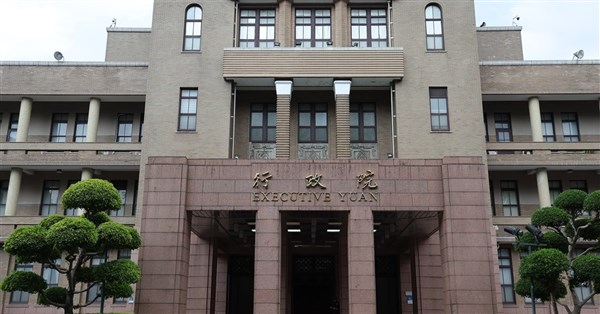
By Chung-Hua Kao, Taipei, June 15 (Central News Agency) — Media reports indicate that Kuomintang (KMT) legislators have proposed eliminating the current ban on retired military personnel, civil servants, and educators receiving both government salaries and pensions—commonly referred to as the 'dual-salary fat cat' scenario. In response, Executive Yuan officials stated today that allowing such dual income could reignite public dissatisfaction over intergenerational justice and cautioned that abruptly removing the rules might obstruct promotion pathways for junior personnel. Therefore, they argue, any amendment should not proceed without broad societal consensus.
To prevent retired public servants from re-entering public-sector roles while simultaneously collecting both a salary and a pension, current regulations stipulate that if a retired military or civil servant takes up a new position—including in public offices, administrative corporations, or state-funded or state-invested entities exceeding a certain threshold—and their remuneration exceeds the minimum wage or a statutory amount, their monthly pension payments must be suspended by law.
Media reports reveal that KMT legislators, including Yeh Yuan-chih, have recently submitted three draft amendments: one to delete Article 77 of the Public School Staff Retirement, Dismissal, and Pension Act; another to delete Article 77 of the Civil Servants Retirement, Dismissal, and Pension Act; and a third to delete Article 34 of the Armed Forces Officers and Non-Commissioned Officers Service Regulations. Collectively, these proposals aim to remove the existing prohibition on 'dual-salary fat cats' for retired public servants.
Executive Yuan officials explained that the current rule—'suspend monthly pension upon re-employment'—was originally established to prevent individuals from receiving both a government salary and a government pension simultaneously, thereby avoiding the double consumption of national resources.
They emphasized that since both salaries and pensions are funded by government budgets, when retired personnel earn a stable income from re-employment, the government should temporarily halt pension disbursements, resuming them only after the individual leaves the post, thus preventing dual use of public funds.
Moreover, the rule is designed to encourage retired personnel to vacate public positions, thereby creating more employment and development opportunities for younger generations.
The Executive Yuan officials cited two primary reasons for opposing any modification or deletion of the current rule. First, to avoid social controversy: lifting the suspension rule—and effectively allowing dual government income—could reignite public discontent over intergenerational justice and trigger舆论 backlash.
Second, to protect grassroots career advancement: removing the rule could obstruct promotion channels for junior military and civil servants, negatively impacting internal talent mobility and organizational renewal within the government. Therefore, they concluded, changes should not be made arbitrarily without first achieving broad societal consensus. (Edited by Hsieh Chia-chen) 1150615
FACT BOX
- Source: CNA (Central News Agency)
- Category: Taiwan