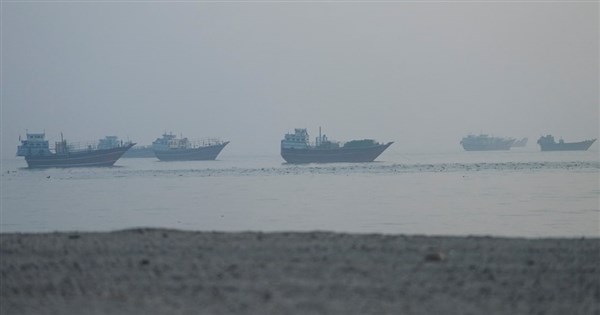
CNA Paris 15th, comprehensive foreign wire report) After nearly 4 months of conflict between the US and Iran, both parties announced today that they have reached a ceasefire agreement. Subsequently, US President Trump announced the reopening of the Strait of Hormuz (Strait of Hormuz) and the lifting of the US maritime blockade. Below are the reactions from various sectors compiled by foreign media. The spokesperson for UN Secretary-General Antonio Guterres stated, "The Secretary-General welcomes the agreement between the United States and Iran on a peace agreement, including an immediate and permanent ceasefire, the reopening of the Strait of Hormuz, and the framework for subsequent negotiations. This is a crucial step in peacefully resolving the conflict." French President Emmanuel Macron called for "the immediate and unconditional reopening of the Strait of Hormuz" and stated that France and the UK "are ready to provide support." Paris will also support "Lebanon's firm efforts to restore national sovereignty." He added that the agreement "must address international concerns about Iran's nuclear and ballistic missile programs." UK Prime Minister Keir Starmer stated, "Now is the time to restore unimpeded freedom of navigation in the Strait of Hormuz," and that London is ready to "assist in the execution of mine-clearing tasks," while emphasizing that the UK's consistent and firm position is that "Iran must never possess nuclear weapons." German Chancellor Friedrich Merz stated, "I welcome the agreement between the United States and Iran and congratulate President Trump and Iran on their diplomatic breakthrough. This paves the way for global economic recovery and an upgrade in Middle East regional security. It is crucial to be determined to implement the contents of the agreement." Austrian Chancellor Christian Stocker said, "I urge the relevant parties to ensure that this memorandum is implemented quickly and comprehensively, including the permanent opening of the Strait of Hormuz, to guarantee freedom of navigation under international law. This agreement opens up a negotiating opportunity for a safer and more stable Middle East. I urge all parties to participate in a constructive manner, which includes addressing Iran's nuclear and ballistic missile programs." Japanese Prime Minister Kishi Kayo stated that Japan strongly hopes to "ensure the freedom and safety of navigation in the Strait of Hormuz" and "reach a final agreement on the Iranian nuclear issue and other related matters as soon as possible." Australian Prime Minister Anthony Albanese said, "The Australian government welcomes the agreement between the United States and Iran. Australia has long called for de-escalation and an end to conflicts including Lebanon. As we have said, the longer the war continues, the greater the impact. Maintaining restraint and constructive interaction is crucial to avoiding further escalation and securing a long-term agreement." New Zealand Prime Minister Luxon Christopher stated that the reopening of the Strait of Hormuz "helps restore stable trade routes, ensures the smooth flow of fuel, and drives the continued development of our economy." Turkish President Recep Tayyip Erdogan said, "I view the agreement between the US and Iran as an important step in establishing peace and stability in our region, and I welcome it. I solemnly emphasize that before the signing of the agreement, we must avoid statements, provocations, and actions that could escalate tensions, and remain highly vigilant against potential destructive behavior." European Council President Antonio Costa said, "I welcome the agreement announced earlier by Washington and Tehran, hoping that this costly war will end and the Strait of Hormuz will fully resume freedom of navigation." European Commission President Ursula von der Leyen stated that "rapid and comprehensive implementation (of the ceasefire agreement) is urgent," and she called on "all parties to respect Lebanon's sovereignty and territorial integrity and implement a true ceasefire." The Qatari Ministry of Foreign Affairs stated, "We fully support all efforts and plans aimed at strengthening regional security and stability." The Saudi Arabian Ministry of Foreign Affairs issued a statement on social media saying that the Kingdom of Saudi Arabia welcomes "an agreement between the United States and the Islamic Republic of Iran to end military action, and the launch of detailed negotiations within 60 days to reach a permanent agreement." The statement emphasized that a permanent peace agreement must "take into account the security interests of countries in the region and adhere to the principle of non-interference in the internal affairs of other countries." The Egyptian Ministry of Foreign Affairs stated, "Egypt welcomes the agreement between the United States and the Islamic Republic of Iran, seeing it as a significant step that helps restore security and stability at the regional and international levels. We hope this agreement will be an important turning point, moving towards strengthening trust, building a foundation for cooperation, creating an environment that supports peace, and promoting diplomatic efforts aimed at solving other problems in the region."
FACT BOX
- Source: CNA (Central News Agency)
- Category: Taiwan