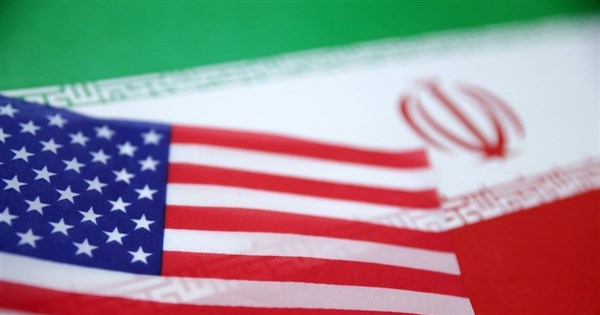
The United States and Iran have announced a consensus on a ceasefire framework, with both countries set to hold negotiations within two months to finalize a 'final agreement.' U.S. President Trump announced that the Strait of Hormuz will reopen on the 19th following the signing of a preliminary agreement.
Speaking on the social media platform 'Truth Social,' Trump added, 'This great agreement will bring peace and security to the entire region.'
Iran confirmed that, following the mutual declaration of an immediate cessation of hostilities, talks will be held within 60 days to seek a 'final agreement' ending the conflict between the two nations.
Iranian Deputy Foreign Minister Kazem Gharibabadi stated in a televised commentary early on the 15th local time: 'When negotiations aimed at reaching a final agreement begin within 60 days, the key issue for us, should an agreement ultimately be reached, will naturally be the implementation of the relevant terms.'
According to Reuters, U.S. and Iranian officials announced today that they have reached a consensus on a peace framework that will end the war, lift U.S. blockades on Iran, and reopen the Strait of Hormuz. Once oil transportation resumes through this critical waterway, energy prices are expected to decline.
Pakistani Prime Minister Shehbaz Sharif, serving as mediator, announced that the agreement was reached early on the 15th local time. Sharif stated that the agreement will be formally signed in Switzerland on the 19th.
Specific terms of the agreement have not yet been publicly disclosed. Sharif posted on the social platform X that the agreement requires the 'immediate and permanent cessation of all military operations on all fronts, including Lebanon.'
Lebanon has been a sticking point in negotiations, as Israel and Hezbollah have ignored calls from Trump and others in recent weeks to cease attacks on each other.
Trump stated that the Strait of Hormuz, which has been effectively blocked by Iran for several months, will reopen on the 19th, and he has ordered the lifting of the U.S. blockade on Iranian ports.
Iranian Deputy Foreign Minister Gharibabadi said that during the 60-day ceasefire period, broader negotiations will take place, including on the lifting of sanctions. Sources previously told Reuters that the future of Iran's nuclear program will also be discussed in subsequent talks.
Israel has not yet responded to the announcement, having previously stated that it is not a party to the proposed U.S.-Iran agreement.
Iranian negotiator Mohammad Baqer Qalibaf earlier posted on X that Israel's recent attack on the southern suburbs of Beirut 'shows the United States lacks the will and ability to fulfill its commitments.'
Iran's Foreign Ministry stated that the U.S. is responsible for the attack and warned of a 'strong response,' with its Supreme Joint Military Command declaring its 'finger is already on the trigger' ready to strike at the 'heart of the enemy.'
Trump said earlier today: 'This morning's attack on Beirut should not have happened, especially on this special day when we are so close to reaching a peace agreement with Iran.'
Israeli Prime Minister Benjamin Netanyahu and Trump are at odds over the Lebanon issue. The U.S. has urged Israel to exercise restraint in its military actions in Lebanon to allow the U.S.-Iran agreement to proceed.
Israel insists on maintaining operational freedom in Lebanon, while Iran views a full ceasefire in the region as a key component of its demands.
A U.S. official speaking before the announcement said the agreement would ultimately lead to the dismantling of Iran's nuclear program, with Iran's stockpile of highly enriched uranium to be destroyed and removed. An Iranian senior official, however, stated that the draft agreement would allow Iran, which denies seeking nuclear weapons, to dilute enriched uranium domestically.
An informed source told Reuters that Qatari negotiators arrived in Tehran this morning as part of efforts to finalize the agreement.
FACT BOX
- Source: CNA (Central News Agency)
- Category: Taiwan