The United States and Iran have reached a preliminary agreement, marking a crucial step toward de-escalating tensions in the Middle East.
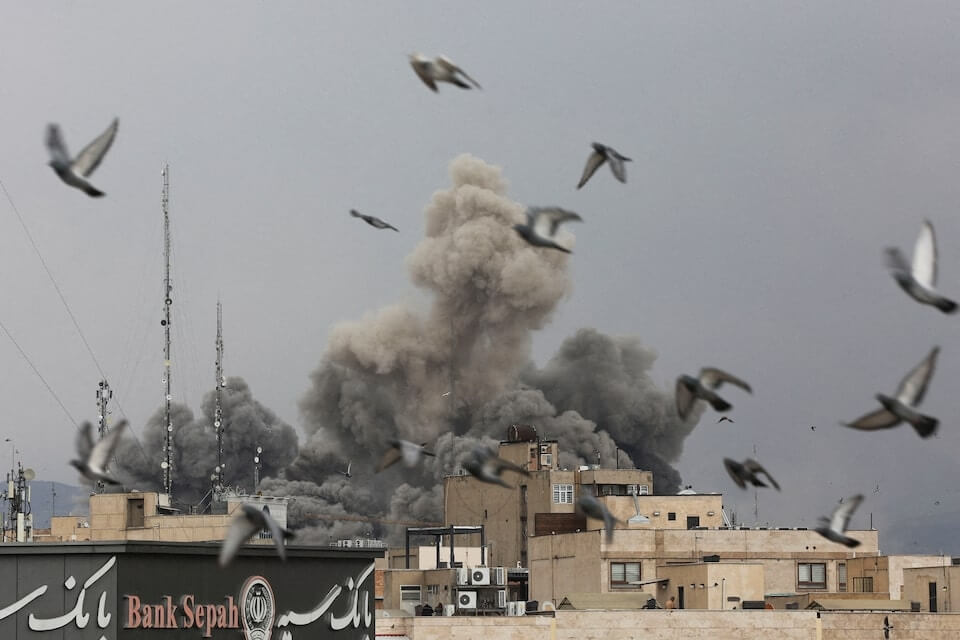
On February 28, the U.S. and Israel launched airstrikes across Iran, killing Supreme Leader Ayatollah Ali Khamenei, who had ruled for nearly 37 years, along with several senior military and intelligence officials. The strikes mistakenly hit a girls' elementary school in southern Iran, killing at least 175 people, mostly children, according to U.S. officials familiar with the military investigation.
In retaliation, Iran launched missiles and drones targeting Israeli and U.S. military bases in the Middle East, including facilities in Qatar, Kuwait, and the United Arab Emirates. On March 11, Iran escalated attacks in and around the Strait of Hormuz, effectively blocking global shipping through this critical waterway, causing oil prices to surge and prompting the Trump administration to take emergency measures.
On March 17, Israeli forces killed Iran’s National Security Council chairman Ali Larijani and Basij militia commander Gholamreza Soleimani, dealing another blow to Iran’s leadership. On March 18, Israel attacked Iran’s South Pars gas field—responsible for 70–75% of Iran’s natural gas output—while Iran struck Qatar’s Ras Laffan Industrial City, the world’s largest liquefied natural gas export facility.
On March 23, President Trump announced that the U.S. and Iran were discussing an end to the war—the first sign of diplomatic talks since the conflict began. On March 27, Iran attacked Saudi Arabia’s Prince Sultan Air Base, injuring 12 U.S. troops and destroying at least one critical E-3 AWACS aircraft.
On April 3, Iran shot down a U.S. F-15E fighter jet. The pilot was rescued the same day, but the weapons systems officer was captured inside Iran. U.S. forces conducted a high-risk rescue mission and successfully extracted him.
On April 7, Trump announced a two-week ceasefire, hoping to reach a war-ending agreement. Iran confirmed the ceasefire, calling it a victory. On April 8, Israel launched its heaviest bombing campaign in Lebanon since the war began, asserting that the U.S.-Iran ceasefire did not include Lebanon.
On April 11, U.S. Vice President JD Vance traveled to Islamabad, Pakistan, to attend Iran peace talks mediated by Pakistan. Though no concrete agreement was reached, this marked the highest-level U.S.-Iran talks since the 1979 Iranian Revolution and the first face-to-face negotiations between officials since the 2015 nuclear deal.
On April 13, the U.S. began blocking ships entering and exiting Iranian ports in an effort to cripple Iran’s economy. On April 21, hours before the ceasefire was set to expire, Trump extended the U.S.-Iran ceasefire, saying he wanted to give Tehran more time to propose a new plan to end the war.
On May 1, Trump submitted documents to Congress declaring that hostilities with Iran had “ended,” arguing that the 1973 War Powers Resolution did not apply. The resolution requires the president to end military actions within 60 days unless Congress formally declares war or authorizes force. Since Trump notified Congress on March 2, the 60-day deadline fell on May 1. The White House claimed the ceasefire rendered the rule inapplicable.
On May 23, Trump said he had discussed a memorandum of understanding on peace with several Middle Eastern leaders and would soon announce it.
On June 3, Israel and Lebanon announced a new U.S.-brokered ceasefire. Hezbollah opposed direct talks between Israel and the Lebanese government but welcomed broader U.S.-Iran ceasefire arrangements and expressed hope that Lebanon’s conflict would be included.
On June 7, Iran launched its first attack on Israel since the April ceasefire, citing retaliation for Israeli strikes near Beirut targeting Hezbollah. Israel responded with retaliatory airstrikes on Iran the following morning.
On June 14, the U.S. and Iran announced a preliminary agreement, including the reopening of the Strait of Hormuz, lifting U.S. blockades on Iranian ports, and launching 60-day negotiations on Iran’s nuclear program, sanctions relief, and other complex issues.
FACT BOX
- Source: CNA (Central News Agency)
- Category: Taiwan