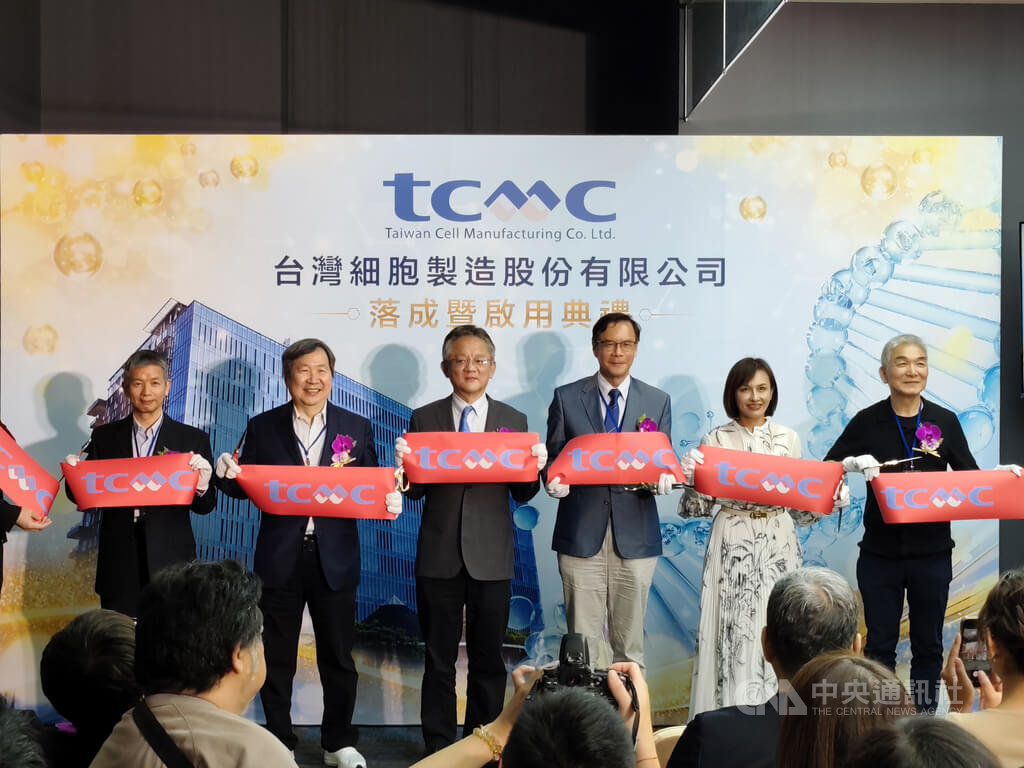
(CNA reporter He Hsiu-ling, Hsinchu, June 15) Lin Cheng-lung, Chairman of PerCell Bio, a developer of novel cell and gene therapy drugs, announced that the interim analysis of its CD19 CAR-T cell therapy product has been completed. The company is now preparing documentation for drug approval. If regulatory review progresses smoothly, it could obtain approval by the end of this year or next year.
PerCell Bio held the inauguration ceremony today for the new facility of its subsidiary, Taiwan Cell Manufacturing Company (tcmc). Lin stated that CAR-T treatments previously used in Taiwan largely relied on overseas manufacturing, requiring patient cells to be sent abroad for production and then shipped back, resulting in higher costs and longer treatment waiting times. With tcmc now operational, Taiwan is expected to establish independent cell therapy manufacturing capabilities.
Legislator Chiu I-ying stated that regenerative medicine is a key global trend in the biotechnology industry, and tcmc's launch demonstrates corporate commitment to deepening roots in Taiwan, injecting new momentum into the nation's biotech sector. Hsinchu Science Park Administration Director Hu Shih-min noted that tcmc's presence further strengthens the industrial cluster in the Hsinchu Biomedical Science Park in the fields of cell and gene therapy, completing a crucial piece in Taiwan's advanced therapy manufacturing puzzle.
CAR-T (chimeric antigen receptor T-cell therapy) is a cell therapy technique that involves extracting a patient's own immune cells, genetically modifying them to attack cancer cells, and reinfusing them into the body. It is currently primarily used in the treatment of certain blood cancers.
Lin pointed out that PerCell's CD19 CAR-T product has completed interim clinical trial analysis. Due to efficacy meeting expectations, patient enrollment was completed ahead of schedule. The company is now simultaneously preparing for drug approval applications and conducting manufacturing validation procedures, under regulatory guidance.
He noted that viral vectors account for approximately 60% of CAR-T manufacturing costs. In recent years, the company has invested in in-house development and production of viral vectors, significantly reducing related costs. Combined with future local manufacturing in Taiwan, this will help further lower treatment expenses.
Lin stated that the newly launched tcmc facility represents an investment of approximately NT$700 million. The plant includes manufacturing platforms for cell therapy products, gene therapy products, and key raw materials—viral vectors (Viral Vector). Going forward, it will provide one-stop CDMO (contract development and manufacturing) services, supporting domestic and international clients in accelerating the research, development, and industrialization of innovative therapies, enhancing Taiwan's competitiveness in the global advanced medical industry chain.
He added that production capacity expansion will be considered based on market demand. Recently, companies from the United States and Japan have approached tcmc for potential collaboration on cell and gene therapy manufacturing. Overseas orders are expected in the future.
In addition to blood cancer treatments, Lin stated that CAR-T technology could potentially extend to autoimmune diseases such as rheumatoid arthritis and systemic lupus erythematosus. PerCell Bio is also investing in the development of next-generation in vivo CAR-T technology, aiming to reduce treatment complexity, lower costs, and expand its applicability.
FACT BOX
- Source: CNA (Central News Agency)
- Category: Event